This is general information, not financial advice. Your circumstances are unique — always speak to a qualified mortgage broker before making financial decisions. This page may contain affiliate links. Affiliate disclosure · Terms
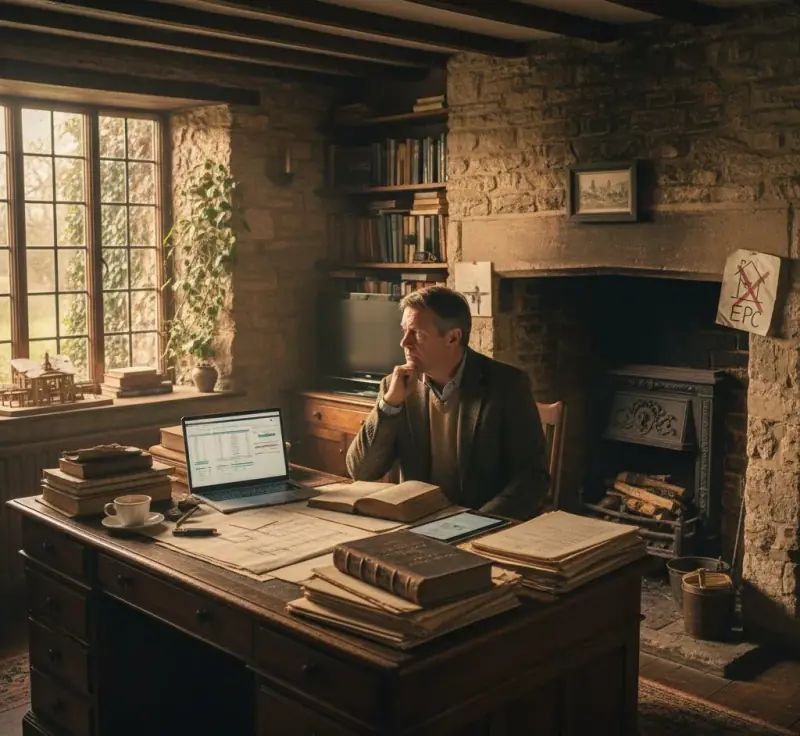
Older properties have character, history, and charm. They can also have solid stone walls, single glazing, no cavity insulation, and an energy performance that makes modern lenders nervous. If you've fallen in love with a period property and are struggling with the mortgage side, around 20% of UK housing stock predates 1919 — lenders have seen it all before.
The EPC Problem
An Energy Performance Certificate (EPC) rates a property's energy efficiency from A (best) to G (worst). Most modern homes sit in bands B-D. Many pre-1900 properties land in bands E, F, or G — not because they're bad homes, but because they were built before energy efficiency was a concept.
Why Lenders Care About EPC
Increasingly, mortgage lenders are factoring energy efficiency into their lending decisions:
- Future regulation risk — the government has discussed minimum EPC requirements for homes. If a property can't be improved to meet future standards, its value might be affected
- Running costs — poorly insulated homes cost more to heat, affecting the occupant's affordability
- Lending policy trends — many lenders are aligning with net-zero commitments, which includes not financing the least efficient properties
- Resale value — there's a growing premium for energy-efficient homes and a potential penalty for inefficient ones
Listed Building Exemption
If the property is listed (Grade I, Grade II*, or Grade II in England), it's exempt from needing an EPC. Listed buildings can't be sold without an EPC, but the regulations around minimum energy performance standards don't apply in the same way, because alterations that would improve efficiency (double glazing, external insulation) often aren't permitted due to heritage rules.
Many pre-1900 properties are in conservation areas rather than listed. Conservation area properties DO need an EPC and aren't exempt from energy standards, though there may be restrictions on certain types of improvement work.
Check the listing status
Before worrying about EPC issues, check whether the property is listed. Use Historic England's National Heritage List (historicengland.org.uk) for England. Listed properties have more lender flexibility because everyone understands the restrictions.
How Older Properties Struggle with EPC
The EPC system was designed primarily for modern buildings. Period properties are penalised by:
- Solid walls — no cavity to insulate, and external/internal insulation may be inappropriate for the building
- Single glazing — replacing with double glazing may not be permitted (listed) or desired (aesthetics)
- No loft insulation — vaulted ceilings, flat roofs, or rooms in the roof space
- Older heating systems — open fires, old boilers, lack of central heating in some rooms
- Air leakage — older buildings are naturally draughty (though this can actually help with moisture management in breathable construction)
The EPC assessor uses a standard methodology (SAP/RdSAP) that doesn't fully account for the thermal mass of solid stone walls, the benefits of breathable construction, or the fact that many period homes perform better in practice than their EPC suggests.
EPC ratings on older homes can be misleading
The EPC assessment methodology is known to unfairly penalise older construction types. A solid stone farmhouse with 600mm thick walls may receive a worse rating than a thin-walled modern house, despite the stone providing significant thermal mass. Take the rating as a guide, not gospel.
Which Lenders Are Restrictive?
A growing number of lenders have introduced EPC-related restrictions:
- Some won't lend on properties rated F or G (or require evidence of planned improvements)
- Others have introduced higher rates for less efficient properties (so-called "brown discounts" in reverse)
- A few have set band D as a minimum for new lending
However, the majority of lenders — including most mainstream banks — still lend on properties regardless of EPC rating, at least for now. The restrictions are more common for buy-to-let, where minimum EPC standards already apply for rental properties (currently band E minimum for tenancies).
Which Lenders Are More Flexible?
Building Societies
Many building societies have extensive experience with older properties in their local areas:
- Nationwide — generally flexible on period properties
- Leeds Building Society — experienced with older homes
- Yorkshire Building Society — pragmatic approach
- Regional societies (Bath, Furness, Loughborough) — local knowledge of period property stock
Specialist Lenders
- Together — notably flexible on unusual and older properties
- Aldermore — manual underwriting considers context
- Kensington — will consider non-standard properties
High Street Banks
Most high street banks don't currently restrict based on EPC for residential mortgages, but check individual lender policies as this is an evolving area.
Non-Standard Construction Issues
Beyond EPC, pre-1900 properties may trigger non-standard construction flags:
- Solid stone walls — actually very durable, but classed as non-standard
- Cob construction — found in Devon and Cornwall, needs specialist assessment
- Timber frame — some older timber-framed buildings need careful evaluation
- Thatched roofs — accepted by many lenders but with conditions
- Wattle and daub — rare but found in very old properties
- No DPC (damp proof course) — pre-Victorian properties often don't have one
Most of these are perfectly acceptable to experienced lenders. The issue is when automated systems flag them without understanding the context.
Improving Your Chances
Get the Right Survey
For a pre-1900 property, a Level 3 Building Survey (formerly a full structural survey) is strongly recommended over a basic homebuyer's report. A surveyor experienced with period properties will understand the construction and provide a balanced report that doesn't over-alarm the lender.
Commission a Specialist EPC
Some EPC assessors are more experienced with older properties and may produce a more nuanced (and sometimes higher) rating by correctly identifying features like solid wall thickness, thermal mass, and existing measures.
Prepare Improvement Plans
If the EPC is very low, preparing evidence of planned (and feasible) improvements can reassure lenders:
- Loft insulation (if accessible)
- Draught-proofing
- Secondary glazing (heritage-appropriate alternative to double glazing)
- Heating system upgrade
- Smart heating controls
Use a Broker
A broker who understands period properties will know exactly which lenders are comfortable with older homes and what documentation to prepare. This is not the time to go direct to a bank's website.
The Buy-to-Let Complication
If you're buying a pre-1900 property as a rental, you face an additional hurdle: the Minimum Energy Efficiency Standards (MEES) require all rented properties to have a minimum EPC rating of E. If the property is rated F or G:
- You can't legally rent it out without improvements or an exemption
- Exemptions exist for listed buildings and where improvements aren't cost-effective
- Some BTL lenders won't lend on properties below band E
This is a genuine constraint for period-property landlords and needs careful navigation.
What the Valuer Looks For in Period Properties
When a surveyor values a pre-1900 property, they assess several factors that are specific to older buildings:
Construction Type Assessment
The surveyor identifies the construction method and materials:
- Solid stone walls: Common in the Cotswolds, Yorkshire, the Lake District, Scotland, and Wales. Typically 400-600mm thick. Structurally sound but poor thermal performance by modern metrics.
- Solid brick walls: Pre-1920s brick walls are typically solid (no cavity). Georgian and Victorian properties in towns and cities commonly use this construction.
- Cob construction: Earth-based walls found primarily in Devon and Cornwall. Can be excellent if properly maintained, but unfamiliar to many valuers.
- Timber frame: Historic timber frame buildings with various infill materials.
- Flint construction: Common in Norfolk, Suffolk, Sussex, and the Chilterns. Flint walls with brick or stone dressings.
Damp Assessment
Older properties handle moisture differently from modern buildings. Pre-Victorian buildings were designed as "breathable" structures — moisture passes through the walls rather than being kept out by a damp-proof course. The surveyor should understand this and distinguish between:
- Rising damp (where a DPC would normally prevent it) — uncommon in truly breathable construction
- Penetrating damp (water coming through the walls from outside) — can indicate maintenance issues
- Condensation (moisture from inside the building) — often caused by modern alterations that prevent the building from breathing naturally
A surveyor experienced with period properties will not automatically flag the absence of a DPC as a defect. In breathable construction, adding a DPC can actually cause more problems by trapping moisture.
Structural Movement

Almost all pre-1900 properties show some structural movement — cracks, uneven floors, leaning walls. The surveyor must assess whether this movement is historical (stable and not progressing) or active (ongoing and potentially problematic). An experienced surveyor will recognise that a degree of movement is normal for a building that has been standing for 100-200+ years and does not necessarily indicate a structural problem.
Roof Assessment
The surveyor examines the roof covering (slate, tile, stone slate, or thatch) and the roof structure:
- Condition and remaining lifespan of the covering
- Condition of the roof timbers
- Evidence of past repair or replacement
- Adequacy of the roof drainage (gutters, downpipes)
Services
Older properties may have outdated electrical wiring, old plumbing, and inefficient heating systems. The surveyor notes the apparent condition and age of the services and may recommend further investigation by a qualified electrician or plumber.
Insurance for Period Properties
Finding Appropriate Cover
Standard home insurance policies can cover period properties, but the terms and cost vary:
- Rebuild cost must reflect the actual cost of repair using appropriate materials (not modern equivalents). For a stone property with stone slate roof, the rebuild cost could be 2-3 times that of a modern property of similar size.
- Specialist insurers (NFU Mutual, Hiscox, Ecclesiastical, LPOC scheme) often provide better cover and more competitive premiums for period properties because they understand the risks and costs.
- Subsidence cover may be more difficult or expensive to obtain for properties on clay soils without modern foundations.
Common Insurance Issues
- No DPC: Some insurers ask about damp-proof courses. The absence of one in a pre-Victorian property should not be a reason for refusal or premium loading, but it sometimes is with less knowledgeable insurers.
- Thatched roof: If the property has a thatched roof, this is the primary insurance concern (see our thatched roof article).
- Listed building: If the property is listed, the rebuild cost must reflect the requirements of replacing like-for-like.
- Unoccupied periods: Some period properties in rural areas may be unoccupied for periods (for example, holiday homes). Standard policies often have restrictions on unoccupied properties, so check the terms carefully.
Regional Variations
The type and prevalence of pre-1900 properties varies significantly across the UK:
The Cotswolds and the South West
Cotswold stone properties are among the most desirable (and expensive) period homes in England. Most are Grade II listed. Local lenders, surveyors, and insurers are experienced with stone construction and understand the low EPC ratings that are typical. Bath, Stroud, Cirencester, and surrounding villages have concentrations of these properties.
The Lake District and Yorkshire Dales
Stone-built farmhouses, cottages, and barns are characteristic of these areas. Many are in national parks where planning restrictions further limit alterations. Furness Building Society, Skipton Building Society, and Cumberland Building Society all have experience with these properties.
East Anglia
Norfolk and Suffolk have distinctive period properties — timber frame with plaster or render, flint construction, and clay lump buildings. The flat landscape and agricultural heritage produce property types that are specific to the region. Ipswich Building Society and Norwich-based lenders understand these properties well.
Scotland
Scottish period properties include granite houses in Aberdeenshire, sandstone tenements in Glasgow and Edinburgh, and crofting cottages in the Highlands. Scotland has its own listing system (Categories A, B, C) and its own EPC framework. Scottish lenders are familiar with these property types.
Wales
Welsh period properties range from stone farmhouses in Snowdonia to terraced cottages in the valleys. Cob and clom (earth construction) buildings are found in parts of rural Wales. Local knowledge is particularly valuable for these less common construction types.
London
Georgian and Victorian terraced houses dominate much of inner London. While these are period properties, they are so common that lenders, surveyors, and insurers are entirely comfortable with them. EPC ratings of D or E are typical for unimproved London terraces. The main mortgage consideration is usually the price, not the age.
Specific Lender Policies for Period Properties
Halifax
Halifax does not currently restrict based on EPC rating for residential mortgages. They will lend on period properties with low EPC ratings provided the valuation is satisfactory. They are generally comfortable with standard period property construction types.
Nationwide
Nationwide is pragmatic about period properties and does not impose EPC restrictions on residential mortgages. Their surveyor panel includes valuers experienced with older buildings. They have been vocal about the limitations of applying modern energy metrics to historic buildings.
Leeds Building Society
Leeds Building Society has extensive experience with stone-built properties across Yorkshire and accepts period properties without EPC-based restrictions.
Ecology Building Society
Ecology takes a unique approach — they actively support the renovation and improvement of older buildings. They offer "green discount" rates for energy efficiency improvements and are philosophically aligned with the sympathetic renovation of period properties.
Together
Together is a specialist lender that is notably flexible with unusual and older properties. They use manual underwriting (rather than automated systems) and can consider the context of a property rather than simply flagging non-standard features. Deposit requirements are typically 20-30%.
Edge Cases and Unusual Situations
Cob and Earth Construction
Cob buildings (earth walls built up in layers) are found in Devon, Cornwall, and parts of Wales. They are perfectly sound if properly maintained — the key is keeping the walls dry by maintaining the roof and the render. However, cob construction is unfamiliar to many valuers and lenders, which can create problems. Specialist surveyors and lenders with experience of cob are essential.
Properties Without Mains Services
Some pre-1900 rural properties may lack mains water, mains drainage, or mains gas. While this does not prevent a mortgage, it does affect the valuation and the ongoing costs. Private water supplies need regular testing, septic tanks need maintenance, and alternative heating sources (oil, LPG, wood) can be more expensive. The surveyor will note the services arrangement, and the lender will consider it in the context of the overall application.
Derelict or Semi-Derelict Period Properties
If you are buying a period property that is in poor condition and needs significant renovation, a standard residential mortgage may not be appropriate. Options include:
- Self-build or renovation mortgages that release funds in stages as work progresses
- Bridging finance to purchase the property, with a standard mortgage arranged once renovation is complete
- Ecology Building Society offers mortgages for properties in need of renovation
Properties with Historical Significance
Some pre-1900 properties have particular historical significance — former manor houses, properties associated with historical events or figures, or buildings with unique architectural features. These properties can be highly desirable and command premium prices, but the unique nature of the property can make valuation difficult because there are no true comparable sales.
Mixed-Use Period Properties
Some period properties have a history of mixed use — a former shop with living quarters above, a farmhouse with attached barns, or a former pub. If the property is now entirely residential, most lenders will treat it as residential. However, if any commercial use remains, the lending picture changes (see our flat above a shop article).
Survey Requirements and Costs
For a pre-1900 property, invest in a thorough survey:
- Lender's valuation: £250-600 — necessary for the mortgage but not designed to protect you
- Building Survey (Level 3): £700-2,000 — strongly recommended for any pre-1900 property. The cost varies by property size and complexity. Ensure the surveyor has experience with period properties.
- Timber and damp report: £200-500 — if the building survey identifies concerns about timber condition or dampness
- Structural engineer's assessment: £400-1,000 — if the survey identifies significant cracking or structural movement
- Electrical survey: £200-400 — recommended for properties with old wiring
- Drainage survey: £200-400 — particularly important for rural properties with private drainage
- Specialist EPC assessment: £60-120 — consider using an assessor experienced with older properties for a more accurate rating
Period Properties Are Worth the Effort
Yes, getting a mortgage on an older property can be more complex. But these homes have stood for over a century — they are not going anywhere. With the right lender, the right survey, and the right broker, the unique character of a pre-1900 property can be yours. Do not let EPC scores written by modern algorithms put you off buildings that were built to last generations.
If the property can't get an acceptable EPC rating, selling directly for cash may be the fastest route. SellTo offers free cash valuations with no fees to the seller.(affiliate)
Energy Performance Certificate
SponsoredNeed an EPC for your property?
You're legally required to have an Energy Performance Certificate before selling or letting. Order one online — typically arranged within 48 hours.
Order an EPCWe may earn a commission if you use this service. Affiliate disclosure
Our exclusive broker partner
Create Finance — for non-standard properties
Create Finance is authorised and regulated by the FCA — Unmortgageable is not. We earn a referral fee from Create Finance only if your mortgage completes through them. This never affects what you pay or what advice you receive.

Unmortgageable is not FCA-authorised. Create Finance is — verify them independently on the FCA Register. See our affiliate disclosure.
This is educational content, not financial advice. Your situation is unique — speak to a qualified mortgage broker before making any decisions.
Related reading

Specialist Mortgage Lenders UK: Who Are They?
Who are the specialist mortgage lenders in the UK? A comprehensive guide to lenders who help with bad credit, self-employment, and non-standard situations.
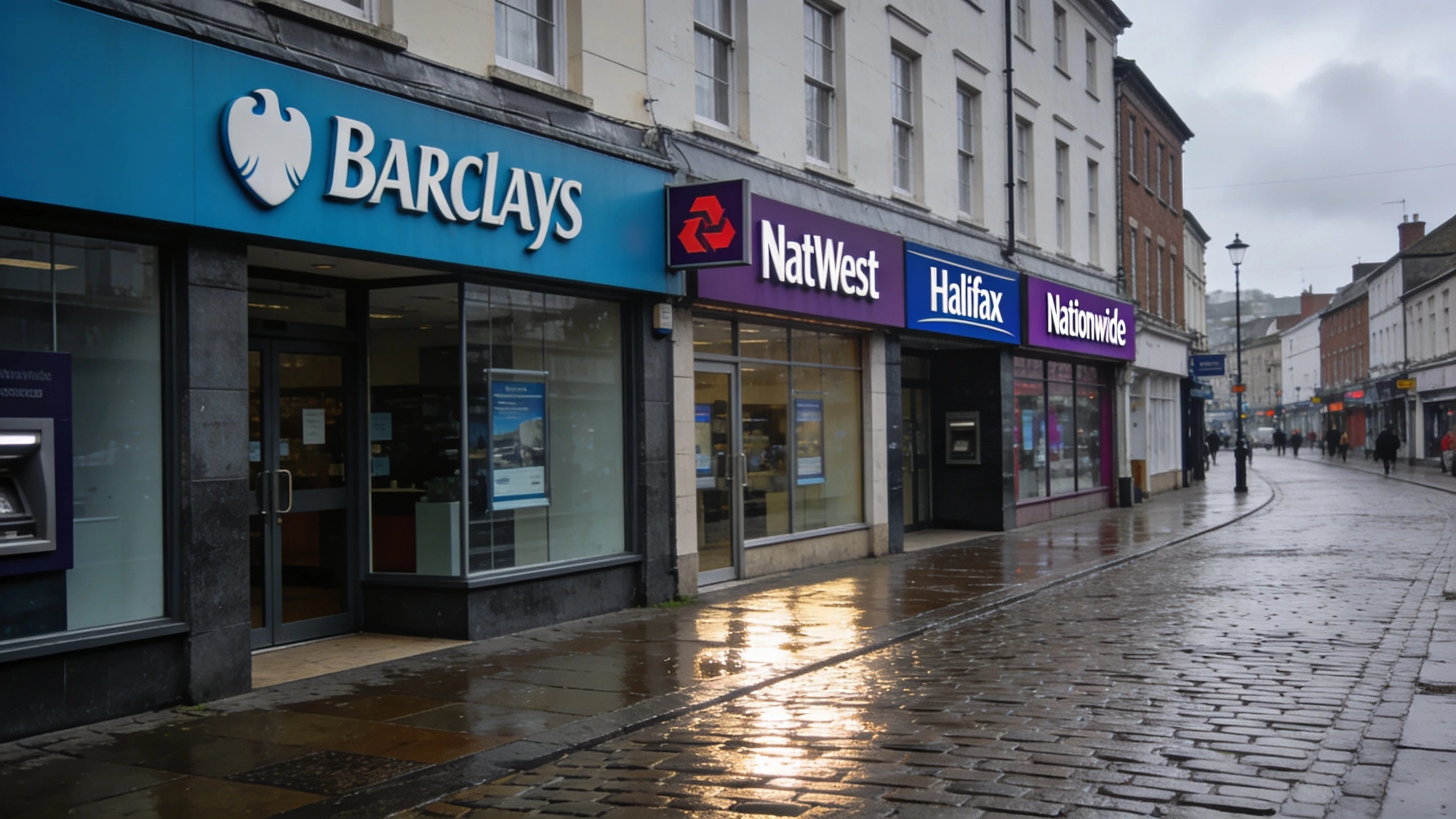
Building Societies vs Banks: Why They're More Flexible
Why building societies often say yes when banks say no. Understand how UK building societies differ from banks and which ones help with complex situations.

Mortgage on a Listed Building
Can you get a mortgage on a listed building in the UK? Yes, but expect specialist surveys, insurance requirements, and restrictions on alterations.
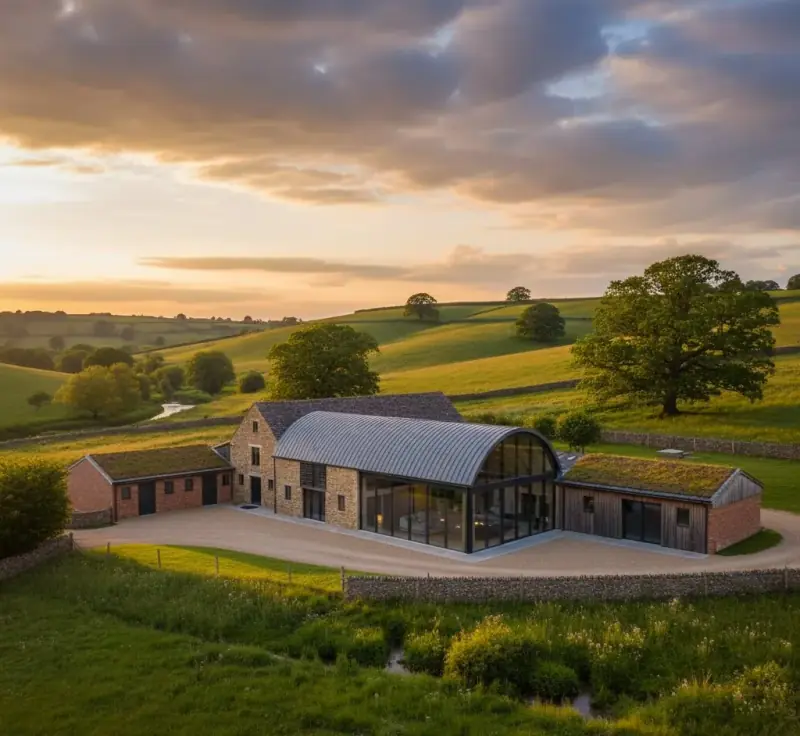
Non-Standard Construction Mortgages: What Counts and Who Lends?
UK guide to mortgages on non-standard construction homes. Timber frame, concrete, PRC, thatched — which lenders accept what and what surveys you need.
Not sure about your mortgage options?
Find out your options — whether it's your circumstances or your property holding you back. Free, no judgement, no cold calls.
This page is educational content, not financial advice or a personal recommendation. Unmortgageable is not FCA-authorised. Any broker or lender we link to is separately regulated — verify them on the FCA Register before engaging. See our affiliate disclosure.