This is general information, not financial advice. Your circumstances are unique — always speak to a qualified mortgage broker before making financial decisions. This page may contain affiliate links. Affiliate disclosure · Terms
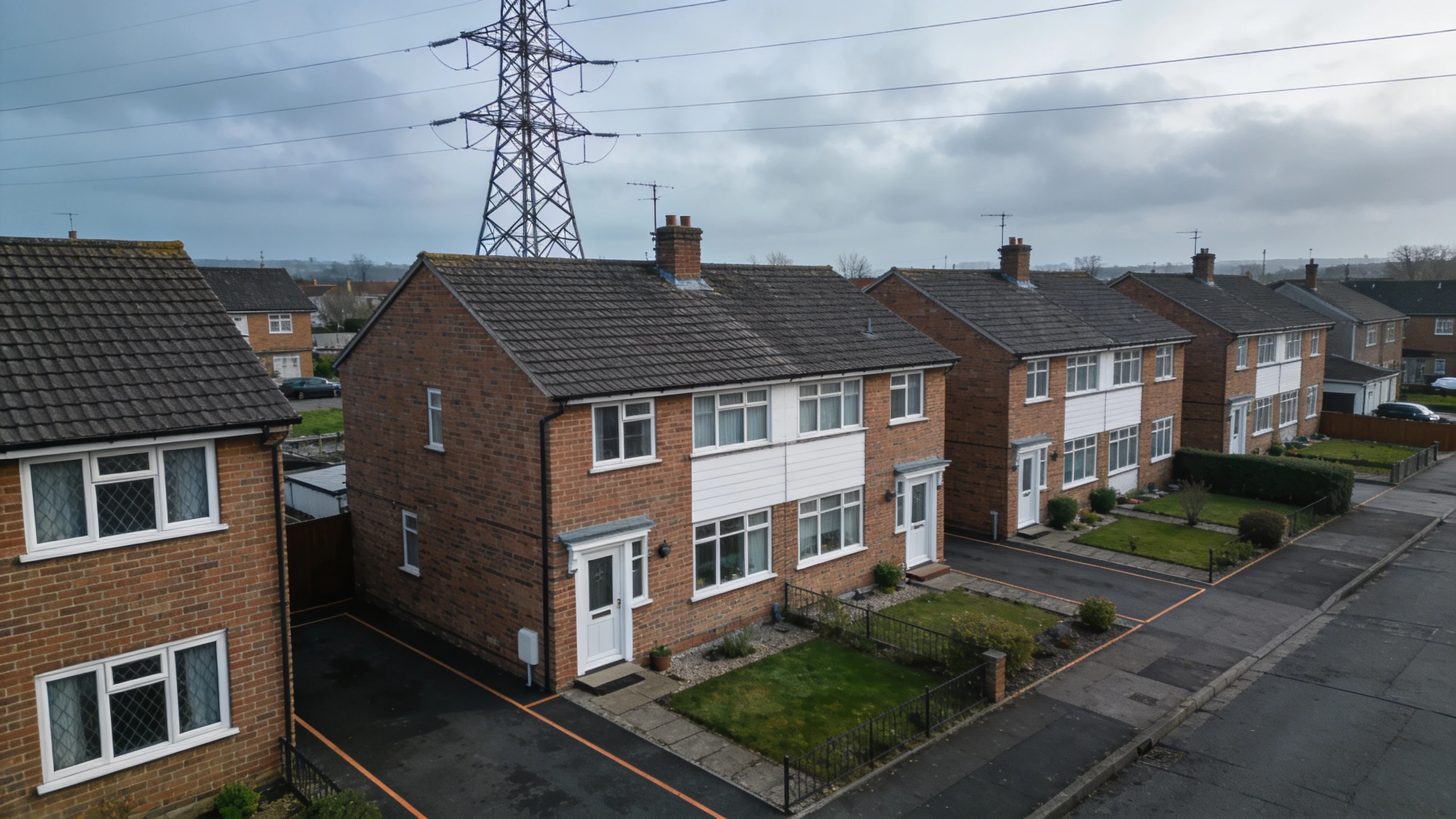
Properties near electricity pylons, mobile phone masts, wind turbines, or major infrastructure projects like HS2 can be genuinely difficult to mortgage — or, in some cases, entirely straightforward if the market has already priced in the feature. The issue is rarely a blanket policy. It is about valuation.
Why Infrastructure Proximity Affects Mortgages
Our exclusive broker partner
Create Finance — for pylon proximity mortgage and valuation issues
Create Finance is authorised and regulated by the FCA — Unmortgageable is not. We earn a referral fee from Create Finance only if your mortgage completes through them. This never affects what you pay or what advice you receive.

Unmortgageable is not FCA-authorised. Create Finance is — verify them independently on the FCA Register. See our affiliate disclosure.
Lenders do not typically have a published policy that says "no mortgages within 300 metres of a pylon." What they have is a reliance on the valuer's report. If the surveyor notes that nearby infrastructure creates a visual or practical issue, and that the local market reflects this with lower comparable sale prices, the valuer will reduce their assessed value — sometimes significantly.
A reduced valuation has a direct effect on your mortgage. If you are paying £350,000 for a property the surveyor values at £300,000, your lender will base the loan on £300,000. At 80% loan-to-value, you now need a £120,000 deposit rather than £70,000.
In some cases — usually where the infrastructure is very close or the valuer considers it a permanent blight — the lender may decline entirely rather than just reducing the figure.
Electricity Pylons and Overhead Power Lines
The Voltage Question
Not all pylons are equal. The concern is broadly proportional to the voltage carried:
- 132kV and above (National Grid transmission lines): These are the tall metal lattice structures crossing open countryside. Valuers treat these with most concern, especially when properties are within 50-200 metres.
- 66kV and 33kV distribution lines: Smaller wooden or metal poles carrying regional distribution lines. Less impact, but still noted if close.
- 11kV and below: The lines on wooden poles running down residential streets. Usually ignored for valuation purposes unless the property is directly beneath them.
The Government's National Grid and the electricity distribution companies are required to underbury cables where technically feasible and where a property suffers demonstrable harm, but this process is slow and expensive.
Distance Thresholds Valuers Use
The 200-metre rule is widely cited but not universal. In practice:
- Under 50 metres: High probability of valuation reduction. Mainstream lenders likely to decline or substantially reduce lending. Specialist lenders may still consider.
- 50-100 metres: Noticeable valuation impact likely, especially for high-voltage lines. Some mainstream lenders may attach conditions.
- 100-200 metres: Modest valuation discount possible, depending on visibility. Many lenders accept at a reduced figure.
- 200 metres and above: Usually minimal impact on mortgageability, though visual intrusion from tall pylons can still be noted.
What the valuer actually looks at
The valuer will consider whether the pylons are visible from the property, whether they form part of the outlook or are behind the property, and whether comparable sales in the immediate area show a discount. A property that backs on to a pylon field is assessed differently from one that has a distant view of pylons on the horizon.
Health Concerns and EMF
There has been longstanding public concern about electromagnetic fields (EMF) from high-voltage power lines and potential health effects. The scientific consensus — reflected in UK Government guidance — is that there is no proven health risk from the EMF levels found near power lines at normal residential distances.
Lenders do not generally cite EMF as a reason to decline. The valuation impact is market-driven: if buyers discount these properties due to perception, the market value falls, and that is what matters for mortgage purposes.
Getting a Structural Survey
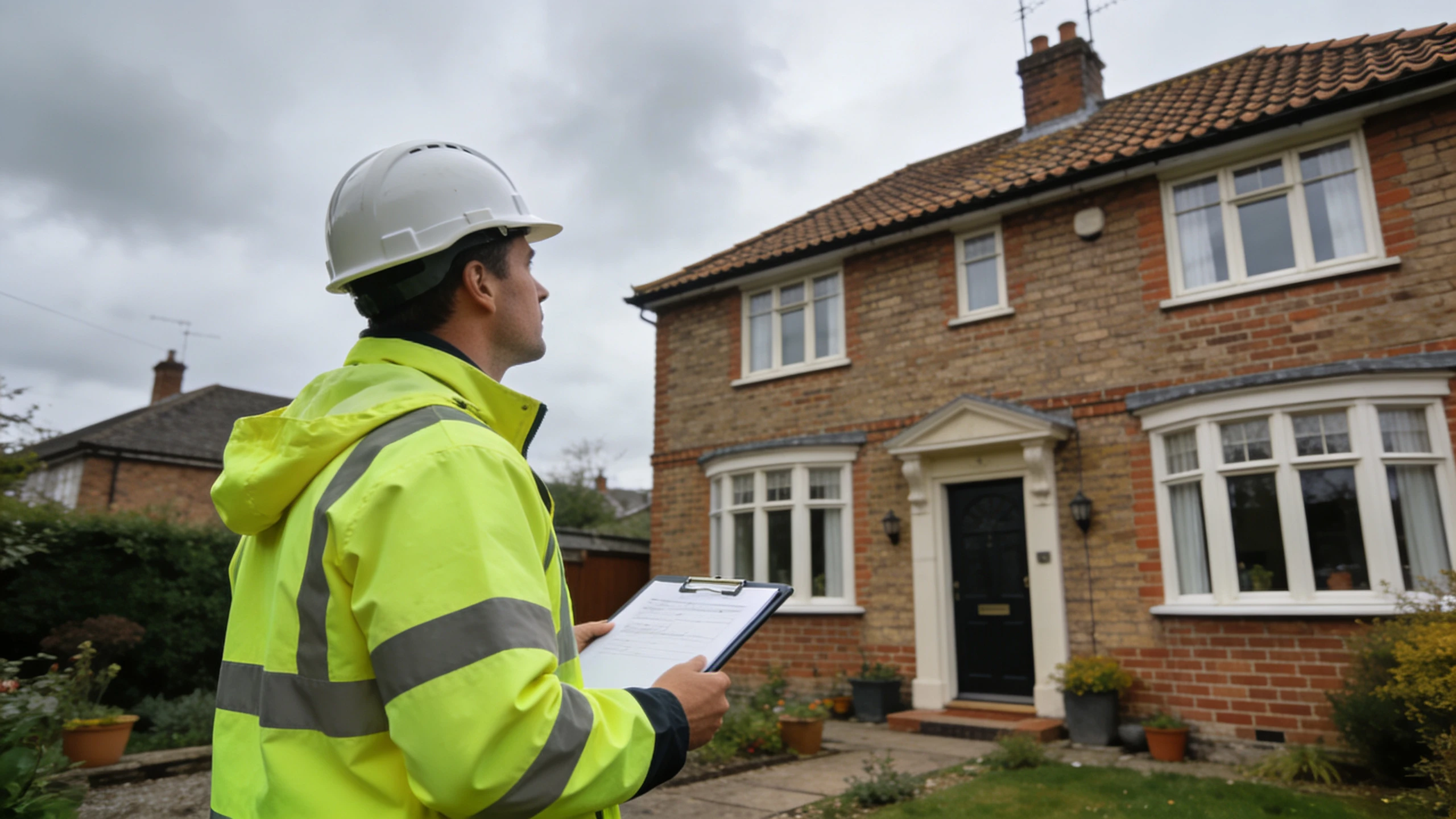
If you are buying near overhead lines, commissioning a full structural survey (RICS Level 3) rather than just a basic valuation is worth the extra cost. The surveyor can give you a clearer view of:
- Whether the lines are within National Grid easement zones
- Whether the property has any restrictions associated with the line's protective strip
- How the proximity is likely to affect future saleability
Mobile Phone Masts and Telecommunications Infrastructure
Masts on or Adjacent to the Property
The most problematic scenario is a mast physically located on or directly adjacent to the property. This can arise with:
- Flats in buildings where a telecoms operator has a roof lease
- Houses near a field or industrial site hosting a mast
- Rural properties on whose land a mast sits under a commercial agreement
If there is a mast on the building you are buying, the key questions for lenders are:
- What are the lease terms? Commercial telecoms leases under the Electronic Communications Code give operators strong rights to remain and resist removal. A roof-top lease can be very difficult to end.
- What is the rental income (if any)? Some roof-top mast leases pay the freeholder a modest annual rent. This is not usually enough to offset the valuation impact.
- Is the mast operational? Planning conditions and local objections can affect this.
Most mainstream lenders will decline a flat in a building with an active telecoms mast under an Electronic Communications Code lease. Specialist lenders may consider it with a larger deposit and at a higher rate.
Masts Nearby But Not on the Property
A mast in an adjacent field, on a neighbour's land, or on a commercial building 50-100 metres away is a different matter. Valuers note these but the impact on value is generally modest unless the mast is very prominent. Most mainstream lenders will proceed.
Wind Turbines
Wind energy development has expanded significantly across the UK, and turbines near residential properties are a recognised valuation issue. Studies have shown varying levels of price impact:
- Within 500 metres: Most likely to show a measurable discount. Lenders may require a higher deposit or specialist underwriting.
- 500 metres to 1 kilometre: Possible modest discount. Shadow flicker and noise can be issues at this range.
- Over 1 kilometre: Generally minimal mortgage impact, though very large turbines or wind farms may still be visible and noted.
Shadow flicker — the intermittent shadow cast by spinning turbine blades — is subject to planning guidance. Developers are required to demonstrate that shadow flicker does not exceed 30 hours per year at a property within 10 rotor diameters. If your property is within this zone, the planning conditions should have addressed shadow flicker, but it is worth verifying.
New turbine developments
If you are buying near a proposed rather than existing turbine, the uncertainty cuts both ways. The development may not proceed (many wind farm applications are refused), but if it does, the impact on your property value may be greater than if the turbine were already there and priced in. Consider how a planning approval or refusal would affect your decision.
HS2 and Major Infrastructure Projects
Direct Impact: Compulsory Purchase
Properties directly within the HS2 safeguarding zone — those needed for the route or its construction — have been the subject of compulsory purchase. If a property is in the compulsory purchase zone, a mortgage is not possible in the ordinary sense; the property's future as private housing is effectively ended.
Nearby Impact: Blight and Compensation
Properties that are not being compulsorily purchased but are "blighted" by their proximity to HS2 may be eligible for compensation under the:
- Need to Sell scheme: For owners who can demonstrate that they need to sell but cannot do so at a reasonable price due to HS2 proximity.
- Express Purchase scheme: For properties very close to the line where HS2 Ltd will purchase at unblighted market value.
- Property Bond scheme: For properties in the rural support zone, offering a bond against value loss when the property is eventually sold.
If a property is not eligible for any of these schemes but sits in a zone where HS2 noise and disruption is a known issue, a mainstream lender may proceed if the valuer confirms that the local market has priced in the impact. A specialist lender is often the more reliable route.
Construction Blight vs Operational Blight
During construction, properties near HS2 may face extended periods of noise, vibration, disruption, and visual impact from construction activity. This is time-limited but substantial. Once operational, the primary concern is train noise (HS2 trains run very frequently at high speed) and vibration.
The mortgageability question often comes down to whether the valuer can find comparable sales in the area that demonstrate the market is still functioning and at what discount level.
Other Infrastructure: Substations and Solar Farms
Electricity substations — the fenced compounds housing transformers — are common in urban and suburban areas. Properties immediately adjacent to large substations (national grid or distribution) face similar valuation questions to pylon proximity. The visual impact is different (substations are more contained) but the hum of transformers and the aesthetic impact of the fencing can reduce market values.
Solar farms are a growing feature of rural England. Studies on their impact on property values are mixed. Some find minimal effect once the development is established and mature hedgerow screens have grown. Others find a modest discount for properties immediately adjacent. Most mainstream lenders will proceed if the surveyor's valuation is satisfactory.
The Valuation Reduction: What to Expect
The impact of infrastructure on value varies considerably. As a rough guide, research and surveyor practice suggest:
- High-voltage pylon within 50 metres: 5-20% value reduction, potentially more
- Phone mast on the building: 5-15% value reduction
- Wind turbine within 500 metres: 2-10% value reduction
- HS2 proximity (significant): 5-20%+ in worst-affected zones
- Solar farm adjacent: 0-5% reduction in most markets
These are indicative. The specific property, its outlook, the local market, and the individual surveyor's judgment all matter. A property that faces pylons from every window is assessed differently from one where pylons are visible only from the back garden.
What Buyers Should Do Before Making an Offer
-
Identify what is there. Use Google Maps satellite view, the National Grid's own mapping tools, and a walk of the area to understand exactly what is nearby.
-
Check for planning applications. New masts, turbines, solar farms, and infrastructure projects may be in the planning system without being visible on the ground yet.
-
Get an independent valuation before committing. If the infrastructure is significant, commission your own RICS valuation before exchange to understand the likely mortgage valuation outcome.
-
Check HS2 eligibility. If the property is near the HS2 route, check the government's compensation scheme eligibility before you proceed.
-
Speak to a specialist lender if your mainstream application is declined. Pylons and masts are not unmortgageable in most cases — they may just require a different lender.
Non-Standard Construction and Infrastructure: A Double Challenge
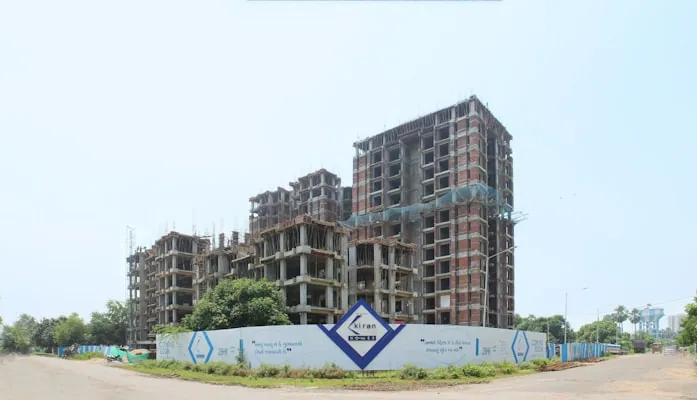
If a property is both non-standard construction and in proximity to pylons, masts, or HS2, the challenges compound. Each factor individually might be manageable; together they can significantly restrict the pool of willing lenders. The survey and the lender search need to be approached with extra care in these cases.
Selling a Property Near Infrastructure
If you currently own a property near pylons, masts, or HS2 and are having difficulty selling at a price that reflects what you paid, a cash buyer may be a practical route. Cash buying companies work without mortgage valuations and are less constrained by the infrastructure concerns that cause mortgage lenders to hesitate. Our guides to selling your house fast and how cash buying companies work explain the process and what to expect on price.
Our exclusive broker partner
Create Finance — for properties near pylons, masts, or HS2
Create Finance is authorised and regulated by the FCA — Unmortgageable is not. We earn a referral fee from Create Finance only if your mortgage completes through them. This never affects what you pay or what advice you receive.
Unmortgageable is not FCA-authorised. Create Finance is — verify them independently on the FCA Register. See our affiliate disclosure.
This is educational content, not financial advice. Your situation is unique — speak to a qualified mortgage broker before making any decisions.
Find out if the property is the problem
Quick check for the construction, lease, cladding, and title issues that get mortgage applications declined — before you spend on a survey.
Get startedRelated reading

Non-Standard Construction Mortgages: What Counts and Who Lends?
UK guide to mortgages on non-standard construction homes. Timber frame, concrete, PRC, thatched — which lenders accept what and what surveys you need.
Getting a Structural Survey in the UK: What to Expect
Level 2 vs Level 3 RICS surveys, when to instruct a structural engineer, costs, timelines, and how survey findings affect mortgage lending.

Specialist Mortgage Lenders UK: Who Are They?
Who are the specialist mortgage lenders in the UK? A comprehensive guide to lenders who help with bad credit, self-employment, and non-standard situations.

Mortgage on a Property in a Flood Risk Area
Can you get a UK mortgage on a property in a flood risk area? Yes, but insurance is key. Learn about Flood Re, Environment Agency data, and lender requirements.
Not sure about your mortgage options?
Find out your options — whether it's your circumstances or your property holding you back. Free, no judgement, no cold calls.
This page is educational content, not financial advice or a personal recommendation. Unmortgageable is not FCA-authorised. Any broker or lender we link to is separately regulated — verify them on the FCA Register before engaging. See our affiliate disclosure.