This is general information, not financial advice. Your circumstances are unique — always speak to a qualified mortgage broker before making financial decisions. This page may contain affiliate links. Affiliate disclosure · Terms
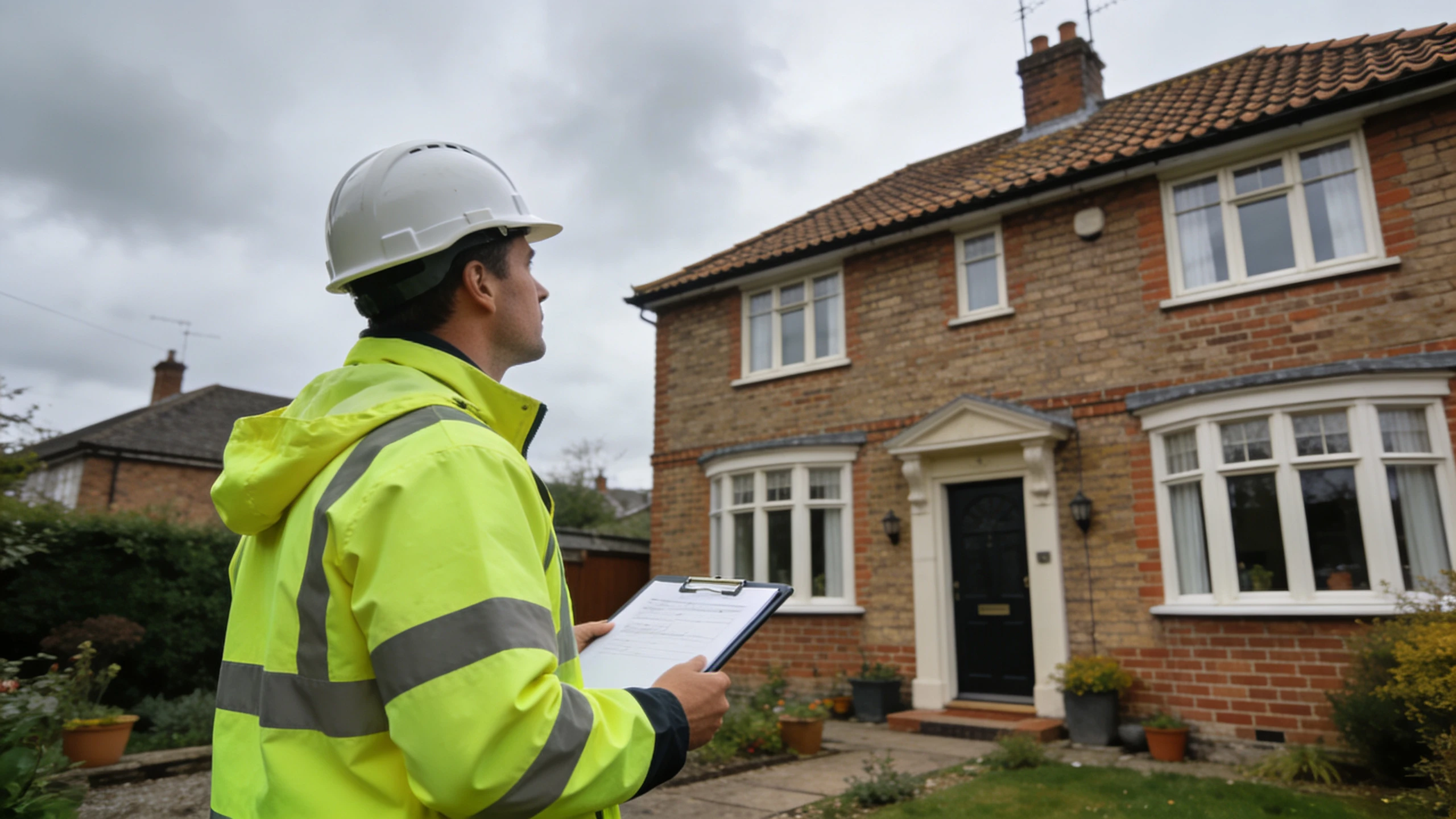
Buying a property is the largest financial decision most people ever make — yet a significant number of buyers skip a proper survey or rely solely on the mortgage valuation, which is designed for the lender's purposes and not yours. Understanding which type of survey you need, what it covers, and how findings affect your purchase is essential to making an informed decision.
The Difference Between a Valuation and a Survey
The mortgage lender's valuation is carried out by a RICS-registered valuer, but it exists to confirm the property is worth the loan amount — it is not a detailed inspection of the property's condition. The valuer may spend 20–30 minutes on site and will not check behind walls, under floors, or in roof spaces in any meaningful way.
You are paying for a valuation that protects the lender. You need a separate, independent survey that protects you.
Do not rely on your mortgage valuation
The mortgage valuation may not identify subsidence, damp, structural defects, or other significant issues. Buyers who rely on it and later discover serious problems have no recourse — the valuation was not commissioned on their behalf. Always instruct your own survey.
The Three RICS Survey Levels
RICS (the Royal Institution of Chartered Surveyors) introduced standardised survey levels in 2021 to make it easier for buyers to understand what they're getting.
RICS Level 1: Condition Report
A basic traffic-light condition report with no advice or valuation. This is the most limited option and is rarely used or recommended for property purchases. It gives an overview of condition ratings but little context or guidance. Only consider this for a brand-new property.
RICS Level 2: HomeBuyer Report
The most commonly purchased survey for residential properties. A Level 2 survey includes:
- Visual inspection of all accessible areas (the surveyor will not move furniture or lift floorboards)
- Condition ratings for all major elements (roof, walls, floors, services, etc.)
- Notes on any matters requiring urgent attention
- An optional market valuation (some surveyors include this, others offer it as an add-on)
- A reinstatement cost assessment for insurance purposes (sometimes included)
- Advice on what further investigations may be needed
Best suited for: Conventional properties (brick or stone construction, in reasonable condition, not significantly extended or altered, built after approximately 1930).
Not suitable for: Properties with obvious structural concerns, listed buildings, older properties requiring significant work, non-standard construction types, or complex extensions.
Cost: Typically £400–£700 for a standard property. Larger or more complex properties may cost more.
Time on site: Usually 2–4 hours.
Report delivery: Typically 3–5 working days after the inspection.
RICS Level 3: Building Survey (formerly Full Structural Survey)
A comprehensive investigation of the property's condition. A Level 3 survey includes:
- Thorough inspection of all accessible areas, including roof spaces, cellars, and sub-floor voids where accessible
- Assessment of construction methods and materials
- Description of defects and their implications
- Estimated costs of remediation (where the surveyor considers this appropriate)
- Identification of hidden or latent defects that may not be visible
- Advice on repair priorities (urgent, short-term, longer-term)
- Specific advice on non-standard materials or construction methods
Best suited for: Older properties (pre-1930s), listed buildings, properties in poor condition, non-standard construction, significantly extended or altered properties, properties where you're planning significant work, or simply where you want maximum information.
Cost: Typically £600–£1,500 for a residential property. Can be more for very large or complex properties.
Time on site: Usually 4–8 hours.
Report delivery: Typically 5–10 working days after the inspection.
When You Need a Structural Engineer Instead
A RICS survey and a structural engineer's report serve different purposes and are sometimes confused.
A RICS survey is a general assessment of the property's overall condition. A structural engineer's report is a specialist assessment of a specific structural issue — for example:
- Subsidence or suspected subsidence (cracks, movement)
- Roof structure concerns (sagging, distortion)
- Suspected removal of load-bearing walls
- Foundation concerns (in older properties, properties near trees)
- Structural assessment of non-standard construction types
- Proposed structural modifications (removing a wall, adding a loft conversion)
A Level 3 RICS surveyor may identify a potential structural concern and recommend you obtain a structural engineer's report — and then you commission the engineer separately.
Cost of a structural engineer's report: Typically £500–£1,000+ depending on the complexity and location.
You may need both — a Level 3 RICS survey for overall condition, and a structural engineer's report for a specific structural concern the surveyor has flagged.
How to Find a Surveyor
Use only RICS-registered surveyors. You can search the RICS Find a Surveyor directory at rics.org. Alternatively:
- Ask your mortgage broker or conveyancer for a recommendation (though check they are not receiving referral fees that might bias the recommendation)
- Ask friends or family who have recently bought property in the area
- Check Google reviews for local firms
Avoid panel surveyor firms that provide volume services for lenders — they exist to serve the lender's purposes. Find an independent, locally based surveyor who will carry out your inspection personally.
When contacting surveyors, ask:
- Which RICS survey level do you recommend for this specific property, and why?
- Will you personally carry out the inspection, or will it be passed to a colleague?
- How long will the report take to deliver?
- Does the Level 2 include a valuation, or is that an add-on?
- What happens if I need a structural engineer after reading the report — can you recommend someone?
What Surveyors Actually Check
During a Level 2 or Level 3 inspection, the surveyor will examine:
External: Roof covering (tiles, slates, felt), chimney stacks, guttering and downpipes, external walls (cracks, bulging, damp staining), windows and doors, damp-proof course, garage, outbuildings.
Internal: Ceilings and roof structure (from inspection hatch), walls and partitions (cracks, damp), floors (bounce, level, sub-floor condition where accessible), staircases, kitchen and bathroom condition, windows and doors.
Services: Visual assessment of boiler age and condition, electrical consumer unit (age and type), water supply and drainage, central heating radiators.
Grounds: Drainage (gullies, inspection chambers), trees near the property, retaining walls, boundary structures.
Surveyors do not test electrical systems, gas appliances, or plumbing — these require specialist inspections.
How Long Does It Take?
- Booking: Typically 1–2 weeks for an appointment (longer in busy markets)
- Site visit: Level 2: 2–4 hours. Level 3: 4–8 hours
- Report: Level 2: 3–5 working days. Level 3: 5–10 working days
Allow 3–4 weeks from instructing a surveyor to receiving your report in most cases.
How Survey Findings Affect Mortgageability
Certain survey findings will be reported to your mortgage lender by the valuation surveyor, which can affect their lending decision:
Issues that may cause lenders to hold funds, reduce the loan, or decline:
- Active subsidence or significant cracking indicating movement
- Major damp penetration or rising damp affecting structural elements
- Roof in urgent need of replacement
- Non-standard construction the lender will not accept
- Asbestos in deteriorating condition
- Japanese knotweed or other invasive species
Issues that typically don't affect lending directly (but matter to you):
- General maintenance backlog
- Kitchen and bathroom needing updating
- Older but functional boiler
- Single-glazed windows
- Minor damp in outbuildings
Your own independent survey and the lender's valuation are separate documents. Even if your survey reveals serious issues, your lender will only act on what their valuer reports. However, if you inform your lender of serious structural concerns after receiving your own survey, they may instruct a re-inspection.
Using Survey Results to Renegotiate
A survey that reveals significant defects is not just bad news — it is a negotiating tool. Once you have a clear understanding of remediation costs, you can:
- Request a price reduction — supported by surveyor estimates of repair costs
- Request that the seller carries out repairs before exchange — though sellers often prefer to reduce the price
- Ask for specific specialist inspections — damp survey, drainage survey, electrical survey — and use those findings further
- Walk away — if the findings are serious enough, this may be the right decision
Estate agents will sometimes advise sellers to push back on survey-based renegotiation. Stand firm if your position is well-evidenced. A 10–15% reduction on a property with significant structural issues is not unusual.
Get remediation estimates before renegotiating
Before approaching the vendor with a price reduction request, obtain at least two written quotes from specialist contractors. A vague claim that "the roof needs work" is easy to dismiss. Quotes totalling £18,000 for a roof replacement are not.
Cost Summary
| Survey Type | Typical Cost | Best For |
|---|---|---|
| RICS Level 1 (Condition Report) | £200–£350 | New-builds only |
| RICS Level 2 (HomeBuyer Report) | £400–£700 | Standard, reasonable condition |
| RICS Level 3 (Building Survey) | £600–£1,500 | Older, complex, or condition concerns |
| Structural Engineer Report | £500–£1,000+ | Specific structural issues |
| Damp and Timber Survey | £150–£400 | Where Level 2 flags concerns |
| Drainage Survey (CCTV) | £100–£400 | Older properties, pre-exchange |
| Electrical Installation Report | £150–£300 | Pre-1970s or concern flagged |
Where this leaves you
A proper survey is not an optional extra — it is essential protection on what will likely be the largest purchase of your life. For most conventional properties, a Level 2 HomeBuyer Report is a reasonable starting point. For older, larger, or non-standard properties, invest in a Level 3 Building Survey. If any structural concerns are flagged, commission a structural engineer's report before exchanging contracts.
The cost of a comprehensive survey is trivial compared to the cost of discovering serious structural problems after completion.
Our exclusive broker partner
Create Finance — for survey findings affecting mortgageability
Create Finance is authorised and regulated by the FCA — Unmortgageable is not. We earn a referral fee from Create Finance only if your mortgage completes through them. This never affects what you pay or what advice you receive.

Unmortgageable is not FCA-authorised. Create Finance is — verify them independently on the FCA Register. See our affiliate disclosure.
This is educational content, not financial advice. Your situation is unique — speak to qualified professionals before making any decisions.
Related reading

Mortgage Valuation vs Survey: What Each Covers
Mortgage valuation vs survey explained. What the lender's valuation covers, what it doesn't, and which survey you actually need.
Selling a Fire-Damaged Property in the UK
Fire damage doesn't mean you can't sell. Understand your options: insurance claims, as-is sales to cash buyers, auction routes, and realistic discount expectations.

Mortgage on a Property with Asbestos
Can you get a mortgage on a property with asbestos in the UK? In most cases yes — if the asbestos is managed properly. Here's what lenders look for, survey types, and remediation options.
Non-Standard Construction Mortgages: What Counts and Who Lends?
UK guide to mortgages on non-standard construction homes. Timber frame, concrete, PRC, thatched — which lenders accept what and what surveys you need.
Not sure about your mortgage options?
Find out your options — whether it's your circumstances or your property holding you back. Free, no judgement, no cold calls.
This page is educational content, not financial advice or a personal recommendation. Unmortgageable is not FCA-authorised. Any broker or lender we link to is separately regulated — verify them on the FCA Register before engaging. See our affiliate disclosure.