This is general information, not financial advice. Your circumstances are unique — always speak to a qualified mortgage broker before making financial decisions. This page may contain affiliate links. Affiliate disclosure · Terms
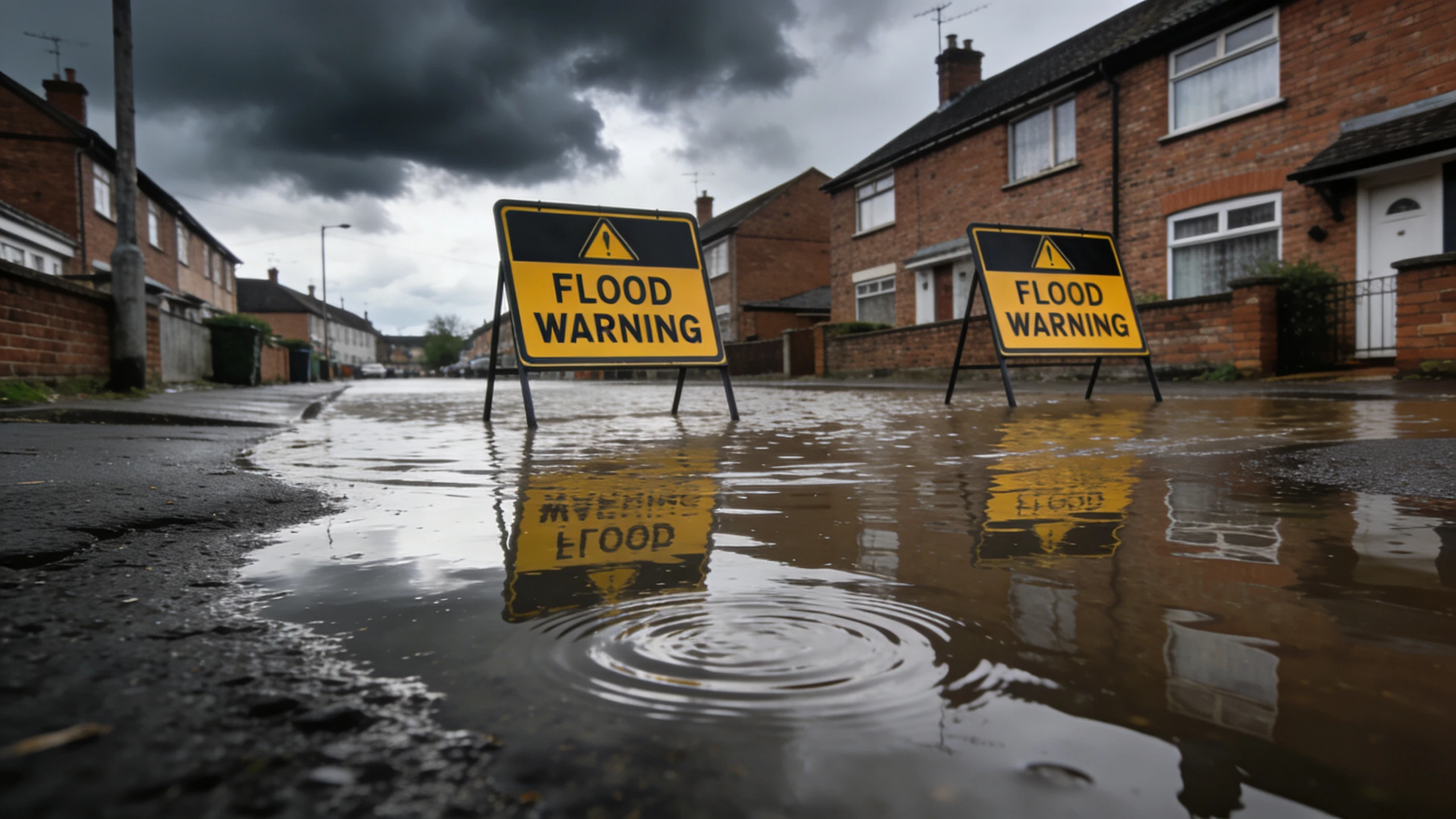
When a mortgage lender considers lending on a property in a flood risk area, the central question is not how likely the property is to flood — it is whether affordable buildings insurance can be obtained. Flood Re, the government-backed reinsurance scheme, has transformed the answer to that question for most pre-2009 homes in England, Scotland, and Wales.
The Problem Flood Re Was Created to Solve
Before Flood Re launched in April 2016, the insurance market was struggling with an increasing concentration of flood risk claims. Climate change was driving more frequent and severe flood events. Insurers were responding by either excluding flood cover from policies in high-risk areas or charging premiums that made coverage unaffordable — sometimes several thousand pounds per year for properties with a history of flooding.
Without affordable buildings insurance, mortgage lenders would not lend. A property that cannot be insured is a property the lender cannot protect as security. The consequence was creeping unmortgageability in flood-affected communities across Yorkshire, Cumbria, Somerset, parts of East Anglia, and coastal areas.
Flood Re was the solution negotiated between the government and the Association of British Insurers. The principle was reinsurance: insurers could pass the flood risk element of their policies to Flood Re at a fixed, capped price. In return, all UK home insurers pay a levy into the scheme — around £180 million per year — which funds the reinsurance pool.
How Flood Re Actually Works
Flood Re is not an insurer that homeowners interact with directly. Homeowners still buy their buildings insurance through the normal market — their usual insurer or a comparison site. The Flood Re mechanism operates behind the scenes:
-
Homeowner buys buildings insurance. The insurer assesses the property, including its flood risk.
-
Insurer passes flood risk to Flood Re. For eligible properties, the insurer can reinsure the flood risk element of the policy with Flood Re at a fixed premium based on the property's council tax band.
-
Flood Re charges a capped premium. This premium is set by council tax band, not by actual risk. A Band A property currently pays the lowest Flood Re premium; Band H pays the most.
-
Homeowner receives affordable flood cover. Because the insurer has reinsured at a known, affordable cost, they can offer the policy at a reasonable premium to the homeowner.
-
If the property floods, the insurer pays. The insurer handles the claim as normal. If the flood damage is severe, the insurer may make a recovery claim against the Flood Re pool.
The council tax band caps as of the most recent Flood Re review (indicative figures, subject to annual adjustment) are:
- Band A: Approximately £210 per year
- Band B: Approximately £262 per year
- Band C-D: Approximately £296-313 per year
- Band E-H: Rising to approximately £540-738 per year
These are the amounts the insurer pays to Flood Re — the premium the homeowner sees will be higher (it includes standard perils and the insurer's margin) but is kept affordable because the flood risk element is capped.
Who Qualifies for Flood Re
Eligible properties:
- Built before 1 January 2009
- Used as a domestic residence (not commercial or mixed use)
- Subject to council tax (Band A-H in England; equivalent bands in Scotland and Wales)
- In England, Scotland, or Wales (Northern Ireland is not covered)
Not eligible:
- Properties built after 1 January 2009
- Commercial properties
- Small businesses
- Leasehold properties in purpose-built blocks of flats where the freeholder arranges buildings insurance (the freeholder would need to access Flood Re through their insurer — availability varies)
- Properties in Band H in some circumstances (historically, though this has been reviewed)
- Properties used only as second homes or holiday lets in some circumstances
Checking eligibility
You cannot directly check whether a specific property can access Flood Re — it is arranged between insurers and the scheme without a public registry of eligible properties. The best approach is to get insurance quotes from multiple insurers and ask each one whether they can offer flood cover and whether they are using Flood Re for this property.
Why the 2009 Cut-Off Matters
The exclusion of properties built after 1 January 2009 is deliberate and important. The stated policy rationale is to avoid creating a moral hazard — if developers and buyers knew that flood insurance would always be affordable regardless of where they built, it could incentivise building in flood plains.
In practice, this means that:
Post-2009 new builds in flood risk areas have no Flood Re safety net. Developers building on flood plains after January 2009 are supposed to build to flood resilient standards — raised floor levels, flood-resistant construction, managed drainage. The new-build insurance is obtained on the open market without Flood Re backing.
If you are buying a post-2009 property in a flood risk area:
- Ask the developer or seller to confirm what flood insurance is available
- Get quotes from insurers before proceeding — if flood cover is unavailable or prohibitively expensive, the mortgage lender may decline
- Check the planning permission — it should include conditions about flood risk mitigation
- Review the developer's flood risk assessment submitted with the planning application
For buyers of pre-2009 homes, Flood Re makes mortgages possible. Without Flood Re, many of these properties would be uninsurable at any reasonable cost and therefore unmortgageable. Flood Re is directly responsible for maintaining the mortgageability of hundreds of thousands of UK properties.
Flood Re and Mortgage Lenders
The connection between Flood Re and mortgage lending is direct. Lenders require buildings insurance to be in place as a condition of the mortgage offer. Without adequate buildings insurance including flood cover, the lender cannot be confident their security is protected.
When a lender's surveyor flags a property as being in a flood risk area, or where the property has previously flooded, the solicitor will check whether buildings insurance including flood cover is available before the lender proceeds.
For pre-2009 properties where Flood Re applies:
- Most mainstream lenders will proceed if flood-inclusive insurance can be obtained at reasonable cost
- The lender does not need to know the specific insurer or whether Flood Re is being used — they need to see evidence of insurance
For post-2009 properties in flood risk areas:
- The availability of flood insurance at reasonable cost determines mortgageability
- If insurance is unavailable or very expensive, the property may be effectively unmortgageable
Our guide to mortgage on a flood risk property covers the broader picture of how lenders assess flood risk in detail.
The Build Back Better Initiative
Flood Re introduced the Build Back Better (BBB) element in 2022. This is an additional benefit available when a Flood Re-eligible property makes a flood damage insurance claim.
When processing a flood damage claim, the homeowner can request that their insurer installs flood resilience and resistance measures as part of the reinstatement work. The additional cost of these measures — up to £10,000 per claim — is covered by the insurer and reimbursed through the Flood Re scheme.
Eligible measures include:
- Automatic flood gates or barriers
- Non-return valves on drainage
- Raised electrical sockets and consumer units
- Water-resistant internal finishes (tile floors, lime plaster)
- Raised boilers and appliances
- Improved external drainage
The aim is that properties leave a flood event in a better condition than they entered it — more resistant or resilient to the next flood.
For mortgage lenders and valuers, a property with documented flood resilience measures is viewed more favourably than one without. Evidence that BBB measures have been installed after a flood event can counteract some of the negative valuation impact of a flooding history.
The 2039 End Date: What It Means for Buyers Now
Flood Re is explicitly designed as a transitional scheme. The 2039 end date is not a vague future concern — it is a structural feature of the scheme. The intention is that by 2039:
- UK flood defences will have improved significantly, reducing risk
- Building standards and resilience measures will have raised the quality of the at-risk housing stock
- The insurance market will be ready to price flood risk more accurately and acceptably
Whether these aims are achieved by 2039 is genuinely uncertain. Climate projections suggest flood risk will increase rather than decrease in many parts of the UK. Flood defence investment has been uneven.
For buyers now:
- If you are buying a pre-2009 flood-risk property and plan to sell before 2039, the mortgage and insurance picture should remain manageable
- If you are buying with a 25-year mortgage completing in 2051, you need to consider what the insurance market looks like post-2039
- Properties in the highest risk areas — those that would be essentially uninsurable without Flood Re — face the greatest uncertainty post-2039
- This risk is increasingly priced into the market in some areas; the discount for high flood-risk properties in well-known areas partly reflects the 2039 uncertainty
Climate change and Flood Re's future
Climate projections from the Committee on Climate Change and others suggest that by the 2050s, properties currently in the 1-in-100 flood risk zone could be in the 1-in-30 zone. This has implications both for the scale of claims the Flood Re pool would face and for the post-2039 transition. There is active policy discussion about how Flood Re should evolve — but no certainty.
Flood Re in Scotland and Wales
Flood Re operates in Scotland and Wales as well as England, under the same eligibility criteria (pre-2009 domestic properties with council tax bands). The scheme is funded and managed at a UK level (excluding Northern Ireland, which has separate arrangements).
In Scotland, SEPA (Scottish Environment Protection Agency) provides flood risk information. In Wales, Natural Resources Wales provides equivalent mapping. In both cases, the same principle applies: if a property in a high-risk area can access buildings insurance with flood cover (whether through Flood Re or otherwise), a mortgage should be available.
What Buyers Should Do Before Proceeding on a Flood-Risk Property
-
Check the flood risk level. Use the Environment Agency's free online checker for England, NRW for Wales, or SEPA for Scotland.
-
Confirm Flood Re eligibility. If the property was built before January 2009, it is likely eligible. Get insurance quotes specifically confirming flood cover is included.
-
Get insurance quotes before exchange. Do not assume insurance will be available at a reasonable cost — confirm it. If it is not, the mortgage may fall through. Get quotes from at least three insurers.
-
Ask about flooding history. Sellers must disclose flooding on the TA6 form. Past claims affect future premiums and may affect Flood Re availability in some circumstances.
-
Assess the post-2039 picture. If this is a long-term property and you are in a high-risk zone, factor the 2039 uncertainty into your decision.
-
Consider Build Back Better. If the property has previously flooded, ask whether flood resilience measures have been installed and whether these were done through BBB.

When Flood Re Is Not Enough
There are circumstances where even Flood Re's availability does not make a flood-risk property easily mortgageable:
Properties that have flooded multiple times. Insurers may decline to offer cover even under Flood Re if the claims history is severe. Flood Re protects against pricing out; it does not compel insurers to cover every property.
Coastal erosion combined with flood risk. Properties at risk of erosion — land physically falling into the sea — are not helped by Flood Re, which covers flood insurance, not cliff erosion. A property likely to disappear within the mortgage term is unmortgageable regardless of insurance availability.
Very recent new builds in flood plains. Post-2009 exclusion from Flood Re plus the uncertainty of open-market flood insurance makes some new-build flood-zone properties difficult to insure and therefore difficult to mortgage.
In these cases, specialist mortgage lenders who take a case-by-case underwriting view may be able to help where mainstream lenders decline.
Our exclusive broker partner
Create Finance — for flood-risk properties and Flood Re insurance questions
Create Finance is authorised and regulated by the FCA — Unmortgageable is not. We earn a referral fee from Create Finance only if your mortgage completes through them. This never affects what you pay or what advice you receive.

Unmortgageable is not FCA-authorised. Create Finance is — verify them independently on the FCA Register. See our affiliate disclosure.
This is educational content, not financial advice. Your situation is unique — speak to a qualified mortgage broker and an insurance specialist before making any decisions.
Related reading
Mortgage on a Property in a Flood Risk Area
Can you get a UK mortgage on a property in a flood risk area? Yes, but insurance is key. Learn about Flood Re, Environment Agency data, and lender requirements.
Non-Standard Construction Mortgages: What Counts and Who Lends?
UK guide to mortgages on non-standard construction homes. Timber frame, concrete, PRC, thatched — which lenders accept what and what surveys you need.

Specialist Mortgage Lenders UK: Who Are They?
Who are the specialist mortgage lenders in the UK? A comprehensive guide to lenders who help with bad credit, self-employment, and non-standard situations.
Getting a Structural Survey in the UK: What to Expect
Level 2 vs Level 3 RICS surveys, when to instruct a structural engineer, costs, timelines, and how survey findings affect mortgage lending.
Not sure about your mortgage options?
Find out your options — whether it's your circumstances or your property holding you back. Free, no judgement, no cold calls.
This page is educational content, not financial advice or a personal recommendation. Unmortgageable is not FCA-authorised. Any broker or lender we link to is separately regulated — verify them on the FCA Register before engaging. See our affiliate disclosure.