This is general information, not financial advice. Your circumstances are unique — always speak to a qualified mortgage broker before making financial decisions. This page may contain affiliate links. Affiliate disclosure · Terms
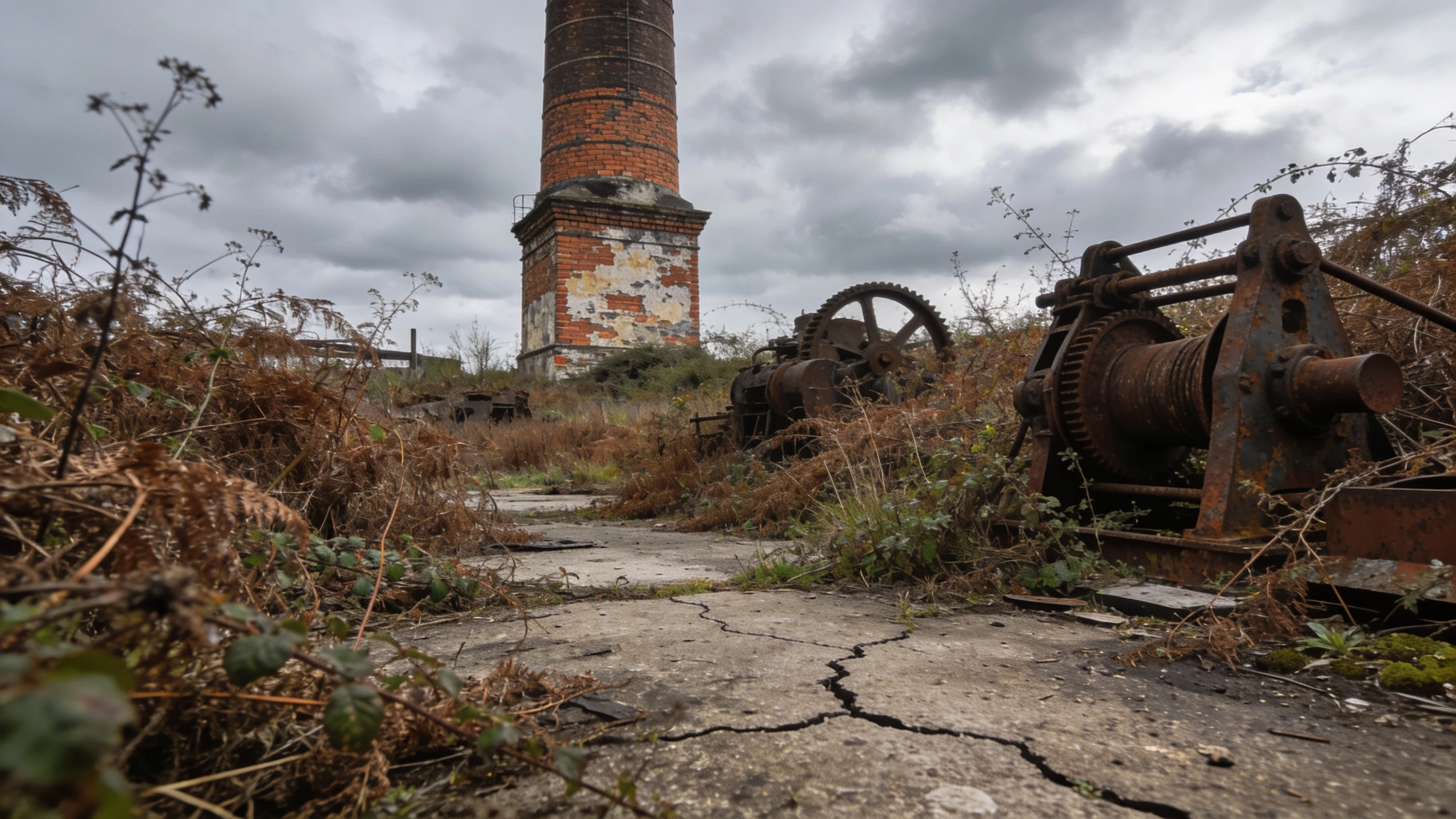
When you buy a property, your solicitor will commission a range of searches. One of these is an environmental or contaminated land search, and when it returns a flag, the conveyancing process can slow significantly. For many buyers, this is the first they have heard of contaminated land — and the terminology, the assessment process, and the mortgage implications can all be unfamiliar.
Why Land Becomes Contaminated
Contaminated land in the UK is primarily a legacy of industrialisation. Decades of manufacturing, chemical production, fuel storage, and waste disposal have left pockets of contaminated ground across the country — often in areas that have since been redeveloped for residential use.
Common contamination sources include:
Former petrol stations and fuel depots: Leaking underground storage tanks release petroleum hydrocarbons into the ground. BTEX compounds (benzene, toluene, ethylbenzene, xylene) and MTBE (a fuel additive) are particularly mobile in soil and groundwater. Former petrol station sites are among the most commonly flagged in residential searches.
Former gas works (manufactured gas plants): Victorian and Edwardian gasworks produced coal tar, benzene, polycyclic aromatic hydrocarbons (PAHs), phenols, and cyanide compounds. Many have been redeveloped, with extensive remediation, but some contamination may remain in surrounding land.
Industrial sites: Metal processing, tanning, printing, chemical manufacture — all can leave legacy metals, solvents, or chemical residues. Heavy metals (lead, arsenic, cadmium, chromium) in soil are a common finding.
Landfill sites: Former landfill can produce methane, carbon dioxide, and other gases as organic material decomposes. Leachate — the liquid produced as waste breaks down — can contaminate groundwater. Properties near or on former landfill face both gas and liquid contamination risks.
Made ground: Areas where material has been deposited — demolished buildings, waste, excavation spoil — are common in urban areas. Made ground can contain a range of materials including asbestos, bricks with lead paint, and other construction waste.
Naturally occurring radon: Radon gas is a geological issue, not an industrial one, but it is assessed within the contaminated land framework. It seeps from granite and uranium-bearing rocks.
The Environmental Search Process
Stage 1: The Conveyancing Search
Your solicitor will commission an environmental search as part of the standard conveyancing searches. The major providers — Groundsure, Landmark, SiteSolutions — produce reports that check:
- Historical land use maps (Ordnance Survey maps going back to the 1800s)
- Local authority contaminated land register (under Part IIA of the Environmental Protection Act 1990)
- Environment Agency records (consented waste sites, discharge consents, remediation notices)
- Radon gas risk mapping
- Landfill locations
- Industrial legacy databases
The search produces a risk rating — typically Green (low risk), Amber (potential risk), or Red (significant risk). An Amber or Red rating does not mean the land is definitely contaminated. It means there is a historical land use that could have caused contamination, and further assessment is needed.
Stage 2: Phase 1 Desktop Study
If the conveyancing search returns an amber or red rating, the next step is usually a Phase 1 Desktop Study. This is a more detailed desk-based investigation:
- Review of historical maps (larger scale, more detailed)
- Site walkover inspection
- Review of geological and hydrogeological conditions
- Assessment of migration pathways (how contamination could move through the ground)
- Identification of "receptors" (people, controlled waters, ecosystems that could be affected)
The Phase 1 produces a Conceptual Site Model — a picture of what contamination might be present, how it might behave, and who or what it might affect. It also produces a risk rating and a recommendation for whether Phase 2 investigation is needed.
Cost of Phase 1: Typically £1,000-3,000 depending on site complexity and the environmental consultant used.
Stage 3: Phase 2 Intrusive Investigation
If Phase 1 identifies a credible risk, a Phase 2 Intrusive Investigation confirms whether contamination is actually present and at what levels.
Phase 2 involves:
- Trial pits or boreholes drilled across the site
- Soil and groundwater samples taken and analysed in an accredited laboratory
- Gas monitoring if landfill or made ground is present
- Comparison of results against appropriate assessment criteria (soil guideline values from the Environment Agency)
Phase 2 can confirm either that contamination is not present at levels of concern (the search flagged a risk that turns out not to have materialised) or that contamination is present and action is required.
Cost of Phase 2: Typically £3,000-15,000 depending on site size, number of boreholes, and number of substances tested.
Who pays for investigation?
In a purchase transaction, the buyer typically pays for investigations, though it is possible to negotiate with the seller — particularly if the contamination is a legacy issue the seller should have known about. If the contamination is severe, the seller may be unwilling to complete without addressing it first.
Radon: The Natural Contamination Risk
Radon is different from industrial contamination but is assessed within the same framework and can affect mortgageability and insurance.
Radon is a naturally occurring radioactive gas — the decay product of uranium in the earth's crust. In well-ventilated outdoor spaces, radon disperses harmlessly. But in enclosed spaces like buildings, particularly with solid floors or basements in geological areas where radon is prevalent, concentrations can build to levels that present a significant lung cancer risk with long-term exposure.
Affected areas in the UK include:
- Cornwall and Devon (particularly granite areas)
- Northamptonshire and parts of the East Midlands
- Derbyshire and parts of the Peak District
- Parts of Wales
- Aberdeenshire in Scotland
The UK Health Security Agency (UKHSA) produces radon mapping, and properties in the highest-risk areas (where more than 10% of properties exceed the action level of 200 Bq/m³) may need radon protective measures. In the highest risk zones (over 30% of properties above action level), mortgage lenders and insurers may require evidence that the property has been tested.
Remediation for radon is typically one of:
- A radon sump: a passive or active system drawing air from below the floor and venting it outside
- Improved underfloor ventilation
- Radon barriers incorporated into the floor construction
Costs range from around £500-1,500 for a passive sump to £1,500-3,000 for an active (fan-assisted) system.
Remediation Options
Where Phase 2 confirms contamination, remediation (cleaning up or containing the contamination) may be required before a mortgage is possible. Options include:
Excavation and disposal: Contaminated soil is physically removed from the site and taken to a licensed disposal facility. This is thorough but expensive — costs can run from tens of thousands to hundreds of thousands of pounds for significant contamination. Appropriate for relatively shallow, well-defined contamination.
Bioremediation: Microorganisms are used to break down organic contaminants (hydrocarbons, solvents) in situ or in excavated soil. Less disruptive than excavation but slower and only effective for biodegradable compounds.
Pump and treat (for groundwater): Contaminated groundwater is pumped to the surface and treated. Used where contamination has migrated into the water table.
Containment: Instead of removing contamination, an engineered barrier (a cap, liner, or cutoff wall) is installed to prevent migration. This is cheaper than full excavation but requires ongoing monitoring and may affect future development potential.
Monitored natural attenuation: In some cases, natural processes can break down contamination over time without active intervention. Regulators sometimes accept this for low-risk situations.
Insurance Options
Where some residual contamination risk remains after investigation and remediation, or where investigation has shown the risk to be low but not absent, environmental indemnity insurance may be available.
This is specialist insurance that covers:
- The cost of remediation if contamination is discovered post-purchase
- Third-party liability if contamination migrates and affects neighbouring land or groundwater
- Legal costs associated with contaminated land notices
Indemnity insurance for contaminated land is more complex and expensive than standard legal indemnity products. Premiums depend heavily on the nature of the historical use, Phase 1 and Phase 2 findings, and the degree of uncertainty remaining.
Some lenders will proceed with a contaminated land property once Phase 2 has been completed, the risk is assessed as low, and appropriate indemnity insurance is in place. Others will not. A specialist mortgage lender may be more pragmatic than a mainstream bank.
Mortgage Lender Positions
There is no single industry-wide policy on contaminated land mortgages. In practice:
Most mainstream lenders (Halifax, Nationwide, NatWest, Santander): Will decline if the environmental search returns an amber or red rating without a completed Phase 2 report showing no significant contamination. They rely on the solicitor's report and the valuer's report — if either raises a contaminated land concern, the application stalls.
After successful remediation: Mainstream lenders may proceed if Phase 2 has been completed and confirms either no contamination or successful remediation, and if the solicitor is satisfied that the Environmental Protection Act 1990 Part IIA liability has been addressed.
Specialist lenders: May consider properties where Phase 1 has flagged a risk but Phase 2 has not yet been completed, particularly for experienced investors or developers who understand the risk. Lending is typically at lower LTV and higher rates to reflect the additional risk.
What lenders will not generally do: Proceed where there is known, unaddressed contamination at levels of concern, regardless of the size of the deposit offered.
The Environmental Protection Act 1990 — Liability Implications
Part IIA of the Environmental Protection Act 1990 creates a statutory regime for contaminated land. Local authorities have a duty to inspect their areas and designate contaminated land where it presents a significant possibility of significant harm or pollution of controlled waters.
Once land is designated, the local authority serves a remediation notice on the "appropriate person" — typically the person who caused or knowingly permitted the contamination (the "Class A" person) or, if they cannot be found, the current owner or occupier (the "Class B" person).
This is why contaminated land searches check the local authority register: if a property is already designated under Part IIA, or is being investigated, the buyer faces potential liability for remediation costs. This is a significant financial risk — remediation can cost hundreds of thousands of pounds — and lenders are acutely aware of it.
Non-Standard Construction Combined with Contamination
Properties on former industrial sites or made ground often have additional structural issues — unusual foundations, filled basements, or unconventional construction methods used to address ground conditions. If a property is both on potentially contaminated land and of non-standard construction, the challenges compound. The structural survey becomes even more critical, and the mortgage market narrows further.
Completed on a property, then environmental issues discovered?
If you complete a purchase and subsequently discover contaminated land issues that were not disclosed or properly investigated, you may have claims against the seller (if they concealed known issues), your solicitor (if searches were inadequate), or your surveyor (if the valuation should have flagged the issue). Seek specialist legal advice promptly.
Practical Steps for Buyers
-
Do not panic at an amber or red environmental search. It means further investigation is needed, not that the property is definitely contaminated or unmortgageable.
-
Commission a Phase 1 quickly. Do not wait for the full conveyancing process to advance before getting a Phase 1 done. If the Phase 1 suggests a serious risk, you want to know before you have spent money on surveys, searches, and legal fees.
-
Get costs for Phase 2 and any remediation before exchange. If Phase 1 identifies a significant risk, understand the likely cost of Phase 2 and potential remediation. Factor these into your price negotiation.
-
Negotiate with the seller. If contamination is a legacy issue from the property's historical use, consider asking the seller to reduce the price to reflect investigation and remediation costs, or to contribute to investigation costs.
-
Check radon risk. If the property is in a radon-affected area, check the UKHSA's radon atlas and consider commissioning a radon test (around £30-50 for a DIY kit, or more for a professional test). A radon sump is not a major obstacle.
-
Get specialist advice. Environmental liability is a complex legal area. Your conveyancing solicitor may not have deep expertise — consider engaging a firm with an environmental law department for any significant contamination concern.
When Contamination Makes a Property Genuinely Difficult to Sell
In some cases — particularly former heavy industrial sites, petrol station forecourts, or landfill-adjacent properties — the combination of remediation costs, liability risk, and lender hesitancy can make conventional sale very difficult. Our guide to selling your house fast covers the options for owners who need to exit, including cash buyers who specialise in problem properties.
Our exclusive broker partner
Create Finance — for properties with contaminated land concerns
Create Finance is authorised and regulated by the FCA — Unmortgageable is not. We earn a referral fee from Create Finance only if your mortgage completes through them. This never affects what you pay or what advice you receive.

Unmortgageable is not FCA-authorised. Create Finance is — verify them independently on the FCA Register. See our affiliate disclosure.
This is educational content, not financial advice. Your situation is unique — speak to a qualified mortgage broker and an environmental law specialist before making any decisions.
Find out if the property is the problem
Quick check for the construction, lease, cladding, and title issues that get mortgage applications declined — before you spend on a survey.
Get startedRelated reading
Mortgage on a Property in a Flood Risk Area
Can you get a UK mortgage on a property in a flood risk area? Yes, but insurance is key. Learn about Flood Re, Environment Agency data, and lender requirements.
Getting a Structural Survey in the UK: What to Expect
Level 2 vs Level 3 RICS surveys, when to instruct a structural engineer, costs, timelines, and how survey findings affect mortgage lending.
Non-Standard Construction Mortgages: What Counts and Who Lends?
UK guide to mortgages on non-standard construction homes. Timber frame, concrete, PRC, thatched — which lenders accept what and what surveys you need.

Specialist Mortgage Lenders UK: Who Are They?
Who are the specialist mortgage lenders in the UK? A comprehensive guide to lenders who help with bad credit, self-employment, and non-standard situations.
Not sure about your mortgage options?
Find out your options — whether it's your circumstances or your property holding you back. Free, no judgement, no cold calls.
This page is educational content, not financial advice or a personal recommendation. Unmortgageable is not FCA-authorised. Any broker or lender we link to is separately regulated — verify them on the FCA Register before engaging. See our affiliate disclosure.