This is general information, not financial advice. Your circumstances are unique — always speak to a qualified mortgage broker before making financial decisions. This page may contain affiliate links. Affiliate disclosure · Terms
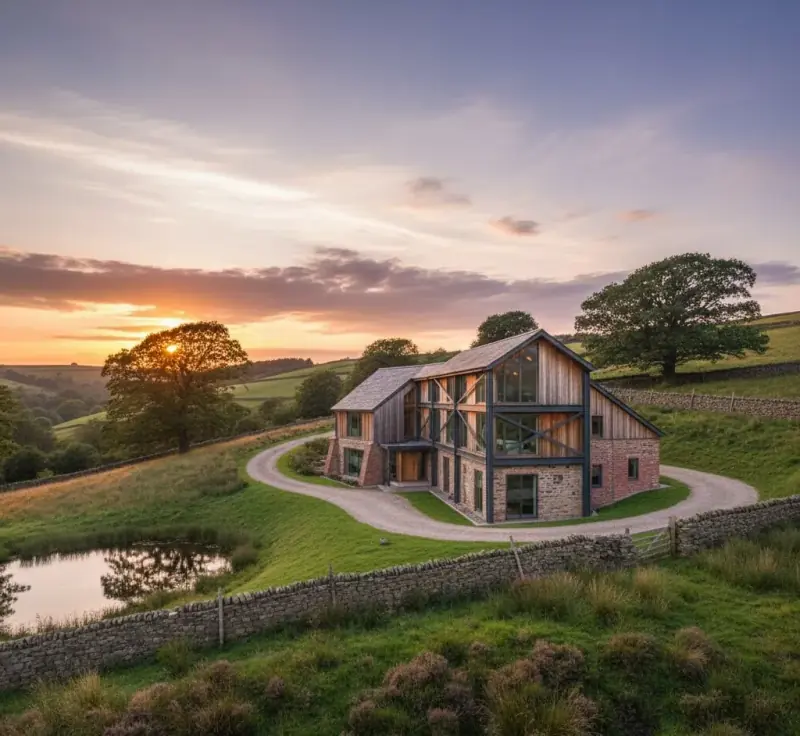
Steel frame houses occupy an interesting space in the UK mortgage market. Modern steel frame construction is well-regarded and widely accepted. Older steel frame homes — particularly post-war BISF houses and similar types — face more scrutiny as non-standard construction. The difference matters enormously for your mortgage.
Types of Steel Frame in the UK
Modern Steel Frame
Modern steel frame construction uses galvanised or treated steel sections that are designed to resist corrosion. These buildings meet current Building Regulations and are used in both residential and commercial construction. Many modern apartment blocks and some houses use steel frame.
Mortgage availability: Good. Most mainstream lenders accept modern steel frame construction.
BISF Houses (British Iron and Steel Federation)
Built between 1946 and 1955 as part of the post-war housing drive, BISF houses have a distinctive appearance — steel frame with steel-clad upper storeys (often with a pebbledash render) and brick or rendered ground floors.
Approximately 36,000 BISF houses were built across the UK. They are found on estates in many towns and cities, particularly where there was post-war housing need.
Mortgage availability: Limited. BISF houses are classed as non-standard construction, and many mainstream lenders will not accept them.
Other Post-War Steel Frame Types
Several other post-war construction systems used steel frames, including:
- Trusteel — steel frame with various cladding types
- Hills — steel and concrete hybrid
- Unity — steel frame with concrete panels
Each has its own characteristics and mortgage implications.
Identifying the construction type
Steel frame homes are not always obviously steel frame from the outside. Many have brick cladding or render that disguises the underlying structure. The construction type may not be apparent until a surveyor inspects or the property documents reveal it. Always ask the seller about the construction type before committing.
Why Lenders Are Cautious About Older Steel Frame
Corrosion
The primary concern is corrosion of the steel frame. If the protective coating deteriorates or moisture gets in, the steel can rust, weakening the structure. In severe cases, the frame can lose structural integrity.
Cold Bridging
Steel is an excellent conductor of heat (and cold). Without proper insulation, steel frame houses can suffer from cold bridging, leading to condensation, damp, and associated problems.
Insulation
Many post-war steel frame houses were built with minimal insulation by modern standards. Upgrading insulation can be difficult without removing cladding panels, and the thermal performance of these homes is often poor.
Resale Market
Because fewer lenders will mortgage older steel frame homes, the pool of potential buyers is smaller. This affects property values and makes lenders more cautious about their security.
Getting a Mortgage on a BISF or Older Steel Frame Home
Step 1: Structural Survey
A structural engineer's report is essential. This should assess:
- The condition of the steel frame (is there corrosion?)
- The condition of cladding and render
- Insulation and condensation issues
- Any previous repairs or refurbishment
- The remaining useful life of the structure
Step 2: PRC Certificate (If Applicable)
Some steel frame homes have been repaired under the PRC (Prefabricated Reinforced Concrete) scheme or similar programmes. If the property has a PRC certificate confirming structural repair, this significantly improves mortgage prospects.
Step 3: Find a Willing Lender
Lender appetite for steel frame varies significantly by type and condition — use our construction lender checker to see which lenders currently accept your specific property.
Lenders who may consider older steel frame properties include:
- Ecology Building Society — experienced with non-standard construction
- Newbury Building Society — takes an individual approach
- Buckinghamshire Building Society — flexible on non-standard types
- Some specialist lenders — with appropriate survey evidence
- Accord Mortgages — more flexible than many mainstream lenders
Most high street lenders will decline unremediated BISF and similar properties.
Remediated vs unremediated
If an older steel frame home has been professionally remediated (the frame protected, new cladding installed, insulation upgraded), it becomes significantly more mortgageable. A PRC certificate or equivalent documentation of the remediation work is crucial. Some local authorities ran remediation programmes for council-owned steel frame homes — check whether the property benefited.
Surveys and Reports Needed
For modern steel frame: A standard mortgage valuation is usually sufficient.
For older steel frame (BISF, etc.):
- Structural engineer's report: £500-1,500
- PRC certificate (if remediated)
- Full Building Survey: £600-1,200
- Damp and condensation assessment: May be included in the building survey
- Energy assessment: Useful for understanding running costs
Typical Extra Costs
For Modern Steel Frame
Minimal extra costs. Standard mortgage products and insurance should be available.
For Older Steel Frame
- Higher deposit: 20-25% typically required
- Higher interest rates: Specialist lenders may charge premium rates
- Structural survey: £500-1,500
- Remediation costs: If the property has not been remediated, this can cost £15,000-40,000+
- Insurance: May cost more; specialist insurers may be needed
- Energy costs: Often higher due to poor insulation (unless remediated)
Remediation: What Is Involved?
Full remediation of a BISF or similar steel frame home typically involves:
- Removing the external cladding
- Inspecting and treating the steel frame
- Installing modern insulation
- Fitting new external cladding (often brick or render)
- Upgrading windows and doors
- Addressing any structural issues found
The result is a home that looks and performs like a modern property, with the added benefit of the steel frame's inherent strength. Remediated BISF homes are accepted by a wider range of lenders.
Practical Advice
- Identify the exact construction type before making an offer — ask the seller, check the property deeds, and speak to the local council
- Get a structural survey from an engineer experienced with steel frame construction
- Check for remediation — has the property been refurbished? Is there a certificate?
- Factor in energy costs — older steel frame homes can be expensive to heat
- Negotiate the price — the limited mortgage market means fewer competing buyers, which gives you negotiating power
- Talk to a specialist broker — they will know which lenders are currently accepting steel frame and what evidence is required
- Consider remediation costs — if the property is unremediated, factor the cost of remediation into your budget
Insurance Considerations

Insuring a steel frame property involves specific considerations that differ from standard brick-built homes:
Modern Steel Frame
Modern steel frame houses are generally insured by mainstream providers without any issues or premium loading. The construction is well-understood and meets current Building Regulations. You do not need to seek specialist cover.
Older Steel Frame (BISF, Trusteel, etc.)
Insuring an unremediated older steel frame home can be challenging:
- Some mainstream insurers will decline cover on unremediated BISF and similar properties
- Specialist insurers such as Adrian Flux, HomeProtect, and some Lloyd's of London syndicates will cover non-standard construction, typically at a premium of 20-50% above standard rates
- Remediated properties with a PRC certificate or equivalent documentation are accepted by most mainstream insurers, though premiums may still be slightly elevated
- NFU Mutual has experience with rural and non-standard properties and may offer competitive terms
Rebuild Cost
Getting the rebuild cost right is essential. An unremediated steel frame home cannot be rebuilt in its original form — the rebuild would use modern methods. However, the rebuild cost assessment should reflect the actual cost of reconstructing the property, including any specialist access or demolition requirements. A standard online rebuild calculator is unlikely to be accurate for these properties.
Key Insurance Points
- Disclose the construction type fully when applying for insurance — failing to do so could invalidate a claim
- If the property has been remediated, provide the insurer with details of the work carried out
- Check whether subsidence cover is included — steel frame homes with shallow foundations can be susceptible to ground movement
- Review the policy annually to ensure the sum insured remains adequate
Regional Prevalence
Steel frame homes, particularly BISF houses, are not evenly distributed across the UK:
The Midlands
Birmingham, Wolverhampton, Coventry, and surrounding towns have significant numbers of BISF and other steel frame homes. The post-war housing need in the industrial Midlands was acute, and steel was available from local manufacturers. Local surveyors and building societies in the region are typically experienced with these properties.
The North of England
Sheffield, Leeds, Manchester, and many northern towns have BISF estates. The steel industry's proximity to these areas made steel frame construction a natural choice. Some northern building societies have particular experience with these properties.
South Wales
The Valleys and parts of South Wales have concentrations of steel frame homes, often built as council housing for mining communities. Welsh local authorities have experience with remediation programmes for these properties.
Scotland
Scotland has its own stock of steel frame homes, including some BISF estates in the Central Belt. The Scottish housing market has its own dynamics, and local Scottish lenders are typically familiar with these properties.
South East England
While less common than in the Midlands and North, BISF homes exist in parts of the South East, often on specific estates. In these areas, they may be less familiar to local surveyors and lenders, which can create additional challenges.
Rural Areas
Some steel frame homes were built in rural areas as agricultural workers' housing. These can be particularly challenging because the combination of non-standard construction and a rural location can narrow the lender pool significantly.
What the Valuer Looks For
When a surveyor values a steel frame property for mortgage purposes, they conduct a specific assessment:
Construction Type Identification
The surveyor identifies the exact construction system. BISF homes have distinctive characteristics — a steel-clad upper storey (often with pebbledash render), a rendered or brick ground floor, and a shallow-pitched roof. Other steel frame types have their own identifying features. The surveyor confirms the type and reports it to the lender.
Frame Condition Assessment
The surveyor looks for external signs of steel frame deterioration:
- Rust staining on the external walls, particularly at the junction between the ground floor and upper storey
- Bulging or bowing of external cladding panels, which can indicate frame corrosion beneath
- Cracking in render or cladding at panel joints
- Water ingress — any signs that moisture is penetrating to the steel frame
- Movement at window and door openings, which can suggest frame distortion
Internal Indicators
Inside the property, the surveyor checks:
- Condensation and damp — cold bridging through the steel frame can cause condensation
- Signs of previous remediation — internal lining, insulation upgrades, new plastering
- Thermal imaging (if used) — can reveal cold spots where insulation is missing or the frame is exposed
Documentation Review
The surveyor reviews any available documentation:
- PRC certificate (if remediated)
- Structural engineer's reports
- Records of any repair or improvement works
- Local authority records relating to the property's construction and any remediation programmes
Before-and-After Scenarios
Scenario 1: BISF House, Unremediated
A BISF house in Sheffield, original condition with steel-clad upper storey and no remediation. The frame shows some surface corrosion but no structural compromise. Result: Declined by mainstream lenders. Ecology Building Society or a specialist lender may consider with 25% deposit and a detailed structural report. Valued at approximately 40% below comparable brick-built properties.
Scenario 2: BISF House, Fully Remediated
The same BISF house after full remediation — frame treated, new brick outer skin, insulation upgraded, PRC certificate issued. Result: Accepted by most mainstream lenders with 10-15% deposit. Valued at 85-95% of comparable brick-built properties. Standard insurance available.
Scenario 3: Modern Steel Frame
A 2015-built detached house with modern galvanised steel frame and brick outer skin, covered by NHBC warranty. Result: Accepted by all mainstream lenders with no restrictions. Standard deposit requirements. Standard insurance. The steel frame is a non-issue for mortgage purposes.
Scenario 4: Trusteel with Partial Improvement
A Trusteel house where the owner has upgraded the insulation and installed new windows but has not undertaken formal frame remediation. No PRC certificate. Result: Still classified as unremediated non-standard construction by lenders. The improvements help the property's comfort and energy efficiency but do not change its mortgage status. A specialist lender or cash purchase is still needed.
The Value Opportunity
Older steel frame homes are often priced significantly below brick-built equivalents in the same area. If you can secure a mortgage (or buy with cash and remediate), the value uplift from remediation can be substantial. A BISF home bought for £100,000 and remediated for £30,000 might be worth £160,000+ after the work — though these figures vary widely by location.
If you can't find a lender for steel-frame construction, selling directly for cash may be the fastest route. SellTo offers free cash valuations with no fees to the seller.(affiliate)
Our exclusive broker partner
Create Finance — for non-standard construction
Create Finance is authorised and regulated by the FCA — Unmortgageable is not. We earn a referral fee from Create Finance only if your mortgage completes through them. This never affects what you pay or what advice you receive.

Unmortgageable is not FCA-authorised. Create Finance is — verify them independently on the FCA Register. See our affiliate disclosure.
This is educational content, not financial advice. Your situation is unique — speak to a qualified mortgage broker before making any decisions.
Find out if the property is the problem
Quick check for the construction, lease, cladding, and title issues that get mortgage applications declined — before you spend on a survey.
Get startedRelated reading
Timber Frame House Mortgage: Who Lends?
Getting a UK mortgage on a timber frame house. Modern vs traditional timber frame, which lenders accept them, and what surveys you need.
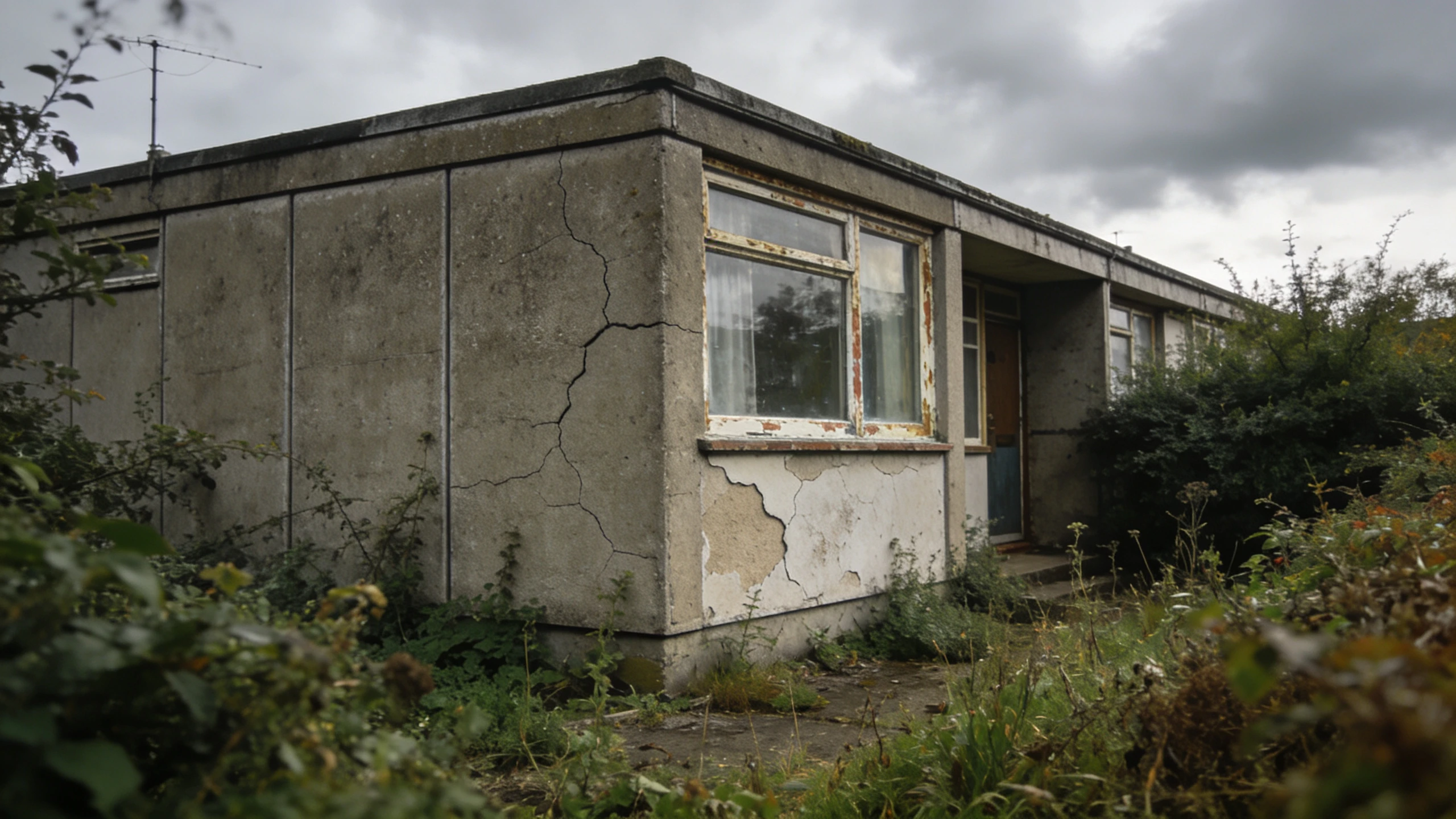
Concrete Construction Mortgages (Wimpey No-Fines, Airey, etc.)
Getting a UK mortgage on a concrete construction home — Wimpey No-Fines, Airey, Reema, Cornish Unit, and more. PRC certificates, remediation, and lending options.
Ex-Council House Mortgage: What Lenders Think
Getting a mortgage on an ex-council house in the UK. Learn why some lenders hesitate, which construction types cause issues, and how to find flexible lenders.
Non-Standard Construction Mortgages: What Counts and Who Lends?
UK guide to mortgages on non-standard construction homes. Timber frame, concrete, PRC, thatched — which lenders accept what and what surveys you need.
Not sure about your mortgage options?
Find out your options — whether it's your circumstances or your property holding you back. Free, no judgement, no cold calls.
This page is educational content, not financial advice or a personal recommendation. Unmortgageable is not FCA-authorised. Any broker or lender we link to is separately regulated — verify them on the FCA Register before engaging. See our affiliate disclosure.