This is general information, not financial advice. Your circumstances are unique — always speak to a qualified mortgage broker before making financial decisions. This page may contain affiliate links. Affiliate disclosure · Terms
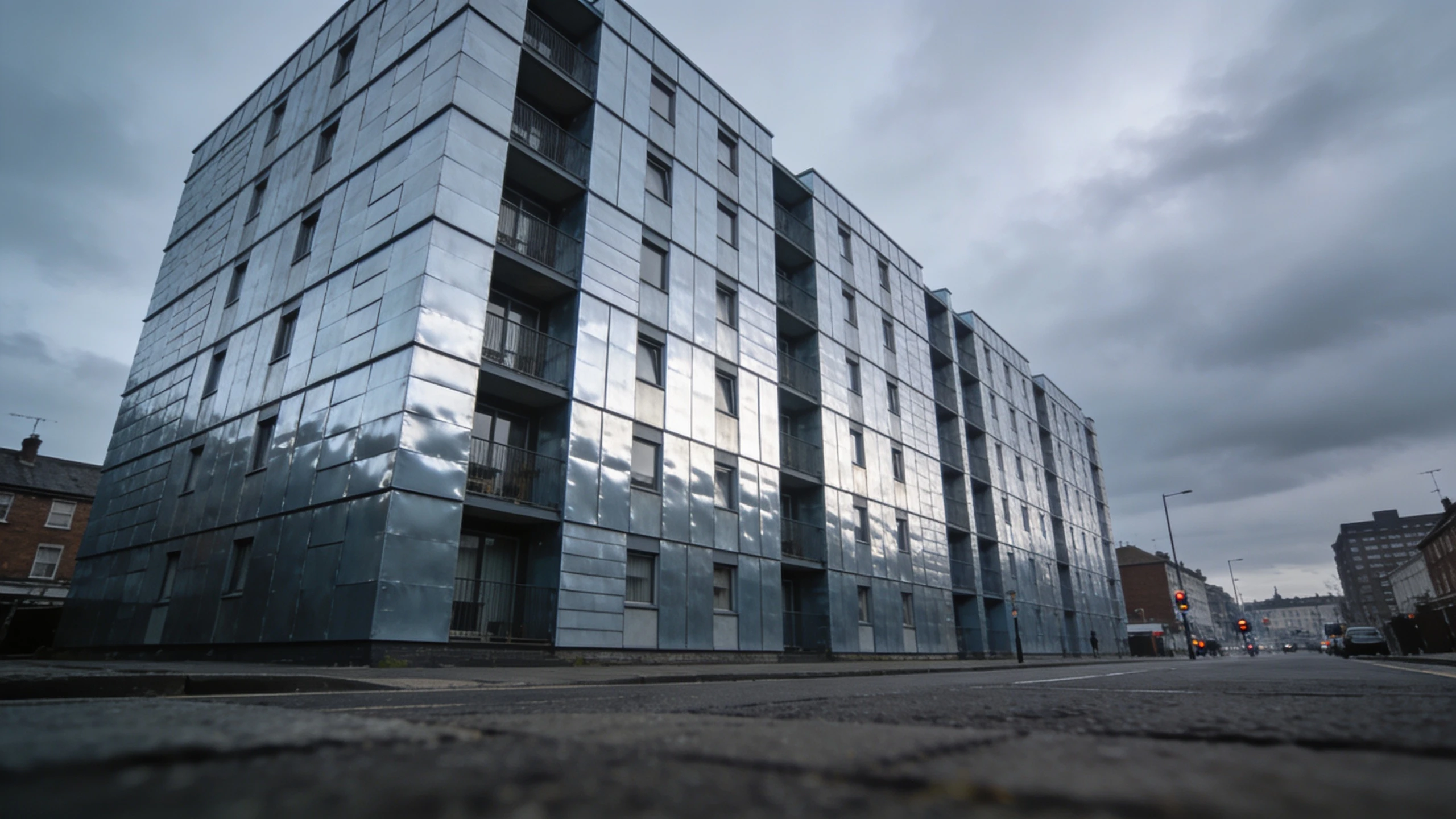
The cladding crisis that followed the Grenfell Tower tragedy in 2017 has had a profound impact on the UK flat market. Thousands of leaseholders have found themselves unable to sell or remortgage because of building safety concerns. The situation has improved significantly since the worst days of 2020-2022, but cladding and fire safety remain live issues for many buildings.
Understanding the EWS1 Form
The External Wall System Fire Review (EWS1) form was introduced in 2019 as a way for buildings to demonstrate that their external wall systems (cladding) are safe. It is completed by a qualified fire engineer who assesses the building's external walls.
EWS1 Ratings
The form produces one of four ratings:
A1: No combustible materials in the external wall. No further action required. This is the best outcome.
A2: Combustible materials present but in a quantity or arrangement that does not pose a fire risk. No further action required.
A3: Combustible materials present that need further assessment but are unlikely to require major works.
B1: Combustible materials present that pose a fire risk. Remediation work is needed. This is the most problematic rating for mortgage purposes.
B2: An adequate assessment could not be completed. Further investigation needed.
A B1 or B2 rating can halt a sale
If a building receives a B1 rating, many lenders will not provide a mortgage until the remediation work has been completed or a credible plan is in place. This can leave leaseholders unable to sell their flats. If you are considering buying in a building with a B1 rating, understand that remediation could take years.
Which Buildings Need an EWS1?
The requirements have evolved significantly since the form was introduced:
Buildings Under 11 Metres (Up to 4 Storeys)
Most lenders no longer require an EWS1 form for buildings under 11 metres. This position was formalised in December 2022 when RICS and UK Finance confirmed that buildings under 11 metres should not routinely require EWS1 assessments in most circumstances. Following that guidance, these lower-rise buildings are considered low risk for external wall fire spread.
Buildings 11-18 Metres (5-6 Storeys)
The position varies by lender. Some accept these buildings without an EWS1 if there is no visible cladding. Others still require the form. The trend is towards relaxing requirements for this height band, but check with your specific lender.
Buildings Over 18 Metres (7+ Storeys)
Most lenders still require an EWS1 form (or equivalent fire safety assessment) for taller buildings. A satisfactory rating (A1, A2, or A3) is needed for most lenders to proceed with a mortgage.
The Current Landscape
Updated Industry Guidance (2025)
In April 2025, UK Finance issued updated guidance stating that lenders should not demand new EWS1 forms where an existing form has not expired and no significant building changes have occurred in the interim. This addressed a practice where some lenders were routinely requesting fresh assessments even when a valid, unexpired EWS1 was already in place. If you have a building with a current EWS1, its existing form should be sufficient for most lenders unless there has been material change to the external wall system.
As of 2025, approximately 9% of mortgage valuations still require an EWS1 form — down significantly from the peak of 2020-2022 when the requirement was far more widespread.
The October 2025 High Court Ruling
In October 2025, the High Court dismissed legal challenges brought by freeholder groups against the Building Safety Act 2022. The ruling confirmed the Act's protections for leaseholders, including the provisions that prevent qualifying leaseholders from being charged for historical cladding remediation. This removes a significant source of legal uncertainty that had caused some lenders to apply additional caution.
Government Remediation Programmes
The UK Government has established several programmes to fund the removal of unsafe cladding:
- Building Safety Fund: Provides grants for the remediation of buildings 11-18 metres with unsafe cladding
- ACM Cladding Remediation Fund: Specifically for buildings with the same type of cladding as Grenfell Tower (aluminium composite material)
- Developer Pledges: Over 50 developers have signed pledges to fund remediation of buildings they developed
- Cladding Safety Scheme (CSS): The expanded programme covering more building types and providing a clearer pathway for lender engagement
The Remediation Scheme Mortgage Pathway
An important development for buyers and lenders is the emergence of a recognised mortgage pathway for buildings that are registered with government remediation programmes. Many lenders will now consider applications on buildings where a confirmed Cladding Safety Scheme (CSS) registration or a Developer Remediation Contract (DRC) is in place — even where remediation has not yet been completed. Lenders are increasingly treating these registrations as sufficient evidence that the financial responsibility for remediation has been addressed, allowing mortgage offers to proceed subject to conditions. This represents a significant practical improvement from the earlier position where even funded buildings were often treated as unmortgageable pending completion of works.
The Building Safety Act 2022
This landmark legislation:
- Established the Building Safety Regulator
- Created a new regime for higher-risk buildings (over 18 metres or 7+ storeys)
- Extended the limitation period for building safety claims
- Required developers to contribute to remediation costs
- Introduced the Responsible Actors Scheme (developers who do not sign up face restrictions)
Leaseholder Protections
The Building Safety Act includes protections for qualifying leaseholders:
- Leaseholders in buildings over 11 metres are generally not required to pay for the remediation of historical building safety defects
- Service charge caps apply for non-cladding defects
- Building owners and developers bear the primary responsibility
Check the building's status
Before offering on a flat in a multi-storey building, ask the managing agent or freeholder about: the building's EWS1 status, whether any remediation work is planned or underway, whether the building is registered with the Building Safety Fund, and what the estimated timeline for resolution is. This information is essential for your mortgage application and your financial planning.
Getting a Mortgage in an Affected Building
If the Building Has a Clear EWS1 (A1, A2, or A3)
Most mainstream lenders will proceed normally. The building has been assessed and does not require remediation. Keep a copy of the EWS1 form for your records and mortgage application.
If the Building Has a B1 Rating (Remediation Required)
Options are more limited but not zero:
- Some specialist lenders may consider lending if remediation is funded and has a clear timeline
- Cash buyers are not affected by mortgage requirements
- Some lenders may lend once a remediation contract has been signed, even before work is complete
If the Building Has No EWS1 Form
For buildings over 18 metres — typically high-rise flats — without an EWS1, most lenders will not proceed. Getting an EWS1 assessment requires the building's freeholder or managing agent to commission a fire engineer. Individual leaseholders usually cannot commission this themselves.
If you are stuck waiting for an EWS1, practical steps include:
- Pressuring the managing agent or freeholder to commission the assessment
- Contacting your MP for support
- Checking whether the building qualifies for government-funded assessment programmes
- Exploring specialist lenders who may accept alternative fire safety evidence
Impact on Property Values
The cladding crisis has had a measurable impact on property values in affected buildings:
- Buildings with clear EWS1: Minimal long-term impact; values have largely recovered
- Buildings in remediation: Temporary depression of 10-20% during the works period
- Buildings with unresolved B1 ratings: Significant depression of 20-40%+ due to limited buyer pool — and mortgage affordability calculations reflect this
As remediation progresses across the country, values in affected buildings are expected to recover. But timing is uncertain.
What Lenders Want to See
When you apply for a mortgage on a flat in a multi-storey building, lenders will want:
- An EWS1 form (for buildings where required) with a satisfactory rating
- Evidence that the building is not subject to remediation requirements — or if it is, that funding and a plan are in place
- Confirmation of buildings insurance — some insurers have been reluctant to insure buildings with cladding issues
- A satisfactory valuation — the surveyor will assess the building's fire safety as part of the valuation
Practical Advice
- Research the building thoroughly before making an offer
- Ask for the EWS1 form early in the process — do not wait until your mortgage application is underway
- Check the building's safety case if it is a higher-risk building registered with the Building Safety Regulator
- Factor in service charges — even with leaseholder protections, there may be costs associated with building safety improvements
- Consider future saleability — will the cladding situation be fully resolved when you want to sell?
- Get specialist mortgage advice — a broker can identify which lenders are currently lending on buildings with your specific circumstances
Sell your property
Need to sell a property with cladding issues?
SellTo helps UK homeowners sell any property quickly — cash purchase or auction, no fees to you, and a straightforward process. Get a free, no-obligation offer.
Get a free cash offer →We may earn a commission if you use this service. Affiliate disclosure
For Current Leaseholders
If you already own a flat in an affected building and are struggling to sell or remortgage:
- Check your eligibility for leaseholder protections under the Building Safety Act and leasehold reform
- Contact the managing agent about the remediation timeline
- Explore specialist lenders for remortgaging
- Consider whether your existing lender will offer a product transfer (switching to a new rate without a full application, which may not require an EWS1)
- Seek legal advice about potential claims against developers or building owners
Insurance Complications in Affected Buildings
One of the less-discussed consequences of the cladding crisis is the impact on buildings insurance. Before Grenfell, insuring a residential block was relatively straightforward. Since 2017, insurers have become far more cautious about multi-storey buildings, and premiums have risen sharply in many cases.
Why Insurance Has Become Harder

Insurers reassessed their exposure to fire risk in the years following Grenfell. Buildings with combustible cladding — or buildings where the cladding status was unknown — were seen as significantly higher risk. Some key consequences:
- Premium increases of 300-1,000% have been reported in some buildings, particularly those over 18 metres with unresolved cladding issues
- Excesses (the amount you pay before insurance kicks in) have risen from typical levels of £250-500 to £50,000-250,000+ in some affected buildings
- Some insurers have withdrawn from the residential block market entirely, reducing competition
- Policy exclusions for fire-related damage have appeared in some policies, which can be problematic for mortgage lenders who require comprehensive cover
The Impact on Service Charges
Buildings insurance is typically arranged by the freeholder or managing agent and recharged to leaseholders through service charges. When insurance premiums spike, your service charge can increase dramatically — sometimes by thousands of pounds per year. This is a direct hit to your monthly outgoings and affects mortgage affordability calculations.
What Lenders Require
Mortgage lenders require that adequate buildings insurance is in place for the property they are lending against. If a building cannot obtain comprehensive insurance — or if the insurance excludes fire damage — some lenders will not proceed. When applying for a mortgage in a multi-storey building, your conveyancer should obtain confirmation of the current insurance arrangements, including the sum insured, the excess, and any exclusions.
Specific Lender Policies on Cladding
Lender approaches to cladding have evolved significantly and continue to change. Here is a snapshot of how major lenders typically handle applications on buildings affected by cladding issues:
Halifax and Lloyds Banking Group
Generally pragmatic. They were among the first mainstream lenders to accept applications on buildings under 11 metres without an EWS1. For buildings over 18 metres, they require a satisfactory EWS1 or equivalent. They will consider applications where remediation is fully funded and contractually committed, even if work has not yet started.
Nationwide Building Society
Nationwide follows RICS guidance closely. Buildings under 11 metres do not need an EWS1. For taller buildings, a satisfactory fire safety assessment is required. Nationwide has been relatively flexible where government-funded remediation programmes are confirmed.
NatWest Group (Including RBS and Ulster Bank)
NatWest adopted a risk-based approach. They accept buildings under 11 metres without an EWS1 and require appropriate documentation for taller buildings. They have shown willingness to lend on buildings in the Building Safety Fund pipeline where a clear remediation plan is evidenced.
Barclays
Barclays requires an EWS1 for buildings over 18 metres. They have been cautious about buildings in the 11-18 metre range and may still request documentation depending on the visible cladding type. Their approach has gradually relaxed over time.
Santander
Santander follows industry guidance on EWS1 thresholds. They are generally pragmatic for buildings under 11 metres and require appropriate evidence for taller buildings.
Specialist Lenders
Some specialist lenders, including Together and Aldermore, will consider applications on buildings with cladding issues where mainstream lenders will not. Terms may include higher interest rates and larger deposit requirements (typically 25-30%), but they can provide a route to purchase or remortgage where no other option exists.
Regional Variations
The cladding crisis has not affected all parts of the UK equally. The issues are concentrated in areas with significant numbers of multi-storey residential buildings:
London
The capital has the highest concentration of affected buildings. Many luxury riverside developments built in the 2000s and 2010s have been found to have cladding issues. The scale of the problem in London means longer wait times for EWS1 assessments and remediation. However, London also has the most active specialist mortgage market, with brokers experienced in navigating cladding issues.
Manchester and Salford
The rapid development of residential towers in Manchester city centre and Salford Quays during the 2000s and 2010s has resulted in a significant number of affected buildings. Some high-profile developments have faced remediation delays.
Birmingham
Birmingham's city centre regeneration has produced a number of high-rise residential buildings, some of which have been affected. The Midlands has also seen ex-council tower blocks with cladding concerns.
Leeds, Bristol, and Other Cities
Most major UK cities with significant numbers of residential towers have some affected buildings. The number varies by city, and the progress of remediation differs across local authority areas.
Scotland
Scotland has its own building safety framework and assessment process. The Scottish equivalent of the EWS1 operates slightly differently, and some buildings in Glasgow, Edinburgh, and other Scottish cities are affected.
Valuation Challenges
Even when a building has the right documentation, the valuation process can present challenges:
What Valuers Look For
When a surveyor values a flat in a multi-storey building, they assess fire safety alongside all the usual factors. Specifically, they will consider:
- The EWS1 rating or equivalent fire safety assessment
- Whether remediation is underway, funded, or planned
- The impact of any waking watch (24-hour fire patrols) costs on the service charge
- The overall marketability of the flat given the building's safety status
- Comparable sales data — which may be limited in affected buildings where few transactions are happening
Down-Valuations
In buildings with unresolved cladding issues, down-valuations are common. The surveyor may value the property below the asking price to reflect the limited buyer pool, the potential for ongoing costs, and the uncertainty around remediation timelines. A down-valuation can derail a purchase if the buyer cannot make up the shortfall.
No Comparable Evidence
In some affected buildings, there have been very few sales for several years. Without recent comparable sales data, valuers must make judgement calls that can result in conservative valuations.
Edge Cases and Unusual Situations
Mixed-Use Buildings
Buildings that combine residential and commercial elements face additional complexity. The commercial element may have different cladding from the residential floors, and the responsibility for remediation may be split between different parties. Lenders may need separate assessments for the residential and commercial portions.
Buildings With Partial Remediation
Some buildings have had cladding removed from certain elevations but not others, or have had ACM cladding replaced but other combustible materials remain. Lenders want to see that all identified fire safety issues have been — or are being — addressed, not just the most obvious ones.
Timber-Clad Buildings
Not all cladding issues involve aluminium composite materials (ACM). Timber cladding on some buildings has been flagged as a fire safety concern, particularly where it is combined with inadequate fire breaks. The EWS1 process covers all external wall systems, not just metal cladding.
New Builds With Cladding Issues
Some buildings completed as recently as the mid-2010s have been found to have non-compliant cladding. Buyers may have purchased with an NHBC warranty, but the warranty may not cover cladding remediation if the materials used met the Building Regulations at the time of construction. The developer pledge system aims to address this, but coverage is not universal.
Waking Watch Costs
Some buildings without adequate fire alarm systems in place during remediation are required to operate a "waking watch" — a 24-hour fire patrol. The cost of this is passed to leaseholders through the service charge and can add £100-500 per flat per month. These costs reduce affordability and may cause issues with mortgage applications, even if the building itself is otherwise acceptable to the lender.
Survey Requirements and Costs
If you are buying in a multi-storey building, the typical survey costs include:
- Lender's valuation: £250-600 (sometimes free as part of a mortgage deal)
- HomeBuyer Report (Level 2): £400-800 — useful but may not address cladding issues in depth
- Building Survey (Level 3): £600-1,500 — more comprehensive, but cladding assessment is typically beyond the scope of a standard building surveyor
- EWS1 assessment: The cost of commissioning an EWS1 falls on the building (freeholder or managing agent), not individual leaseholders. However, the cost per building ranges from £5,000 to £50,000+ depending on size and complexity, and this is typically recharged through the service charge
The key document is the EWS1 form itself. If the building has one with a satisfactory rating, the surveyor and lender should be satisfied. If the building does not have one, or has a B1 or B2 rating, the survey process effectively stalls until the fire safety situation is resolved.
Free guide
Get our free guide: Is Your Property Mortgageable? The Definitive Checklist
Plain-English guidance from people who understand complex property and mortgage situations.
Free educational guide. Not financial advice. We will never share your email.
Our exclusive broker partner
Create Finance — for cladding issues
Create Finance is authorised and regulated by the FCA — Unmortgageable is not. We earn a referral fee from Create Finance only if your mortgage completes through them. This never affects what you pay or what advice you receive.

Unmortgageable is not FCA-authorised. Create Finance is — verify them independently on the FCA Register. See our affiliate disclosure.
This is educational content, not financial advice. Your situation is unique — speak to a qualified mortgage broker before making any decisions.
Find out if the property is the problem
Quick check for the construction, lease, cladding, and title issues that get mortgage applications declined — before you spend on a survey.
Get startedRelated reading

High-Rise Flat Mortgage: Over 6 Storeys
Getting a UK mortgage on a high-rise flat over 6 storeys. Cladding, EWS1, service charges, and which lenders will consider tower block flats.

Mortgage on a Flat Above a Shop
Can you get a mortgage on a flat above a shop in the UK? Yes, but lender criteria vary by shop type, access, and commercial element. Here's what to know.
Leasehold Reform 2024: What Changed for Mortgage Applicants
How the Leasehold and Freehold Reform Act 2024 affects UK mortgage applicants. Ground rent caps, marriage value changes, and what's in force now.
Short Lease Mortgage: What to Do Under 80 Years
Getting a UK mortgage on a short lease property under 80 years. Understand the 80-year cliff edge, lease extension costs, and which lenders will consider it.
Not sure about your mortgage options?
Find out your options — whether it's your circumstances or your property holding you back. Free, no judgement, no cold calls.
This page is educational content, not financial advice or a personal recommendation. Unmortgageable is not FCA-authorised. Any broker or lender we link to is separately regulated — verify them on the FCA Register before engaging. See our affiliate disclosure.