This is general information, not financial advice. Your circumstances are unique — always speak to a qualified mortgage broker before making financial decisions. This page may contain affiliate links. Affiliate disclosure · Terms
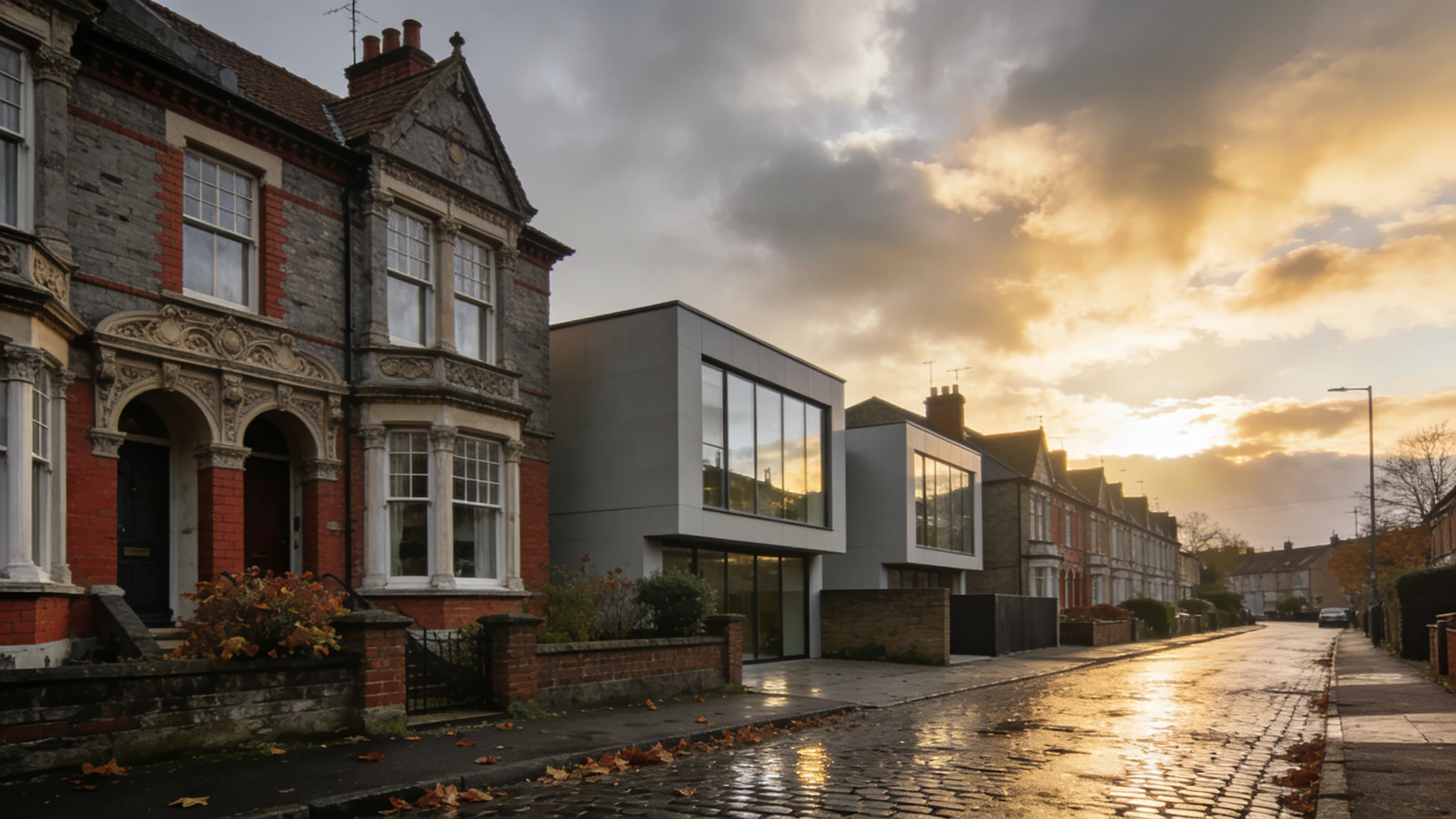
A cavity wall is what most UK homes have: two layers of brickwork with an air gap (now usually filled with insulation) between them. Single-skin brickwork is just one layer — a single course of bricks, typically 115mm (about 4.5 inches) thick. It is cheaper and faster to build, but it creates problems with damp, insulation, and — for lenders — long-term structural adequacy. If a survey flags "single-skin" or "single-leaf" brickwork, expect the mortgage process to get more complicated.
What Is Single-Skin Brickwork?
Our exclusive broker partner
Create Finance — for single-brick construction specialist mortgage
Create Finance is authorised and regulated by the FCA — Unmortgageable is not. We earn a referral fee from Create Finance only if your mortgage completes through them. This never affects what you pay or what advice you receive.

Unmortgageable is not FCA-authorised. Create Finance is — verify them independently on the FCA Register. See our affiliate disclosure.
Standard UK residential construction uses a cavity wall: an outer leaf of brickwork, an air gap (typically 50-100mm), and an inner leaf of brickwork or blockwork. The total wall thickness is usually 270-300mm or more. The cavity provides thermal insulation, prevents damp from passing directly through the wall, and contributes to structural stability.
Single-skin brickwork is exactly what it sounds like: one layer of brick, with no cavity. A standard UK brick is 215mm × 102.5mm × 65mm. A single-skin wall laid in the standard English or Flemish bond pattern is one brick wide — approximately 102.5mm (4 inches) or, if the bricks are laid lengthways (the less common "stretcher bond" single-skin), around 215mm. In most domestic single-skin construction, the wall is approximately 102.5mm to 115mm thick, including mortar joints.
Compare that to a modern cavity wall at 270-300mm and the difference is stark. The single-skin wall provides:
- One layer of protection against driving rain — there is no cavity to interrupt the passage of moisture
- Limited thermal mass — the wall offers poor resistance to heat loss
- Less structural redundancy — there is no inner leaf to contribute to lateral stability
Where Is Single-Skin Brickwork Found?
Pre-1920 Properties
Before cavity wall construction became standard practice (broadly from the 1920s onwards), single-skin or solid brickwork was common. Older solid brick walls are typically thicker than modern single-skin walls — Georgian and Victorian properties often have walls 225mm or 450mm thick (one or two bricks laid across the full wall depth) — so they are not identical to thin single-skin construction. However, some older properties, particularly smaller terraces, outbuildings, and ancillary structures, were built with genuinely thin walls.
Converted Outbuildings
Barns, stables, and agricultural buildings that have been converted to residential use often have single-skin brickwork. The original structure was designed for animals or storage, not human habitation, so the walls were built to a different standard. When conversion occurs, the thermal and moisture performance of the single-skin wall becomes a residential issue.
1960s and 1970s Low-Cost Housing
Some post-war social and private housing, particularly in the 1960s and early 1970s when construction costs were being cut and speed of delivery was prioritised, used single-skin or very thin brickwork in ancillary elements — garages, extensions, sun rooms, and in some cases, the main structure. Local authority housing programmes and private developers sometimes used non-standard construction methods to reduce costs. Properties from this era with unusual construction should always be surveyed carefully.
Extensions and Additions
Single-skin brickwork is most commonly encountered in extensions, conservatories, and additions to otherwise standard properties. A 1970s rear extension built in single skin affects the mortgageability of the whole property, even if the main house is cavity construction.
Estate agents and single skin
Estate agent particulars rarely mention single-skin construction. It is a surveyor's finding, not something that is typically disclosed in marketing materials. The only way to know whether a property has single-skin walls is to have it surveyed — do not assume standard construction without checking.
Why Lenders Are Cautious
Damp Penetration
A single-skin brick wall provides one layer of protection against driving rain. In the UK climate — with significant rainfall, frequent wind-driven rain, and high humidity — this is a genuine limitation. Water can penetrate the outer face of the brick, travel through the mortar joints, and emerge on the inner face as damp. In cavity wall construction, moisture that crosses the outer leaf is interrupted by the cavity and cannot travel to the inner leaf.
The practical result is that single-skin walls often show damp on internal surfaces, particularly on exposed elevations. This affects the health of occupants, the condition of plaster and finishes, and the long-term condition of the structure.
Thermal Performance
Single-skin brickwork has poor thermal resistance. In the context of EPC assessments and energy efficiency requirements, a single-skin wall scores badly. This has become more significant with the growth of minimum EPC standards for mortgaged properties.
Cavity wall insulation — the standard retrofit solution for improving the thermal performance of cavity walls — cannot be used on single-skin walls. There is no cavity to fill. Instead, internal wall insulation (adding insulation to the interior face) or external wall cladding systems are the options, both of which are more disruptive and expensive.
Structural Concerns
Single-skin walls have less structural redundancy than cavity walls. For a one- or two-storey building, single-skin construction may be structurally adequate for the building as originally designed. But any modifications — removing walls, adding floor loads, converting a loft — need careful structural assessment.
Lenders and their valuers consider whether the construction is adequate for the property's use and whether it represents a standard against which future buyers will be willing to pay normal market prices.
What a RICS Survey Reveals
A Level 2 HomeBuyer Report or Level 3 Building Survey will identify single-skin construction. The surveyor will:
- Measure wall thickness at window and door reveals (where the depth of the wall is visible)
- Note any evidence of damp penetration on internal surfaces
- Check for cold bridging (where heat loss through a single-skin wall creates condensation on cold surfaces)
- Assess the condition of the mortar and any remedial pointing
- Consider the structural adequacy for the current use
Where a Level 2 survey flags single-skin construction as a concern, a Level 3 survey or a specialist damp and structural report may be recommended before the mortgage can proceed.
Measuring at the reveal
The easiest way to identify single-skin construction without a survey is to look at window reveals — the visible depth of wall around a window frame. A standard cavity wall will show 270-300mm or more of depth. A single-skin wall will show 100-115mm. If you can only fit your hand into the reveal rather than most of your forearm, the wall may be single skin.
Which Lenders Accept Single-Skin Construction?
Mainstream Lenders
You can check how lenders currently view single-skin construction using our construction lender checker.
Most major high street lenders — Halifax, Nationwide, NatWest, Barclays — will decline applications where the surveyor identifies single-skin brickwork as the primary construction method for the main habitable areas. Their mortgage criteria typically require "standard construction," which means cavity wall or better.
Where single-skin construction is limited to a minor extension or outbuilding that does not significantly affect the property's value or habitability, some mainstream lenders will proceed — especially if the rest of the property is standard construction.
Specialist Lenders
Specialist lenders — including Together Money, Shawbrook Bank, Precise Mortgages, and Aldermore — are more likely to consider single-skin construction on a case-by-case basis. They will typically require:
- A detailed survey confirming the structural adequacy
- Evidence that damp is managed (or a remediation plan)
- A credible assessment of the property's market value, including any discount for the construction type
Deposit requirements for specialist lenders on non-standard construction are typically 20-30% rather than the 5-10% available on standard properties.
Local Building Societies
Building societies with strong local roots in areas where single-skin construction is prevalent — particularly in rural areas with converted agricultural buildings — sometimes have more experience and flexibility than national lenders. It is worth approaching local societies, particularly if the property type is common in the area.
The Cavity Wall Insulation Retrofit Question
Cavity wall insulation cannot be retrofitted into a single-skin wall — there is no cavity to fill. This is sometimes misunderstood by homeowners who assume that a poorly performing wall can be improved the same way as a standard cavity wall.
For single-skin walls, the thermal performance options are:
Internal wall insulation (IWI): Insulation boards are fixed to the interior face of the wall, improving thermal performance but reducing internal floor area. This approach requires careful detailing at junctions with floors, ceilings, and windows to avoid cold bridging.
External wall cladding: Insulation is fixed to the exterior face and covered with a render or cladding system. This improves thermal performance without reducing internal space but changes the external appearance of the building. In conservation areas or for listed buildings, external cladding may not be permitted.
Improving the mortar: Repointing with lime mortar (for older brick construction) improves weather resistance and reduces moisture penetration, though it does not transform the thermal performance.
Any of these approaches can improve a single-skin wall's performance — but they represent a material cost and disruption. Buyers should factor this into their offer and budget.
Insurance Implications
Buildings insurance for single-skin construction is available, but premiums may be higher than for standard cavity wall properties. Insurers consider the increased risk of damp-related claims and, in the case of converted outbuildings, the specific construction risks.
Disclose the construction type to your insurer when arranging cover. Failure to accurately describe the construction can invalidate claims.
Making a Purchase Decision
If you are considering buying a property with single-skin construction:
-
Commission a full Level 3 Building Survey — this is not a property for a basic valuation. You need to understand the specific condition, the extent of any damp, and the structural adequacy before committing.
-
Get a damp report — where the survey flags damp concerns, a specialist damp and timber report will quantify the issue and estimate remediation costs.
-
Get estimates for improvement — whether internal wall insulation, external cladding, or remediation of damp issues, know the costs before you agree a price.
-
Factor the non-standard construction into your offer — single-skin construction typically results in a discount to comparable properties with standard construction. The discount reflects the reduced buyer pool (fewer lenders, fewer buyers) and the cost of any remediation.
-
Use a specialist broker — not all brokers have experience placing mortgages on non-standard construction. A broker who has successfully placed single-skin construction mortgages will know which lenders to approach and what they need.
If single-skin brickwork makes standard mortgage approval difficult, selling directly for cash may be the fastest route. SellTo offers free cash valuations with no fees to the seller.(affiliate)
Our exclusive broker partner
Create Finance — for non-standard construction properties
Create Finance is authorised and regulated by the FCA — Unmortgageable is not. We earn a referral fee from Create Finance only if your mortgage completes through them. This never affects what you pay or what advice you receive.
Unmortgageable is not FCA-authorised. Create Finance is — verify them independently on the FCA Register. See our affiliate disclosure.
This is educational content, not financial advice. Your situation is unique — speak to a qualified mortgage broker and surveyor before making any decisions.
Find out if the property is the problem
Quick check for the construction, lease, cladding, and title issues that get mortgage applications declined — before you spend on a survey.
Get startedRelated reading
Non-Standard Construction Mortgages: What Counts and Who Lends?
UK guide to mortgages on non-standard construction homes. Timber frame, concrete, PRC, thatched — which lenders accept what and what surveys you need.
Steel Frame House Mortgage
Getting a UK mortgage on a steel frame house. Learn about BISF homes, modern steel frame, corrosion concerns, and which lenders accept this construction.

Concrete Construction Mortgages (Wimpey No-Fines, Airey, etc.)
Getting a UK mortgage on a concrete construction home — Wimpey No-Fines, Airey, Reema, Cornish Unit, and more. PRC certificates, remediation, and lending options.

Specialist Mortgage Lenders UK: Who Are They?
Who are the specialist mortgage lenders in the UK? A comprehensive guide to lenders who help with bad credit, self-employment, and non-standard situations.
Not sure about your mortgage options?
Find out your options — whether it's your circumstances or your property holding you back. Free, no judgement, no cold calls.
This page is educational content, not financial advice or a personal recommendation. Unmortgageable is not FCA-authorised. Any broker or lender we link to is separately regulated — verify them on the FCA Register before engaging. See our affiliate disclosure.