This is general information, not financial advice. Your circumstances are unique — always speak to a qualified mortgage broker before making financial decisions. This page may contain affiliate links. Affiliate disclosure · Terms
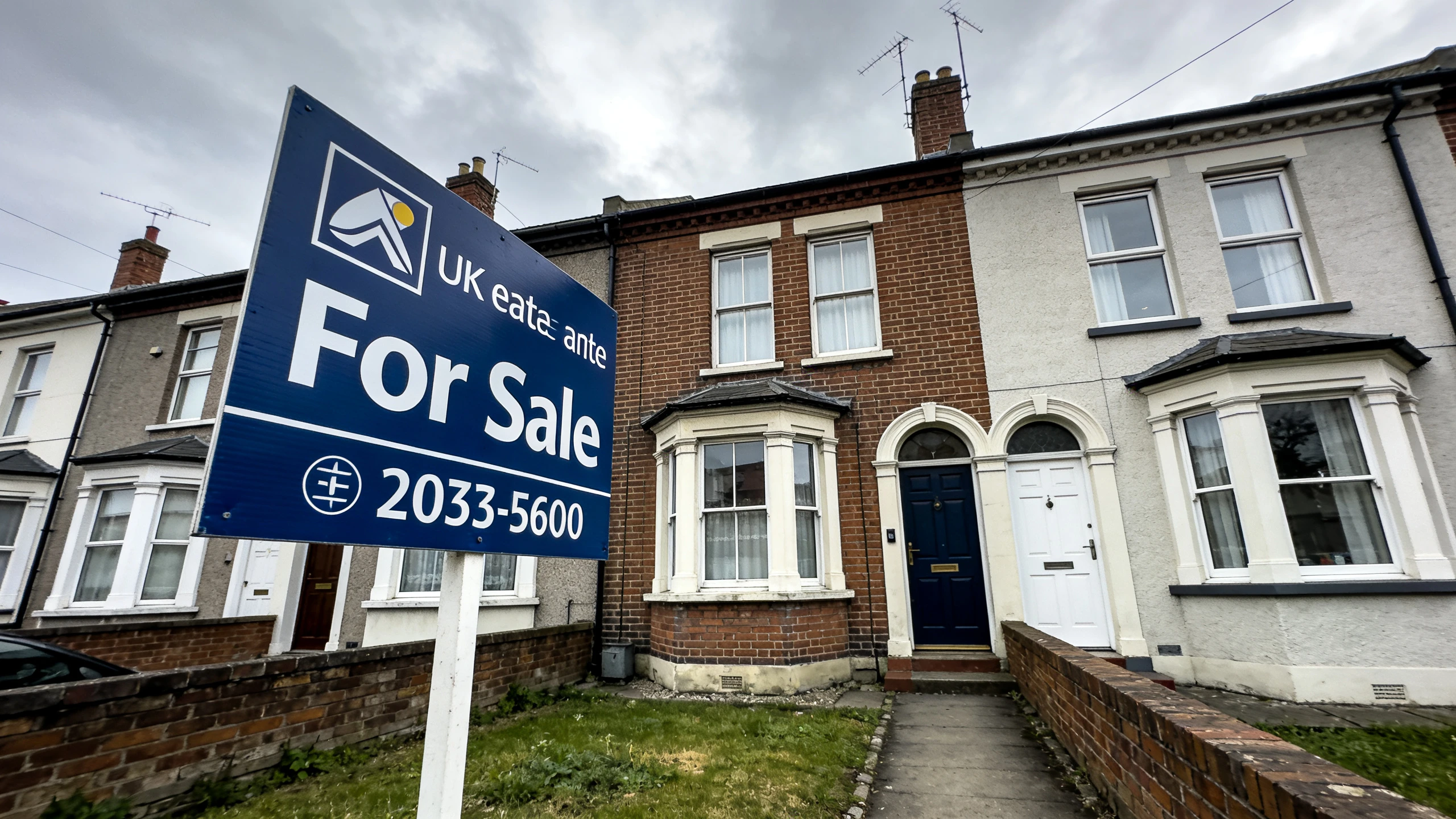
Six months on the market with few viewings and no offers is demoralising. It is also a signal — the market is telling you something. The challenge is working out what that is and responding effectively. In most cases, properties that do not sell have a diagnosable reason. Identifying it honestly is the first step to resolving it.
Why Properties Fail to Sell
Before deciding on a course of action, it is worth understanding honestly why your property has not sold. The reasons divide broadly into four categories.
1. Price
The single most common reason a property sits on the market is that it is priced above what buyers are willing to pay. This is not always the seller's fault — agents sometimes overvalue properties to win the instruction, and sellers often have emotional attachments that inflate their price expectations. But the market is clinical: buyers compare properties across Rightmove and Zoopla, and if yours is priced above comparable properties or comparable to better-presented alternatives, the viewings will not come.
Signs that price is the issue:
- Few viewings despite reasonable presentation
- Viewings that consistently do not result in offers, or offers consistently below asking price
- Comparable properties in the area are selling; yours is not
- Your agent is suggesting a price reduction
2. Marketing and Presentation
Poor photography, inadequate floorplans, weak listing copy, or a property presented poorly at viewings can all suppress interest. In the modern property market, buyers form their first impression from online listings. A property with dark, cluttered photographs and a poorly written description will be scrolled past by buyers who might otherwise be interested.
Signs that marketing is the issue:
- Very few clicks or enquiries from Rightmove/Zoopla (your agent can share listing analytics)
- Viewings are rare despite what appears to be a competitive price
- Neighbouring properties with similar characteristics are selling
3. Property Issues
Some properties have specific characteristics that reduce their appeal or make them harder to finance. These might include:
- Non-standard construction: Timber frame, concrete, steel frame — all can be harder to mortgage
- Short leasehold: Flats with under 80 years on the lease deter mainstream buyers
- Structural issues: Movement, damp, subsidence — shown in surveys and deterring buyers
- Location issues: Near to something undesirable (industrial site, busy road, high-voltage pylons)
- Title issues: Complicated ownership, access rights disputes, absent freeholder
- Unusual configuration: Very unusual layouts, low ceilings, poor natural light
Signs that property issues are the cause:
- Good viewing traffic but buyers consistently pulling out after surveys or legal advice
- Your buyer's mortgage is refused on the property (see the guide on buyer mortgage refused)
- Estate agents have mentioned specific objections from viewers
4. The Agent
Not all estate agents are equal. Some lack the resources, networks, or motivation to achieve a sale. Signs that the agent may be a factor:
- No proactive contact from the agent; you are always chasing them
- Your property is not featured prominently in their window or on their social media
- The agent is not requesting or sharing viewer feedback
- The agent won the instruction with a high valuation and has since repeatedly suggested reductions without explaining the strategy
Portal fatigue: the longer it sits, the harder it gets to sell
On Rightmove and Zoopla, buyers can filter by "new and reduced" or sort by date listed. Properties that have been on the market for several months start to accumulate a listing history that experienced buyers notice. They begin to wonder: "If no one has bought this in 6 months, what's wrong with it?" This perception is self-reinforcing and is one of the strongest arguments for taking decisive action if a property is not selling.
What to Do About It
The right course of action depends on which of the above categories applies to your situation — often a combination of two or three. Here are the main options.
Honest Price Review
Before doing anything else, have an honest conversation with yourself and your agent about price. Look at:
- What comparable properties in your area have actually sold for (not their listing price — their sold price, available on Rightmove's sold prices section)
- Whether any properties similar to yours have sold in the last 6 months
- What your agent's current assessment of value is, and whether it has changed since the start of the listing
A price reduction is often the most effective single thing you can do. A property reduced from £395,000 to £375,000 re-enters the search results of buyers who set a £375,000 maximum. The reduction also signals that the seller is motivated, which can generate a flurry of viewing requests.
The size of the reduction matters. A 1% reduction is usually invisible in buyer psychology. A meaningful reduction — typically 3–7% — has a much more noticeable effect.
New Photography and Presentation
If you suspect marketing is a factor, a fresh approach to presentation can help significantly:
- Professional photography: Not all estate agents use proper professional photographers. If yours used a phone camera or poor lighting, investing in professional photography (£150–400 typically) can materially improve the visual impression of the property.
- Virtual tour: A Matterport or similar 3D virtual tour allows buyers to pre-qualify themselves before visiting, attracting more serious viewers and increasing the viewing-to-offer conversion rate.
- Decluttering and staging: If the property is occupied, a ruthless declutter and professional staging (or even just moving furniture) can make a significant difference to how photographs and viewings feel.
- Kerb appeal: The exterior photograph is often the first image buyers see. If the front of the property looks unloved, tidying the garden, repainting the front door, and cleaning the driveway are inexpensive changes with disproportionate impact.
Change Agent
Changing estate agent is a significant step but sometimes the right one. Before doing so:
- Check your contract: Most estate agents have a sole agency agreement with a tie-in period (commonly 12 weeks) and a notice period. Read what you signed carefully — you may owe fees to the current agent even if a new agent sells the property.
- Consider multi-agency: Some sellers instruct two agents simultaneously on a multi-agency basis. Fees are higher (typically 2–3% versus 1–1.5% for sole agency) but the increased competition can accelerate a sale.
- Research before switching: Look at which agents are selling properties similar to yours in your area. Who has the most sold signs up? Who is generating the most Rightmove listings with sold subject to contract?
When you relist with a new agent (or after a withdrawal period), the listing is treated as new on the portals, which removes the accumulated days-on-market stigma. This "fresh start" effect is one of the main reasons sellers switch agent.
Address Property Issues
If property issues are the underlying problem, the options depend on the specific issue:
- Non-standard construction: You may need to target cash buyers or investors who are not deterred by lender restrictions, or approach specialist agents who market to buyers familiar with these properties
- Short lease: Consider a lease extension before or during the sale process — this significantly improves saleability and value
- Structural issues: Obtain a full structural engineer's report, understand the cost of remediation, and price accordingly — or carry out the works before marketing
- Title issues: Engage a specialist solicitor to resolve the issue or provide adequate indemnity insurance
Being transparent about property issues, with appropriate evidence of their management, is almost always better than leaving buyers to discover problems through their own surveys and searches.
Ask your agent for raw data on your listing
Estate agents have access to Rightmove and Zoopla analytics — how many times your listing has been viewed, how many times people have clicked through for details or saved the property, and how many enquiries have been made. Ask for this data. It tells you whether the listing is generating interest at the top of the funnel (people seeing it and clicking through) but failing to convert, or whether the listing is not being seen at all. The answer points to different solutions.
Auction as an Alternative Route
If conventional estate agency is not working, auction is worth serious consideration. Property auction has changed significantly in recent years — it is no longer only for distressed properties or unusual stock. Before choosing between auction, a cash buyer, or relisting, use our selling route comparison tool to model the net proceeds from each option.
What Auction Does Well
- Certainty of sale: Once the hammer falls (or the online auction closes), exchange is immediate and completion is legally committed
- Speed: Traditional auction completes in 28 days; Modern Method of Auction typically in 56 days
- Investor buyers: Auction attracts cash buyers, developers, and investors who are comfortable with unusual properties or those needing work
- Transparent price discovery: If there is genuine interest at a realistic price, auction will find it
The Price Trade-Off
Auction guide prices are typically set at 70–80% of the estimated value to drive bidding interest. Whether the final sale price matches or exceeds the "open market" value depends on how many bidders are interested. Popular properties in competitive markets can sell for guide price or above at auction. Unusual or difficult properties may sell for significantly below their theoretical open market value — but they do sell.
For a property that has sat on the market for six months, selling at 85p in the pound at auction may be preferable to continuing to carry costs (mortgage, insurance, council tax) for another six months without a sale.
Modern Method of Auction
MMA gives buyers slightly longer than traditional auction — typically 56 days to exchange and complete — while still requiring a non-refundable reservation fee from the winning bidder. This attracts more mortgaged buyers into the auction process, which can be helpful for mainstream properties that have simply failed to sell through conventional marketing.
Cash Buyers as a Last Resort
Specialist cash buyer companies (sometimes called "quick house sale" companies) will purchase almost any property at a discount. They offer:
- Completion in as little as 7–28 days
- Certainty — they do not rely on mortgage approval or chains
- Willingness to buy properties in poor condition or with legal complications
The trade-off is price. Cash buyer companies typically offer 75–85% of market value. On a property worth £300,000, this means accepting £225,000–255,000.
Whether this is "worth it" depends on your circumstances:
- How long have you already been carrying the property's costs?
- Is there time pressure (financial difficulty, probate, relocation)?
- Is there any realistic prospect of achieving a better price through other means?
For a property that has genuinely been on the market for 12+ months with no viable offers, a quick cash sale at 80% of value may represent a better financial outcome than continuing to market at full value for another 12 months while carrying costs.
If you do explore a cash buyer, use one that is a member of the National Association of Property Buyers (NAPB) and the Property Ombudsman scheme. Get any offer in writing and have a solicitor review the terms. Some companies in this space are legitimate and professional; others are less so.
Sell your property
Need to sell a property that won't sell?
SellTo helps UK homeowners sell any property quickly — cash purchase or auction, no fees to you, and a straightforward process. Get a free, no-obligation offer.
Get a free cash offer →We may earn a commission if you use this service. Affiliate disclosure
What to do next
A property that is not selling is not necessarily unsellable. In the vast majority of cases, there is a diagnosable reason — price, presentation, a property-specific issue, or agent performance — and a corresponding action that can change the outcome.
The key is honest diagnosis, decisive action, and being realistic about the trade-offs between time, price, and certainty.
Free guide
Get our free guide: The Complete Guide to Selling an Unmortgageable Property
Plain-English guidance from people who understand complex property and mortgage situations.
Free educational guide. Not financial advice. We will never share your email.
Our exclusive broker partner
Create Finance — for property that won't sell or difficult property issues
Create Finance is authorised and regulated by the FCA — Unmortgageable is not. We earn a referral fee from Create Finance only if your mortgage completes through them. This never affects what you pay or what advice you receive.

Unmortgageable is not FCA-authorised. Create Finance is — verify them independently on the FCA Register. See our affiliate disclosure.
This is educational content, not financial advice. Your situation is unique — speak to a qualified estate agent and, where relevant, a solicitor before making any decisions.
Related reading

When an Estate Agent Says Your Property Is Hard to Sell
What estate agents mean when they say a property is hard to sell, how to get a second opinion, specialist agent options, and alternative routes including auction and cash buyers.

What to Do When a Property Chain Collapses
Why property chains fail (29.8% fail rate), what to do when yours collapses, and your options: cash buyers, Modern Method of Auction, bridging finance, and reservation agreements.

Your Buyer's Mortgage Has Been Refused: What It Means for You as a Seller
What to do when a buyer's mortgage is refused on your property. Understanding the specific reason, whether to fix it or find a different buyer, and when cash buyers or auction are the answer.
Property That Won't Sell: What to Do After 6+ Months on the Market
Why properties sit on the market for 6+ months and what to do about it. Overpricing, poor marketing, property issues, relisting strategies, auction, and cash buyer options.
Not sure about your mortgage options?
Find out your options — whether it's your circumstances or your property holding you back. Free, no judgement, no cold calls.
This page is educational content, not financial advice or a personal recommendation. Unmortgageable is not FCA-authorised. Any broker or lender we link to is separately regulated — verify them on the FCA Register before engaging. See our affiliate disclosure.