This is general information, not financial advice. Your circumstances are unique — always speak to a qualified mortgage broker before making financial decisions. This page may contain affiliate links. Affiliate disclosure · Terms
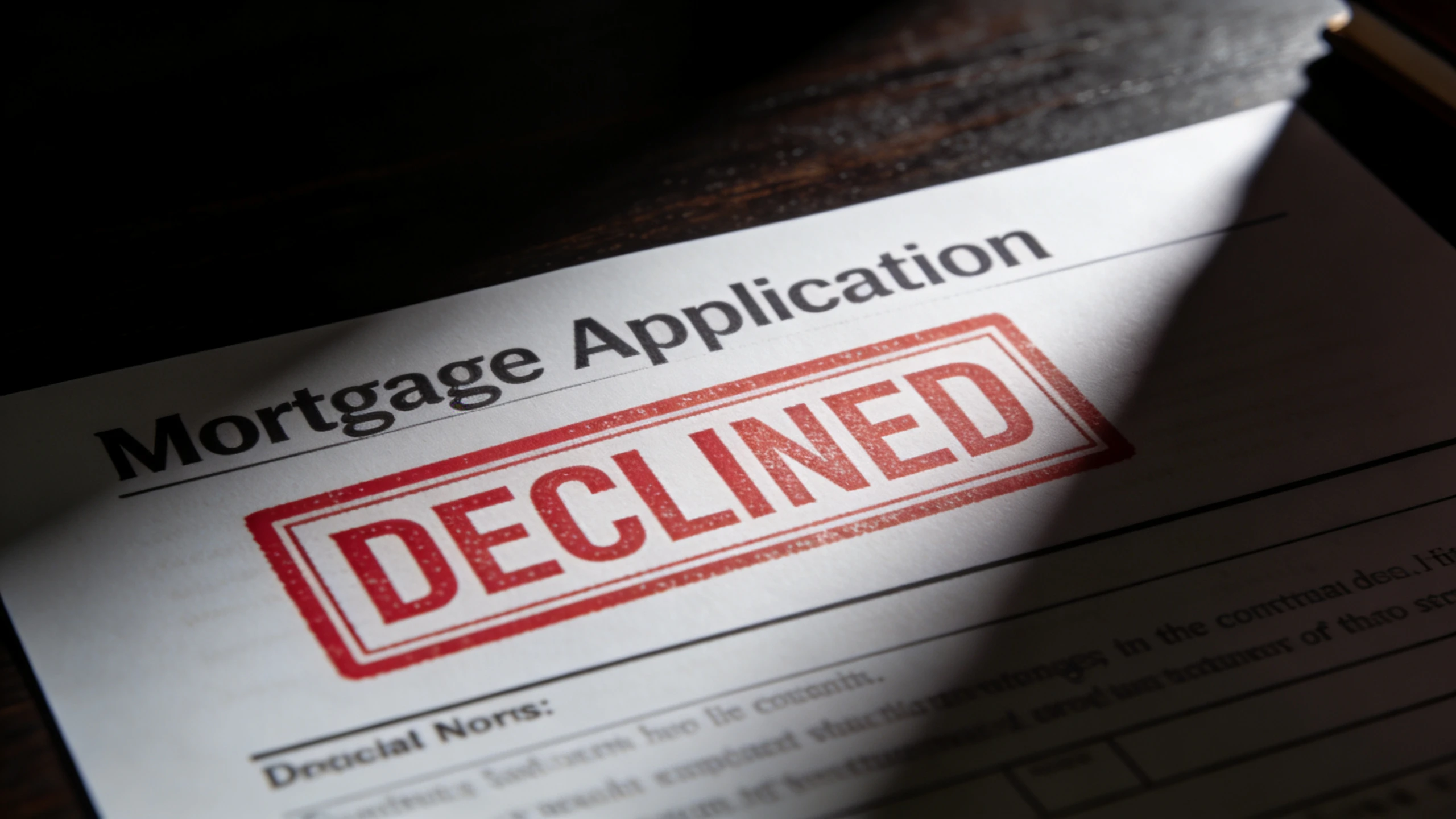
Your Agreement in Principle was accepted. Your offer went through. And then the lender's surveyor visited — and everything stopped. A decline at valuation stage is one of the more disorienting moments in a property purchase, partly because many buyers don't fully understand what the lender's valuation is actually doing.
Here is a clear account of what happened, what each decline reason means, and the practical steps that give you the best chance of completing the purchase.
Our exclusive broker partner
Create Finance — for mortgage decline at valuation stage and specialist lender placement
Create Finance is authorised and regulated by the FCA — Unmortgageable is not. We earn a referral fee from Create Finance only if your mortgage completes through them. This never affects what you pay or what advice you receive.

Unmortgageable is not FCA-authorised. Create Finance is — verify them independently on the FCA Register. See our affiliate disclosure.
What the Lender's Valuation Actually Does
A mortgage valuation is not a survey. That distinction matters.
When your lender instructs a valuer — whether that is a full physical inspection, a drive-by, or an automated valuation model (AVM) using comparable transaction data — the valuer is answering one question: is this property adequate security for the loan we are being asked to make?
There are three valuation types in common UK use:
- RICS Level 1 mortgage valuation (lender's valuation): a brief inspection focused on value and obvious defects. You pay for it as part of the application; the report belongs to the lender.
- AVM (automated valuation model): no physical visit; the valuer uses recent sold prices of comparable properties. Used for lower-LTV applications where the risk is lower.
- Drive-by or desktop valuation: somewhere between the two — external inspection plus data analysis.
None of these are designed to protect you. They are designed to protect the lender's money. This is why buyers are strongly advised to commission a separate RICS Level 2 HomeBuyer Report or Level 3 Building Survey for their own due diligence — the lender's valuation will not catch the issues you personally need to know about.
If the valuer decides the property is worth less than the agreed price, or flags the property as unsuitable security, the lender's risk model fails — and the application is declined.
Why Valuations Trigger Declines
Down-Valuation
A down-valuation is when the surveyor's assessed value comes in below your purchase price. It happens when the agreed price looks high relative to recent comparable sales in the same area.
Say you agreed to pay £280,000 and the valuer assesses the property at £260,000. Your mortgage application was based on the purchase price. The lender now calculates loan-to-value on £260,000 — which means, if you put down a 10% deposit of £28,000, your LTV against the valuer's figure is 86.9%, not the 90% your product was approved for. The lender may decline to lend, or may only offer a lower sum.
EWS1 Required for Cladding
Flats in buildings with external cladding are subject to the EWS1 fire safety assessment process. If the building has not had an EWS1 assessment, or has received a B2 rating (the worst outcome), most mainstream lenders will decline.
This is a systemic issue affecting hundreds of thousands of flats across the UK. The cladding and EWS1 guide covers lender positions and remediation routes in detail.
Structural Concern or Subsidence
If the valuer observes cracking, movement, or evidence of subsidence, they will flag the property as unsuitable for lending in its current state. The severity determines the outcome — minor historical cracking may only require a structural engineer's report, while active movement is far more serious.
Non-Standard Construction
Lenders maintain internal lists of construction types they will and will not accept. PRC (precast reinforced concrete), steel frame, and certain timber frame constructions are declined by many high street lenders. Specialist lenders tend to have broader criteria, though they often require specific structural reports or repair certificates.
See the non-standard construction mortgage guide for which construction types cause problems and which lenders still lend.
Japanese Knotweed
The presence of Japanese knotweed on or near a property triggers a decline from most mainstream lenders unless there is a management and treatment plan in place with an insurance-backed guarantee. The risk is structural damage from the root system over time.
The knotweed mortgage guide covers what treatment plan you need and which lenders will accept a property with a plan in place.
Short Lease
Leasehold properties with fewer than 70–85 years remaining (thresholds vary by lender) become very difficult to mortgage. Some lenders draw the line at 70 years, others at 80 years. Below those thresholds, the pool of lenders willing to accept the property as security narrows sharply.
Contamination and Flood Risk
Properties on land with historic contamination — former petrol stations, industrial sites, landfill areas — may be declined if the contamination risk is unresolved. Similarly, properties in flood risk areas may be declined or only offered at much higher rates, depending on the availability of flood insurance and the probability of inundation.
Your 5-Step Recovery Plan
Step 1 — Challenge the Valuation
If the issue is a down-valuation rather than a property-suitability flag, gather evidence. Ask your estate agent and conveyancer to pull recent Land Registry sold prices for comparable properties in the immediate area. Look for recent sales of similar size, age, and condition within a half-mile.
Present this evidence to the lender in writing and ask for a formal reconsideration. Not every lender will move — some treat the surveyor's report as final — but if the comparable evidence is strong, it is worth the attempt before you spend money on further surveys.
Step 2 — Commission an Independent RICS Survey
If the decline is based on a structural concern, a contamination flag, or a construction query, commission your own independent RICS survey — at Level 2 or Level 3 depending on the property type and age.
An independent survey has two uses: it gives you a complete picture of the issue so you can make an informed decision, and it can form the basis of a lender reconsideration if it contradicts or significantly qualifies the valuation report's findings.
Under FCA mortgage rules (MCOB 5), the lender must tell you a valuation has been conducted and can provide you with a copy of the report. Ask for it in writing — it tells you exactly what the valuer flagged and why.
Step 3 — Fix the Issue
Some valuation flags are removable. A knotweed management plan with an insurance-backed guarantee satisfies most lenders. A completed EWS1 assessment can unlock previously stuck flats. A PRC certificate of structural repair transforms a previously unmortgageable concrete property.
If the issue is fixable at a reasonable cost, the calculus is straightforward: fix it, then reapply. If it is not fixable — say, a listed building with prohibited alterations, or a flat in a building with no knotweed treatment plan and no prospect of one — you need to assess whether continuing with this purchase is viable.
Step 4 — Re-Apply With a Different Lender
Not all lenders use the same criteria. A property declined by NatWest's valuation panel may be acceptable to Kensington Mortgages, Vida Homeloans, Pepper Money, or Together Financial Services, all of whom have historically broader property criteria.
The critical point: do not fire off multiple applications yourself. Each hard search adds to your credit file and signals instability to lenders. Use a specialist whole-of-market broker who can check soft eligibility criteria and identify the right lender before a single hard search is triggered.
Disclose the previous valuation
When re-applying with a different lender, tell your broker about the previous decline and the reason. A good broker will use that information to choose a lender whose panel surveyors are more likely to view the property differently — or to argue your case to the new lender's underwriting team upfront.
Step 5 — Switch Product or Walk Away
If the issue is a down-valuation and the vendor will not reduce their price, you may need to increase your deposit to bridge the gap, switch to a product that allows a higher LTV on the valuer's figure, or accept that this purchase does not work at this price.
Walking away is a legitimate option. It is far better to lose a survey fee and a few months of searching than to proceed with a purchase that is priced above its actual value or has a property defect you have not fully priced in.
Specialist Lenders and Unusual Properties
Several UK lenders have specifically built their criteria to accommodate difficult properties:
- Kensington Mortgages — accepts a range of non-standard constructions and adverse property history
- Pepper Money — experienced in complex property and credit situations
- Vida Homeloans — accepts more property types than most high street lenders
- Together Financial Services — takes a common-sense approach to both credit and property
- Ecology Building Society — natural build materials, unusual constructions, self-build
For properties with structural movement or contamination concerns, some specialist lenders will proceed subject to an engineer's report confirming the issue is stable and not worsening.
When to Walk Away
Not every declined valuation is recoverable, and not every recovery is worth the effort. Walk away without significant hesitation if:
- The property has active structural movement and the cost of remediation is undefined
- The property has B2-rated cladding and the building's management company has no remediation timetable
- The lease is below 60 years and the freeholder is unresponsive to extension requests
- The flood risk is Zone 3 and flood insurance is unobtainable at a viable premium
- The vendor will not move on price despite a down-valuation, and you cannot increase your deposit
A property with a structural or legal problem that is unresolved at the point you want to buy is not your problem to solve — unless you are buying it at a price that reflects the cost and risk of solving it. That is a different type of purchase, covered in the how to buy an unmortgageable house guide.
If you are at this point and unsure which direction to go, the is my property unmortgageable checklist is a good diagnostic starting point, and our mortgage declined — what to do next guide covers the wider picture of recovering from a decline.
Our exclusive broker partner
Create Finance — for mortgage decline at valuation stage and specialist lender placement
Create Finance is authorised and regulated by the FCA — Unmortgageable is not. We earn a referral fee from Create Finance only if your mortgage completes through them. This never affects what you pay or what advice you receive.
Unmortgageable is not FCA-authorised. Create Finance is — verify them independently on the FCA Register. See our affiliate disclosure.
Related reading

Mortgage Declined After Agreement in Principle: Why It Happens and What to Do
Got a mortgage declined after your Agreement in Principle was accepted? Understand exactly why it happens, the most common causes, and your practical next steps.

Mortgage Declined: What to Do Next
Mortgage application declined? Don't panic. Understand why lenders say no, what to do next, and how to improve your chances second time around.
Is My Property Unmortgageable? A Complete Diagnostic Checklist
A yes/no checklist covering construction, condition, environmental, legal, and type issues that make a property hard to mortgage — with explanations and links.
Non-Standard Construction Mortgages: What Counts and Who Lends?
UK guide to mortgages on non-standard construction homes. Timber frame, concrete, PRC, thatched — which lenders accept what and what surveys you need.
Not sure about your mortgage options?
Find out your options — whether it's your circumstances or your property holding you back. Free, no judgement, no cold calls.
This page is educational content, not financial advice or a personal recommendation. Unmortgageable is not FCA-authorised. Any broker or lender we link to is separately regulated — verify them on the FCA Register before engaging. See our affiliate disclosure.