This is general information, not financial advice. Your circumstances are unique — always speak to a qualified mortgage broker before making financial decisions. This page may contain affiliate links. Affiliate disclosure · Terms
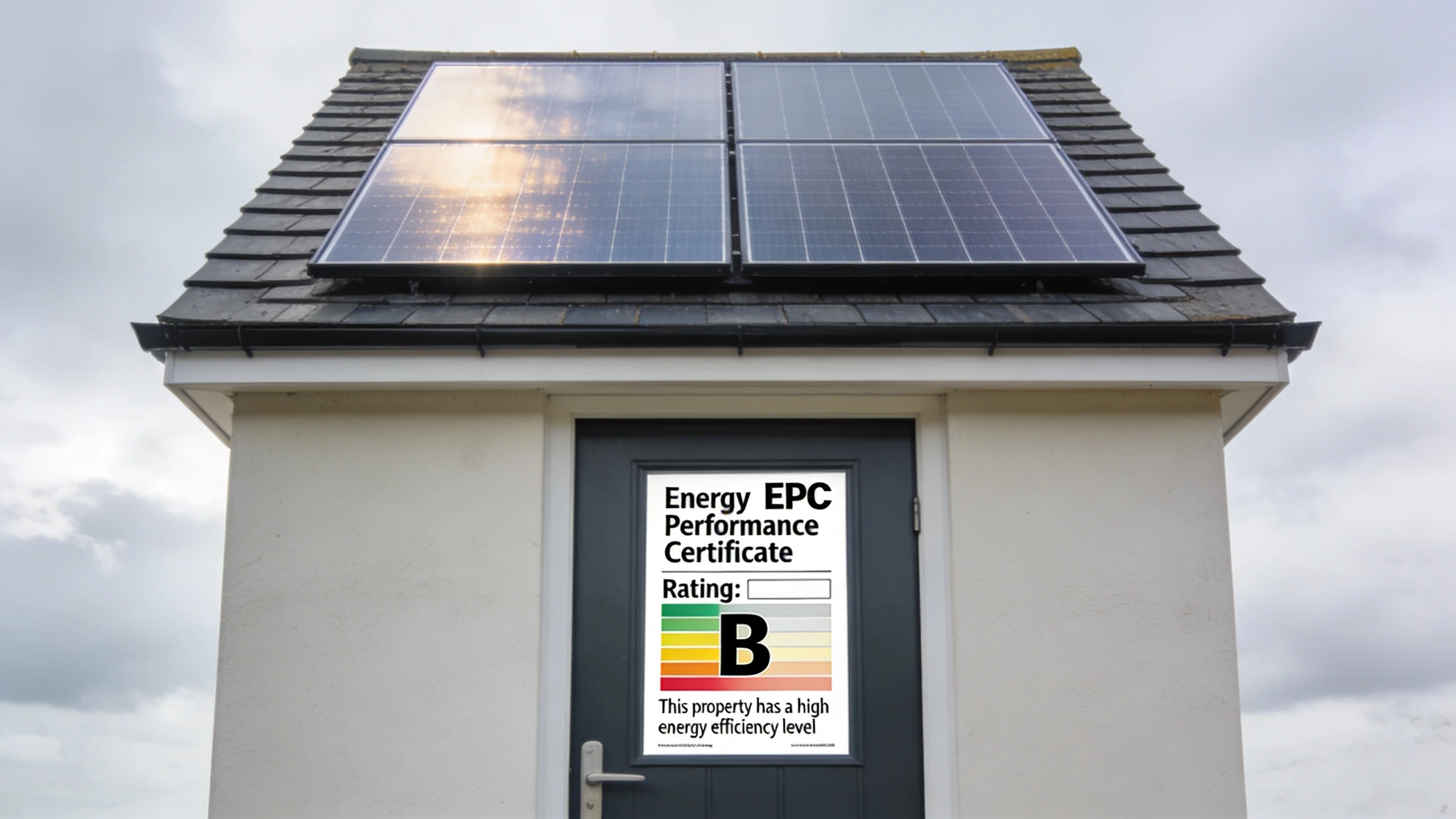
Energy Performance Certificates have moved from administrative box-ticking to genuine mortgage decision territory. If you're buying, selling, remortgaging, or letting a property in 2026, understanding how EPC ratings interact with lenders matters — both for what's required now and what's coming.
What an EPC Actually Measures
An Energy Performance Certificate rates a property's energy efficiency on a scale from A (most efficient) to G (least efficient). The rating is based on:
- Wall insulation (cavity, solid, or none)
- Loft and roof insulation
- Window type (single, double, or triple glazing)
- Heating system (boiler age and type, heat pumps, storage heaters)
- Hot water system
- Any renewable energy generation (solar panels, etc.)
The certificate includes a current rating and a potential rating — what the property could achieve if the recommended improvements were made. Both figures are relevant for different purposes.
EPCs are required when a property is sold, let, or built. They're valid for 10 years, though a new assessment is needed if you've made significant energy improvements and want an updated rating.
EPC and Buy-to-Let: The Current Legal Position
This is where EPC ratings move from advisory to obligatory for landlords.
The Minimum Energy Efficiency Standards (MEES) regulations came into force in England and Wales on 1 April 2018 for new tenancies, and were extended to all existing tenancies on 1 April 2020. The current minimum: EPC E.
A landlord renting a property with EPC F or G is in breach of MEES regulations. Councils can issue financial penalties of up to £5,000 per property. Since the Renters' Rights Act 2025 commenced on 1 May 2026, Section 21 "no-fault" notices have been abolished — possession now runs through Section 8 grounds, and MEES enforcement relies on civil penalties rather than the loss of Section 21 that previously bit non-compliant landlords.
Exemptions exist but are limited:
- The property is listed and improvements would be refused planning permission
- All relevant improvements have been made and the property still can't reach E (cost cap currently £3,500 per property, expected to rise)
- Temporary exemptions for properties purchased at auction or recently inherited
Exemptions must be registered on the Private Rented Sector Exemptions Register — they don't apply automatically.
What EPC F or G Means for Lenders
If you're trying to mortgage an EPC F or G buy-to-let property:
- The property cannot be legally let, so it has no rental income
- Without rental income, it doesn't meet BTL affordability criteria
- Most BTL lenders will decline or require evidence of a plan to achieve EPC E before completion
Some specialist lenders and bridging finance providers will lend on below-minimum EPC properties as a short-term measure while you complete improvements — but this is bridging territory, not standard BTL mortgage territory.
EPC and Residential Mortgages
For properties you're buying to live in yourself, the EPC picture is less clear-cut.
Most lenders don't currently reject applications on EPC grounds alone. A property with EPC G isn't automatically unmortgageable for owner-occupation. However:
- A very low EPC often indicates defects (uninsulated solid walls, single glazing, old boiler) that affect the valuation
- Valuers increasingly note EPC ratings and their impact on running costs, saleability, and future value
- If the EPC reflects a serious underlying problem — such as a property that can't economically be insulated to any reasonable standard — the valuer may flag this
- Future regulatory changes (if minimum EPC standards extend to owner-occupiers) would affect resale and remortgage options
The practical risk isn't immediate mortgage refusal — it's that a very low EPC property may be harder to sell in 5 or 10 years when buyers are more EPC-conscious, or harder to remortgage if regulations tighten.
Green Mortgages: What's Actually Available
Green mortgages have moved from a novelty to a genuine product category. In 2026, the following lenders offer preferential rates for energy-efficient properties:
Halifax (part of Lloyds Banking Group): Green mortgage products for EPC A or B properties, typically 0.1–0.2% lower rate than equivalent standard product. Green homes make up roughly 15% of Halifax's mortgage book, so this isn't a marginal product for them.
Nationwide: Green Further Advance scheme allows existing Nationwide mortgage holders to borrow for energy efficiency improvements at below-standard rates. Also offers rate discounts on purchase mortgages for EPC A or B homes.
Barclays: Green home mortgage for EPC A or B properties, with a rate reduction and in some cases cashback of up to £500. Available for purchases and remortgages.
NatWest / RBS: Green mortgages with rate discounts for highly rated properties. NatWest has also offered a "Green Homes Cashback" scheme for energy improvements.
Coventry Building Society: Green mortgage range with competitive rates for EPC A or B.
Leeds Building Society: Specifically supports eco-build and high-efficiency new builds with green-priced products.
The Co-operative Bank: Environmental credentials extend to mortgage pricing for efficient properties.
The discount size sounds modest — 0.1 to 0.2% — but on a £250,000 mortgage over a 5-year fixed period, that's £1,250 to £2,500 in interest savings. Worth factoring in if you're choosing between an EPC B property and an EPC D property at similar prices.
Ask about green mortgage eligibility before you commit
Green mortgages require the property to already have an EPC A or B at the point of purchase or remortgage. You can't buy an EPC D property and access green mortgage pricing while planning improvements. The EPC must reflect the actual current state of the property.
The Proposed 2030 Minimum for Buy-to-Let
In 2023, the government consulted on raising the minimum EPC for private rented properties to C by 2028 (new tenancies) and 2030 (all tenancies). This proposal was scrapped in September 2023 by then-PM Rishi Sunak, and no successor legislation has been introduced. The minimum remains EPC E.
The policy may return in some form under a future government, but as of April 2026 there is no active proposal, no timetable, and no legislation. Landlords should plan based on current law, not speculation.
The case for acting now:
- EPC C improvement costs are rising as demand for insulation and heat pumps increases
- Properties already at EPC C or above command better rents and sell for more
- Green mortgage rates are available now for EPC A or B properties
- Government improvement schemes (ECO4, Boiler Upgrade Scheme) have funding limits that reduce over time
The case for waiting:
- No legislation has passed — the 2030 target remains a proposal, not a legal requirement
- Landlords who spent heavily to achieve EPC C in anticipation may find deadlines extended or exemptions broadened
- Costs of improvement technology (heat pumps particularly) are expected to continue falling
A balanced approach: assess your properties' current ratings, model the cost of improvement, and act where the investment pays back through reduced void periods, better tenants, and green mortgage eligibility — rather than purely driven by regulatory fear.
How to Improve Your EPC Rating
Loft Insulation
If you have an uninsulated loft, this is almost always the first improvement. It's cheap, effective, and straightforward.
- Cost: £300–600 for a typical semi-detached (more for larger properties)
- EPC impact: Can add 5–15 rating points depending on current insulation level
- Energy saving: £150–300/year in heating bills
- Who installs: Most insulation companies, many local authority schemes
Properties built before the 1960s often have little or no loft insulation. If your property has unboarded loft space, installing 270mm of mineral wool insulation typically brings it to modern standards.
Cavity Wall Insulation
Properties built between approximately 1930 and 1990 usually have cavity walls — two layers of brick with a gap between them. If that cavity is unfilled, injecting insulation is highly cost-effective.
- Cost: £1,500–3,000 for a typical semi-detached
- EPC impact: Can add 10–20 rating points
- Energy saving: £200–400/year
- Who installs: CIGA-registered installers only (certification important for future saleability)
Properties built before 1930 often have solid walls (no cavity), which are much harder and more expensive to insulate. Pre-1930 properties with EPC F or G often struggle to reach EPC C without either external or internal wall insulation — both of which are expensive and disruptive.
Double Glazing
Single-glazed properties lose significantly more heat than double-glazed ones. Replacing all windows is expensive but has a substantial EPC impact.
- Cost: £5,000–12,000 for a full house replacement (3-bedroom semi)
- EPC impact: 5–10 rating points typically
- Energy saving: £100–200/year
- Important: For listed buildings, planning permission may be required for window replacement
Secondary glazing (fitting a second pane inside existing windows) is cheaper — around £200–400 per window — and can improve performance significantly without affecting the building's external appearance.
Boiler Replacement
An old G-rated boiler (anything pre-2005) replaced with a modern A-rated condensing boiler makes a significant difference.
- Cost: £2,500–4,500 for a standard gas boiler replacement
- EPC impact: 5–15 rating points
- Energy saving: £200–400/year
- Life expectancy: Modern boilers last 15–20 years
Boiler Upgrade Scheme grants of £7,500 are available for air source heat pumps — a viable alternative to gas boilers in properties with good insulation levels.
Air Source Heat Pumps
Heat pumps extract heat from outside air (even in cold weather) and transfer it inside. They're more efficient than gas boilers — producing 3 units of heat for every 1 unit of electricity used.
- Cost: £7,000–15,000 installed (after £7,500 Boiler Upgrade Scheme grant: £0–7,500 net)
- EPC impact: Can add 10–20+ rating points
- Who suits: Properties with good insulation (EPC C or above), ideally with underfloor heating or larger radiators
- Who it doesn't suit: Poorly insulated properties, or those on high-use electricity tariffs
Heat pumps are the most transformative EPC improvement but require the right property conditions. Installing a heat pump in a poorly insulated house typically results in high electricity bills without the efficiency gains.

EPC and Property Value
Research from various sources suggests EPC-rated homes sell for a premium over equivalent lower-rated properties:
- Nationwide research found EPC A/B properties sold for around 4% more than EPC D equivalents
- EPC C properties achieve approximately 1–2% more than EPC D
- The premium is larger in some regions and property types than others
For lenders, these differences start to matter when assessing future marketability. A surveyor valuing a property with EPC F will note that it may be harder to sell in a market where buyers are increasingly EPC-aware, and may factor this into their valuation — particularly for older properties where improvement costs are high.
If Your Property Doesn't Have an EPC
Properties built before 1 August 2007 that haven't been sold or let since then may not have an EPC. This is less common now — most properties transacted in the last 17 years will have one — but it does occur, particularly with inherited properties or those that have been owner-occupied for a long time.
For selling or letting a property without an EPC, you'll need to commission one before marketing begins. An EPC assessment typically costs £60–120 and takes 1–3 hours of inspection.
For older properties in conservation areas or listed buildings where EPC improvements may be constrained by planning requirements, there are specific considerations worth understanding.
Practical Steps for Buyers and Landlords
For buyers:
- Check the EPC before making an offer — it's public on the MHCLG register
- Look at the "potential rating" on the EPC — is the gap achievable cheaply?
- If the property is EPC D or below and you're considering it, model the improvement cost into your offer
- Ask about green mortgage eligibility if the property is EPC A or B
For landlords:
- Verify the current EPC rating for every property you let
- Properties at EPC F or G need improvement before the next tenancy
- Consider improving toward EPC C where the investment makes commercial sense — better tenants, lower voids, green mortgage eligibility
- Check whether your properties might qualify for ECO4 funding, which covers improvement costs for lower-income tenants
For remortgagers:
- If your property is EPC A or B, actively ask for green mortgage products
- If it's EPC D or below and you have significant equity, consider whether a green home improvement loan makes sense alongside the remortgage
Our exclusive broker partner
Create Finance — for EPC and mortgage options
Create Finance is authorised and regulated by the FCA — Unmortgageable is not. We earn a referral fee from Create Finance only if your mortgage completes through them. This never affects what you pay or what advice you receive.

Unmortgageable is not FCA-authorised. Create Finance is — verify them independently on the FCA Register. See our affiliate disclosure.
This is educational content, not financial advice. Your situation is unique — speak to a qualified mortgage broker before making any decisions.
Related reading

Green Mortgages UK: EPC Ratings, Better Rates, and Retrofit Financing
Green mortgages UK — which lenders offer them, what EPC rating you need, how much you can save, retrofit financing options, and how improving your EPC unlocks better rates.

Mortgage on a Property with Solar Panels
Can you get a mortgage on a property with solar panels? Owned panels are usually fine. Leased panels can be a real problem. Here's the full picture for UK buyers.

Mortgage on a Pre-1900 Property with No EPC
Getting a mortgage on a pre-1900 property with no EPC or low energy rating. Understand how older UK homes are assessed and which lenders are flexible.

Can You Sell a House Without an EPC?
EPC required before marketing in England and Wales since 2008. What the rules are, the penalties, how to get one quickly, and the limited exemptions.
Not sure about your mortgage options?
Find out your options — whether it's your circumstances or your property holding you back. Free, no judgement, no cold calls.
This page is educational content, not financial advice or a personal recommendation. Unmortgageable is not FCA-authorised. Any broker or lender we link to is separately regulated — verify them on the FCA Register before engaging. See our affiliate disclosure.