This is general information, not financial advice. Your circumstances are unique — always speak to a qualified mortgage broker before making financial decisions. This page may contain affiliate links. Affiliate disclosure · Terms

Green Mortgages UK: EPC Ratings, Better Rates, and Retrofit Financing
Energy efficiency is no longer a fringe consideration in the UK mortgage market. Lenders are pricing it into their products, the FCA is watching how lenders account for climate risk, and the government has floated mandatory EPC C requirements for rental properties (repeatedly, with varying timelines). Whether you're buying, remortgaging, or considering home improvements, your property's Energy Performance Certificate rating now has a direct bearing on your mortgage options.
This guide covers the practical reality: what green mortgages actually offer, which lenders have the most useful products, and how improving your EPC — or buying a property that already has a high rating — can reduce what you pay.
What Is a Green Mortgage?
A green mortgage is any mortgage product that offers a financial incentive — typically a lower rate or a cashback payment — in exchange for the property having a high energy efficiency rating. The rationale from lenders' perspective involves both marketing (green credentials) and risk (energy-efficient properties are thought to hold value better and be easier to sell).
There are two main types of green mortgage:
- Green purchase mortgage: A lower rate or cashback when buying a property that already has an EPC A or B rating
- Green additional borrowing / retrofit mortgage: Additional borrowing or improved terms specifically to fund energy efficiency improvements, available when the property will reach EPC A or B after the works
Some lenders also offer green remortgage products — better rates when remortgaging a property with an EPC A or B, or where improvements are planned.
Which Lenders Offer Green Mortgages?
Barclays Green Home Mortgage
Barclays has one of the longest-running green mortgage products in the UK market. The Barclays Green Home Mortgage offers a reduced rate — typically around 0.10–0.15% below their equivalent standard product — for properties with an EPC rating of A or B at the point of application.
The rate reduction is automatic if the property qualifies. No separate application or retrofit plan required. It applies to purchases and remortgages. Barclays also offers a green home improvement add-on that can be linked to a remortgage for properties that will reach EPC A or B after funded improvements.
The Barclays product is solid for straightforward A or B rated properties — new builds, well-insulated older properties that have already been improved.
NatWest Green Mortgage
NatWest's green mortgage range similarly requires EPC A or B and offers a rate reduction of approximately 0.10–0.15% compared to equivalent standard products. NatWest has also run cashback offers — at various points offering £250–£500 cashback on green mortgage completions, though these are promotional and not permanent features.
NatWest has been vocal about their climate commitments through their "Climate Ambition" programme, which has included pledges around green mortgage volumes. They are one of the higher-volume green mortgage lenders in the UK.
Nationwide Green Additional Borrowing
Nationwide's most useful green product is their Green Additional Borrowing — a facility to borrow more against your property at your existing mortgage rate, specifically to fund energy efficiency improvements.
To qualify, the property must reach EPC A or B after the funded works. Nationwide will ask for quotes from approved installers and evidence that the improvements will achieve the target rating. The borrowing is typically at your existing rate — which means if you have a competitive fixed rate, you can borrow more at that same rate rather than taking a personal loan at a significantly higher rate for the same improvements.
This is genuinely useful for borrowers who have good existing mortgage rates and want to fund heat pumps, insulation, or solar without using expensive unsecured borrowing.
Lloyds Bank
Lloyds launched green mortgage products with similar EPC A or B thresholds and rate reductions. Lloyds is also part of the "Green Finance Initiative" alongside other major UK banks. Their green products include options for new build purchases where the builder certifies the energy rating, which simplifies the process for off-plan new build buyers.
Halifax
Halifax (part of Lloyds Banking Group) has offered green mortgage cashback on new build and EPC A or B rated properties. Halifax's new build products have included green incentives tied to the builder's energy rating certification. The specifics change periodically — check their current range at application time.
Smaller Lenders and Building Societies
Several building societies have moved into green mortgages as a way to differentiate their product ranges:
- Leeds Building Society: Green mortgage range with rate discounts for EPC A/B properties
- Ecology Building Society: Specialist lender focused specifically on sustainable buildings — natural materials, self-build eco homes, retrofit projects. They have always prioritised environmental criteria and offer a range of products that mainstream lenders don't touch
- Triodos Bank: Ethical bank with green mortgage products, though limited to certain property types and geographies
- Bath Building Society: Local lender with green products for properties in their operating area
For genuinely unusual eco-build properties — straw bale, hempcrete, passive house, earth-sheltered — the mainstream lenders are unlikely to lend regardless of the green credentials. Ecology Building Society or Triodos are often the only routes.
What EPC Rating Do You Need?
The consistent threshold across the mainstream green mortgage market is EPC A or B.
For reference, the EPC rating scale runs from A (most efficient, score 92–100) to G (least efficient, score 1–20). The UK average property sits at around D (55–68). Most of the UK's housing stock is rated C, D, or E.
Getting to A or B from a starting position of C or D requires meaningful investment. Getting to A or B from E or below typically requires substantial retrofit works.
The distribution of EPC ratings in England and Wales (based on Landmark Information Group data) broadly looks like:
- A: under 1% of properties
- B: approximately 5–6%
- C: approximately 40%
- D: approximately 37%
- E: approximately 12%
- F and G: around 4–5% combined
This means the majority of UK properties do not currently qualify for green mortgage rates. New builds are the main exception — building regulations Part L (revised 2021) significantly tightened energy efficiency requirements, and most new builds from 2022 onwards should achieve EPC B or better.
How Much Can You Actually Save?
The rate reduction is typically 0.10–0.20% below the lender's equivalent standard product. Let's put that in concrete terms:
On a £200,000 mortgage over 25 years:
- At 4.50% repayment: monthly payment approximately £1,111
- At 4.35% repayment (0.15% reduction): monthly payment approximately £1,093
- Monthly saving: approximately £18
- Annual saving: approximately £216
- Over a 5-year fixed term: approximately £1,080
On a £400,000 mortgage over 25 years:
- 0.15% rate reduction saves approximately £36/month, £432/year, £2,160 over five years
These are real savings, but they're not life-changing in isolation. The more important point is that green mortgages signal a direction of travel in the market. Lenders are beginning to incorporate EPC rating into their standard risk models — not just as an incentive product, but as part of the underlying rate calculation.
Barclays and NatWest have publicly stated that they expect to extend EPC-based pricing beyond just A and B rated properties, eventually pricing C-rated properties differently from D and E. If that happens, having a high EPC rating won't just qualify you for a green mortgage — it will affect your rate on any mortgage product.
Green Additional Borrowing: Financing Retrofit at Mortgage Rates
The most financially practical green mortgage product for most borrowers isn't a green purchase product — it's green additional borrowing (also called a further advance for green purposes).
Here's the problem it solves: you want to install a heat pump, or solid wall insulation, or solar panels. The quotes come in at £15,000–£30,000. A personal loan at current rates (8–15%) makes the monthly cost punishing. You have equity in your home, but a formal remortgage to release it carries costs and — if your circumstances have changed — risks.
Green additional borrowing lets you:
- Borrow against your property equity specifically for energy improvements
- At your existing mortgage rate (or close to it)
- Without a full remortgage
- With qualification based on the post-improvement EPC rating
Nationwide's Green Additional Borrowing is the most developed version of this. The borrowing is linked to an improvement plan and confirmed EPC target. They work with approved installers. The process is more involved than a simple further advance but significantly cheaper than personal finance for the same improvements.
For a borrower with a 3.5% fixed-rate mortgage who wants to borrow £20,000 for a heat pump, borrowing that amount at 3.5% costs approximately £100/month (on a 25-year term). The equivalent personal loan at 10% would cost approximately £220/month. Over five years, that difference is approximately £7,200.
Government Schemes Alongside Green Mortgages
Green mortgages don't exist in isolation. Several government schemes can be stacked with them or used independently:
Boiler Upgrade Scheme (BUS)
The BUS provides grants for replacing gas boilers with heat pumps: £7,500 for air source heat pumps and £7,500 for ground source heat pumps. The scheme is administered by Ofgem and available through approved MCS-certified installers. You apply through the installer, who redeems the voucher directly — you just pay the net cost.
The BUS grant substantially reduces the upfront cost of heat pump installation, making green additional borrowing needed for a smaller sum.
Great British Insulation Scheme
The Great British Insulation Scheme (successor to the Energy Company Obligation, running from 2023) funds insulation improvements for properties with an EPC of D or below, with means-testing for some measures. Eligible measures include loft insulation, cavity wall insulation, and solid wall insulation in some cases.
If your property is currently D-rated and you're considering buying or already own it, the Great British Insulation Scheme may fund part of the improvements needed to reach C, B, or even A — reducing the total private investment required.
Energy Company Obligation (ECO4)
ECO4 runs until 2026 and targets low-income households in inefficient properties. It's more means-tested than the Great British Insulation Scheme. Where eligible, it can fund significant works including wall insulation and heating system upgrades at no cost to the occupant.
How an EPC Improvement Unlocks Better Rates
The financial case for improving your EPC goes beyond the green mortgage discount. There are several mechanisms by which a better EPC rating affects your mortgage cost:
1. Qualifying for Green Products
The obvious one: if you improve from D to B, you may now qualify for the 0.10–0.20% rate reduction. On a large mortgage, that compounds over the mortgage term.
2. Standard Rate Pricing
As noted, lenders are beginning to incorporate EPC into their standard rate models. A C or D rated property may attract a modest rate premium compared to an A or B rated property in the same location — and this gap is expected to widen as lenders advance their climate risk models in response to PRA supervisory guidance (the PRA's Climate Change Adaptation Report has been pushing lenders to price physical and transition risk more explicitly since 2021).
3. Property Valuation
A higher EPC rating can support a higher property valuation — particularly as energy costs have risen and buyers factor in running costs more carefully. A RICS valuer is not supposed to discount an EPC-inefficient property without evidence, but buyer behaviour affects market values and there is growing evidence that lower-EPC properties in some areas sell at a discount.
4. Rental Income (for BTL)
For buy-to-let properties, the government has repeatedly proposed mandatory EPC C minimum standards for new tenancies (with various deferred implementation dates). If EPC C becomes a legal requirement for BTL properties, E or F rated investment properties will become un-lettable without improvement works. Lenders are already factoring EPC into BTL mortgage risk assessments.
Getting an EPC Assessment
An EPC is valid for 10 years. If your property has an existing EPC from before major improvements were made, it won't reflect the current state of the property.
To get a new EPC assessment:
- Find an accredited assessor through the government's Find an Energy Assessor service at gov.uk/get-new-energy-certificate
- The assessor visits your property and evaluates insulation, glazing, heating system, hot water system, and other factors
- An EPC typically costs £60–£150 and is produced within a few days
When you receive the EPC, it includes a list of recommended improvements with estimated cost ranges and potential savings. Crucially, it shows what rating the property would achieve if each improvement were made — which tells you whether a specific improvement would push you from D to C, or from C to B.
If you want to qualify for a green mortgage and your property is currently rated C, review the EPC recommendations to identify what's needed to reach B. Often it's a combination of relatively low-cost measures: better loft insulation, upgrading the boiler to a high-efficiency condensing model, or installing simple controls.
The Practical Green Mortgage Decision
If you are buying a new build: check whether it qualifies for EPC A or B (most will), apply for the lender's green product, and stack it with any new build incentives available.
If you are buying an existing property rated C or below: the green mortgage isn't immediately available, but consider whether the improvement costs to reach B are viable. Get quotes, model the green additional borrowing cost versus the rate saving, and factor in any government scheme eligibility.
If you are remortgaging a property you already own: get a current EPC if yours is more than 5 years old, especially if you've made improvements. If you're close to EPC B, the improvements needed might pay back quickly through the green mortgage rate saving and energy bill reduction combined.
If you are a landlord: the regulatory direction on EPC C for rentals is clear, even if the timeline keeps moving. Financing improvements now through green additional borrowing, while rates are competitive, is more predictable than scrambling to comply with mandatory requirements under deadline pressure.
Green mortgages are not transformative products in isolation. But they are part of a broader shift in how lenders assess and price energy efficiency risk — and the direction of travel is consistent. A property that qualifies today for a minor rate discount may, in five years, attract a meaningful premium over an equivalent inefficient property. Getting ahead of that shift is worth considering.
Related reading
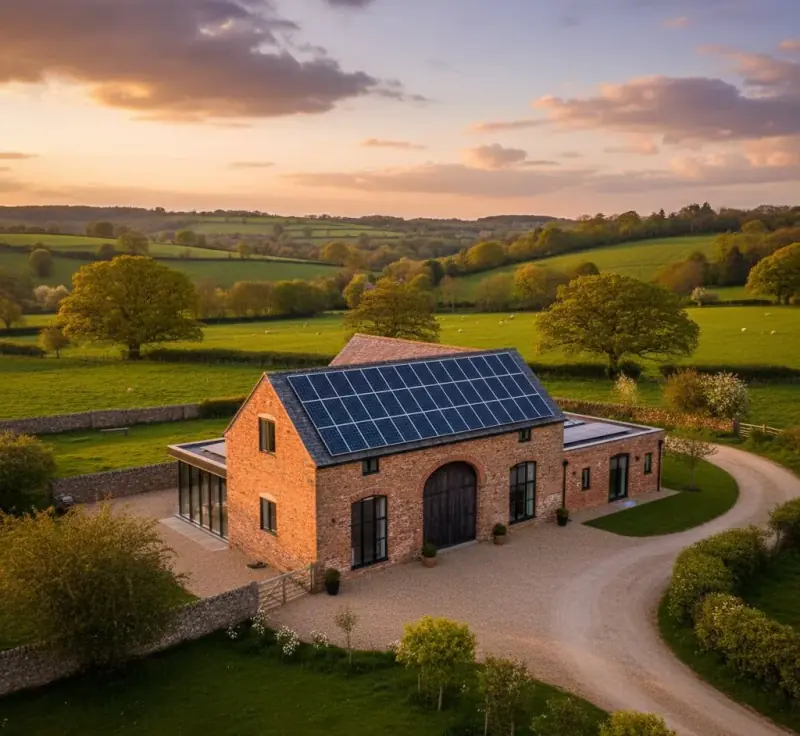
Mortgage on a Property with Solar Panels
Can you get a mortgage on a property with solar panels? Owned panels are usually fine. Leased panels can be a real problem. Here's the full picture for UK buyers.

Mortgage Affordability: How Lenders Decide
How do UK mortgage lenders assess affordability? Understand income multiples, stress tests, committed expenditure, and what affects how much you can borrow.
How Much Can I Borrow for a Mortgage? UK Income Multiples Explained
How much mortgage you can borrow — income multiples, affordability assessments, what reduces borrowing power.
Remortgaging in the UK: The Complete Guide
Complete UK remortgage guide covering process, costs, timing, and when you can't remortgage.
Not sure about your mortgage options?
Find out your options — whether it's your circumstances or your property holding you back. Free, no judgement, no cold calls.
This page is educational content, not financial advice or a personal recommendation. Unmortgageable is not FCA-authorised. Any broker or lender we link to is separately regulated — verify them on the FCA Register before engaging. See our affiliate disclosure.