This is general information, not financial advice. Your circumstances are unique — always speak to a qualified mortgage broker before making financial decisions. This page may contain affiliate links. Affiliate disclosure · Terms
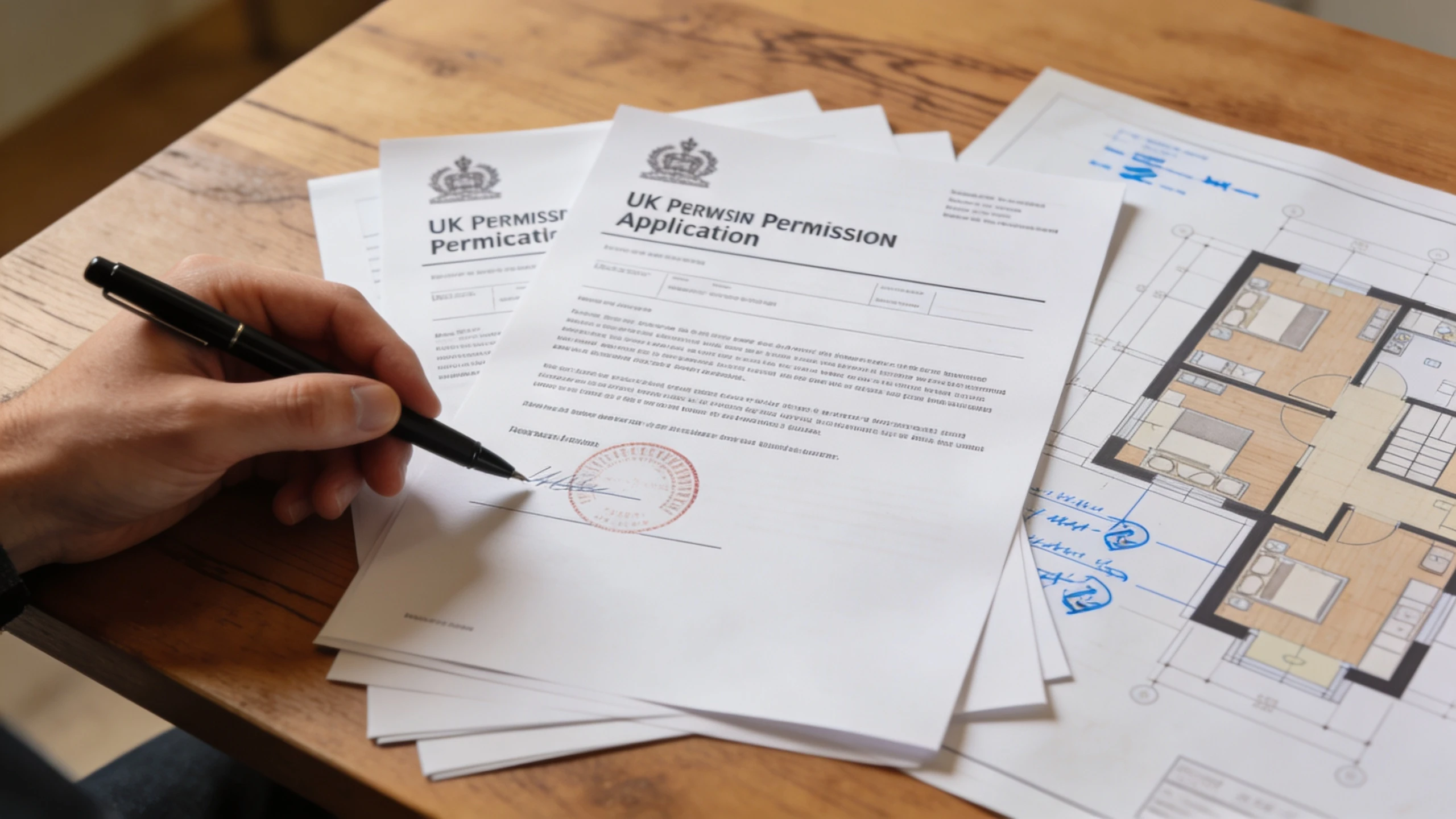
Building regulations are the technical standards that govern how building work is carried out — from structural safety to fire protection, energy efficiency to drainage. When work is done without the required approval, or without the final sign-off (called a completion certificate), it can cause serious problems when the property is sold or remortgaged. Missing building regulations approval is one of the most common issues that surfaces in residential conveyancing.
What Work Requires Building Regulations Approval?
Many homeowners carry out work without fully understanding whether building regulations apply. Planning permission and building regulations are separate things — you can need one without the other, both, or neither.
Work That Almost Always Requires Building Regulations
- Extensions — any new extension to a dwelling, whether single-storey or multi-storey
- Conversions — converting a garage, loft, or basement into living space
- Structural alterations — removing load-bearing walls, underpinning, modifying the roof structure
- New or replacement electrical circuits — major electrical work (not simple like-for-like replacement)
- New bathrooms or WCs — where new drainage is involved
- Replacement boilers and heating systems — gas and oil boilers, central heating upgrades
- Cavity wall insulation — in some cases
- New windows and doors (unless installed by a registered FENSA or CERTASS installer, who self-certify)
- Porches and carports — depending on size and materials
Work That Generally Does Not Require Building Regulations
- Like-for-like repairs — replacing tiles, repointing, redecorating
- Small detached structures — sheds, garden rooms under certain size thresholds
- Internal cosmetic work — new flooring, kitchen or bathroom refits that do not involve drainage or structural changes
- Exempt garden buildings — structures under 15m² with no sleeping accommodation
The government's planning portal has a guidance tool that helps identify whether specific work needs approval, but when in doubt, checking with the local authority's building control team before starting work is always the sensible approach.
Permitted development is not the same as building regulations approval
A common misunderstanding is that work carried out under permitted development rights (i.e., without needing planning permission) also does not need building regulations approval. This is not the case. The two regimes are independent. A rear extension may be permitted development under planning rules but still require a building regulations application and final completion certificate.
For a full explanation of how planning permission history affects your ability to mortgage a property — including issues with work done without consent — see our guide to planning permission and mortgages.
How Missing Approval Is Discovered
Missing building regulations approval typically surfaces in one of three ways:
-
Local authority search — conveyancing solicitors routinely conduct a local authority search, which includes a search of the planning and building control records. Permitted and refused applications, along with building regulations applications and completion certificates, appear here.
-
Solicitor enquiry — solicitors raise standard enquiries with the seller about alterations made to the property. If the seller discloses work was done but cannot produce building regulations completion certificates, this triggers further investigation.
-
Surveyor observation — a surveyor conducting a building survey may note physical evidence of alterations and ask about the relevant approvals.
The Options When Approval Is Missing
There are three main routes when a property is found to have unapproved works: retrospective regularisation, indemnity insurance, or doing nothing (which is rarely appropriate).
Option 1: Retrospective Building Regulations Approval (Regularisation)
Local authorities can issue a retrospective building regulations completion certificate through what is called a regularisation application. This is a formal application to building control confirming that the work, as carried out, meets the relevant standards.
The process:
- Submit a regularisation application to the local authority building control (LABC) or to an approved inspector
- Pay the regularisation fee (typically £150–600 depending on the extent of work)
- The building control officer inspects the work — this may involve cutting away sections of plasterboard, lifting floorboards, or other investigative work to assess whether the structure, insulation, or other hidden elements comply
- If the work meets the standards, a regularisation certificate is issued
- If the work does not meet the standards, you will need to carry out remedial works before the certificate can be issued
When regularisation is practical:
Regularisation works best when the work is relatively recent (so the original builder may still be around, there are drawings available, and the work is likely to comply with relevant standards) and when the alterations are accessible for inspection without excessive disruption.
When regularisation is less practical:
Regularisation becomes difficult if the work was done many years ago, if accessing the hidden elements would cause significant damage, or if the work clearly does not comply and remediation would be very costly. In these cases, indemnity insurance is often the preferred route.
Cost summary for regularisation:
- Local authority fee: £150–600
- Investigative work (opening up): £200–2,000 depending on extent
- Remedial works (if required): highly variable
- Total: £500–5,000+ depending on outcome
Option 2: Indemnity Insurance
Building regulations indemnity insurance is a one-off insurance policy that protects the buyer (and their lender) against the risk of the local authority taking enforcement action against the unapproved works. It does not remove or regularise the issue — it insures against the financial consequences if the council pursues action.
How it works:
- The seller typically provides and pays for the policy, though in practice costs are often negotiated
- The policy is taken out in the name of the buyer and their mortgage lender
- It is a single premium, paid once, with no ongoing payments
- The policy transfers to future buyers when the property is sold again
- Cover typically extends to the cost of rectifying the works if enforcement is required, plus loss of value
Typical costs:
Indemnity insurance for missing building regulations is generally inexpensive:
- Standard single-storey extension or loft conversion: £150–400
- More complex or recent work: £400–1,000
- Policies for multiple issues or high-value properties: £500–2,000+
What most lenders require:
Most mainstream mortgage lenders will accept indemnity insurance as sufficient comfort for missing building regulations where:
- The work is more than 12 months old (very recent unapproved work carries higher enforcement risk)
- There are no signs of structural defects or safety issues with the work
- The policy is offered on proper terms by a reputable insurer
Lenders typically ask their solicitors to confirm that appropriate indemnity insurance is in place. As long as this is confirmed, the mortgage proceeds.
Important caveat:
Once the potential indemnity insurance route is being pursued, neither the buyer, seller, nor solicitor should make any contact with the local authority about the works. Alerting the council to the unapproved works removes the ability to obtain insurance (since the risk is no longer unknown to the authority).
Do not contact the council if you are going for indemnity insurance
Indemnity insurance relies on the local authority being unaware of the specific unapproved works. The moment you write to the council asking about enforcement or regularisation, you alert them to the issue. If you have decided that indemnity insurance is the right route, avoid any approach to the council until the policy is in place — and discuss this carefully with your solicitor first.
Option 3: Doing Nothing
In some situations, particularly where the work is very old, very minor, or clearly not enforceable, a solicitor may advise that no action is needed. After certain time periods, the ability to enforce building regulations is severely limited:
- Enforcement limitation (England and Wales): Generally 12 months from the date of completion of the work for building regulations enforcement notices. After this, enforcement is very difficult.
- Older work: If work was carried out more than 12 months ago and there has been no enforcement action, the practical risk is low — though note that problems with the physical work itself (structural failure, fire safety) can still arise regardless of the enforcement position.
However, "doing nothing" is rarely comfortable for a buyer or their lender, and the solicitor will usually still want some form of comfort — typically indemnity insurance even if the enforcement risk is low.
How Lenders View Missing Building Regulations
Most mainstream lenders have clear policies on missing building regulations approval. The general position is:
- Minor works (cosmetic, low risk): Often acceptable with no action required, at the surveyor's discretion
- Older work with no enforcement risk: Acceptable with indemnity insurance in place
- Recent work with potential structural or safety issues: May require a structural engineer's report confirming safety, in addition to indemnity insurance
- Work that causes serious structural concern: May result in the lender declining to proceed until the work is assessed and any defects remedied
Where a lender has specifically raised a concern about missing building regulations, the solution almost always involves one of the following:
- Indemnity insurance (most common)
- A structural engineer's or surveyor's report confirming the work is safe
- Retrospective regularisation certificate from the local authority
Different lenders have different tolerances. Some are more willing to rely on indemnity insurance; others want additional comfort. If your lender has raised a formal requirement, a specialist broker can sometimes identify alternative lenders who have a more pragmatic approach to the specific issue.
The Role of the Surveyor
When a surveyor carries out a mortgage valuation or building survey, they are assessing physical condition — not planning or building regulations compliance. A surveyor who notices an obvious alteration (a loft conversion, a knocked-through ground floor) may note it in their report and flag that building regulations compliance has not been confirmed.
For buyers, commissioning a full building survey (rather than just a mortgage valuation) is worthwhile for any property where alterations are visible. The surveyor can comment on whether the work appears structurally sound and whether there are signs of poor-quality construction. This is separate from the legal question of whether building regulations were obtained, but the two are connected — if the work was done properly by a competent builder, regularisation (if pursued) is more likely to succeed.
Selling a Property with Missing Building Regulations
If you are selling and your solicitor has identified missing building regulations on a previous alteration, the practical options are:
- Provide indemnity insurance — arrange a policy before exchange. This is the most common solution and usually resolves the issue quickly.
- Apply for retrospective regularisation — slower (allow 4–12 weeks for the process) but produces a proper certificate that provides stronger comfort than insurance.
- Disclose the issue and adjust the price — if the works are clearly problematic (structurally unsafe, fire safety concerns), indemnity insurance may not be available, and remediation or a price reduction is more appropriate.
As a seller, attempting to conceal known issues with building regulations can constitute misrepresentation, which carries legal consequences. Disclosure and resolution is always preferable to concealment.
Costs and Timelines at a Glance
| Route | Cost | Timeline |
|---|---|---|
| Indemnity insurance | £150–2,000 | 1–5 days once instructed |
| Regularisation certificate | £500–5,000+ | 4–12 weeks (more if remedial work needed) |
| Structural engineer's report | £400–1,500 | 1–2 weeks |
What to do next
Missing building regulations approval is a common issue that is resolved in the vast majority of cases — either through indemnity insurance or retrospective regularisation. It rarely kills a property sale outright, but it does require careful legal handling and, in some cases, lender-specific advice.
If you are a buyer whose lender has raised a concern, or a seller trying to resolve the issue quickly, the key is to act through your solicitor promptly rather than attempting to handle it independently.
Our exclusive broker partner
Create Finance — for missing building regulations or property legal issues
Create Finance is authorised and regulated by the FCA — Unmortgageable is not. We earn a referral fee from Create Finance only if your mortgage completes through them. This never affects what you pay or what advice you receive.

Unmortgageable is not FCA-authorised. Create Finance is — verify them independently on the FCA Register. See our affiliate disclosure.
This is educational content, not financial or legal advice. Your situation is unique — speak to a qualified solicitor and, where relevant, a mortgage broker before making any decisions.
Related reading

Solicitor Found a Title Issue: Will It Kill Your Mortgage?
Your solicitor found a title issue on the property. What it means, which issues kill mortgages, and which are fixable with indemnity insurance.
Missing Building Regulations Approval: What It Means for Your Sale or Purchase
What happens when a property has works done without building regulations approval. Regularisation certificates, indemnity insurance, how lenders view missing sign-off, and costs.
Non-Standard Construction Mortgages: What Counts and Who Lends?
UK guide to mortgages on non-standard construction homes. Timber frame, concrete, PRC, thatched — which lenders accept what and what surveys you need.

Mortgage Declined: What to Do Next
Mortgage application declined? Don't panic. Understand why lenders say no, what to do next, and how to improve your chances second time around.
Not sure about your mortgage options?
Find out your options — whether it's your circumstances or your property holding you back. Free, no judgement, no cold calls.
This page is educational content, not financial advice or a personal recommendation. Unmortgageable is not FCA-authorised. Any broker or lender we link to is separately regulated — verify them on the FCA Register before engaging. See our affiliate disclosure.