This is general information, not financial advice. Your circumstances are unique — always speak to a qualified mortgage broker before making financial decisions. This page may contain affiliate links. Affiliate disclosure · Terms
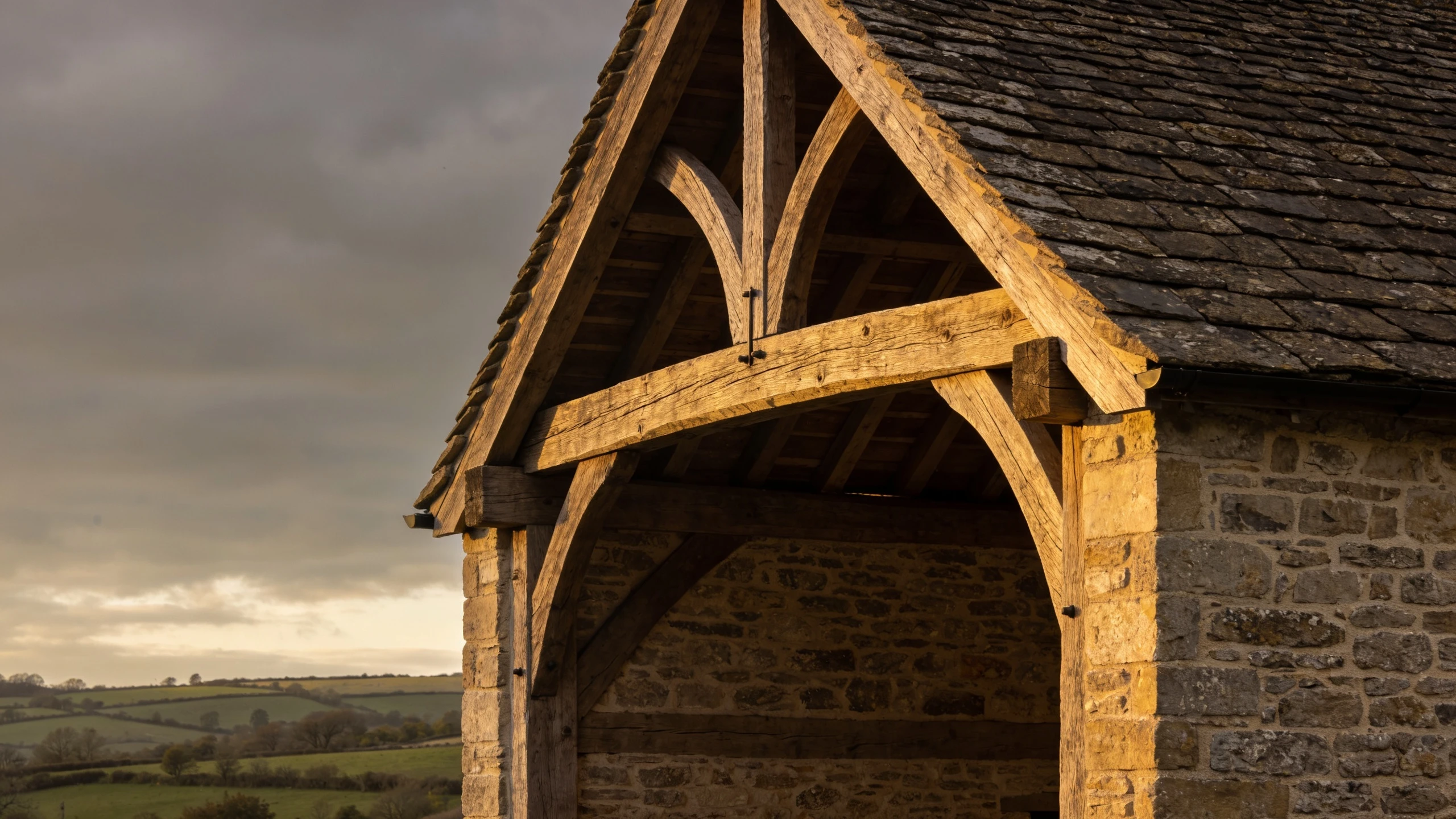
Barn conversions are among the most sought-after rural properties in the UK — large, characterful, often set in genuine countryside. They are also one of the more complex categories of residential property to finance. The planning history, the construction method, the rural location, and the potential for agricultural ties all combine to create mortgage challenges that require careful navigation.
Class Q Permitted Development: The Basics
Our exclusive broker partner
Create Finance — for barn conversion specialist mortgage placement
Create Finance is authorised and regulated by the FCA — Unmortgageable is not. We earn a referral fee from Create Finance only if your mortgage completes through them. This never affects what you pay or what advice you receive.

Unmortgageable is not FCA-authorised. Create Finance is — verify them independently on the FCA Register. See our affiliate disclosure.
Since 2014, Class Q of the Town and Country Planning (General Permitted Development) (England) Order allows certain agricultural buildings to be converted to residential use without a full planning application. The process requires prior approval from the local planning authority rather than full planning permission — a lighter-touch consent mechanism intended to support rural housing delivery.
Class Q has been amended several times since its introduction. In its current form, it allows for the conversion of agricultural buildings (or parts of them) to create up to five dwellings per agricultural unit, subject to conditions and prior approval of specific matters:
- Transport and highways impacts
- Contamination risks
- Flooding risks
- Noise impacts
- The design and external appearance of the development
The appeal of Class Q is speed and certainty: prior approval is quicker than a full planning application, and the principle of residential use is established by the permitted development right rather than requiring a planning committee to approve it.
What Class Q Cannot Do
Class Q has important limitations that directly affect mortgage eligibility:
No substantial reconstruction: This is the critical point, established definitively by the case of Hibbitt and another v Secretary of State for Housing, Communities and Local Government [2016] EWHC 2853 (Admin). The court held that Class Q does not permit works that amount to substantial reconstruction — it permits conversion of what exists. You can put in windows, internal walls, insulation, and services. You cannot demolish and rebuild to the same footprint, even if the result looks similar.
The agricultural building must be structurally capable: The existing structure must be able to bear the conversion without substantial reconstruction. A barn that requires new walls, new roof structure, or replacement of most of the primary structural frame falls outside the scope of Class Q.
No extensions: Class Q cannot be combined with extensions to the agricultural building. The residential unit must sit within the existing envelope.
Conditions apply: Class Q dwellings typically come with conditions attached — including conditions about use and sometimes about occupancy.
The Hibbitt problem in practice
Many barn conversions that have been marketed and sold as Class Q conversions were in fact substantially reconstructed — new external walls were built, the roof was replaced, or the original structure was demolished beyond what the law allows. If the original building could not stand independently and the conversion involved substantial new-build work, the planning consent may be unlawful. This is a serious problem for buyers because unlawful development can be enforced against without time limit in some circumstances. Always check the prior approval carefully with your solicitor.
Full Planning Permission Conversions
Not all barn conversions rely on Class Q. Many go through the full planning process:
Change of use application: An application to change the building's use from agricultural (Class B) to residential (Class C3). This requires a planning committee decision and gives neighbours and the local authority full opportunity to scrutinise the proposal.
Design flexibility: Full planning permission allows for more significant alterations, extensions, and redesign than Class Q — provided the planning authority is satisfied.
New Permitted Development Rights: A barn conversion that has full planning permission and building regulations completion may have full permitted development rights as a residential dwelling, allowing future alterations without repeated planning applications.
For mortgage purposes, a barn with full planning permission and a building regulations completion certificate is in a stronger position than a Class Q conversion, particularly where the full planning route allowed structural work that would not have been possible under Class Q.
The Structural Challenge
Whatever the planning route, barn conversions present structural challenges that standard houses do not:
Original Construction Materials
Traditional barns were built for agricultural use — to store hay, grain, or livestock. They were not designed to housing standards. Common structural materials include:
- Timber frame: Oak, elm, or other hardwood frames with infill panels. Often structurally robust if maintained, but susceptible to decay, pest damage, and movement over time.
- Stone: Rubble stone walls without the engineering of a domestic building. Often thick (providing good thermal mass) but sometimes poorly bonded and with structural weaknesses that are difficult to identify without specialist survey.
- Brick: Later barns often in brick, sometimes single-skin or non-cavity construction.
- Corrugated metal and modern agricultural structures: Post-war and contemporary agricultural buildings are often steel-framed with metal cladding. Converting these to residential use under Class Q is possible but creates thermal, acoustic, and aesthetic challenges.
Structural Warranty Requirements
Lenders advancing money on new or recently converted residential properties generally require a structural warranty — a form of insurance that protects the owner and future buyers against structural defects for a defined period (typically 10 years).
For barn conversions:
-
New Build Warranty: A warranty from providers such as NHBC Buildmark, LABC Warranty, Premier Guarantee, or ICW Warranty covers the conversion as if it were a new build. These warranties require the warranty provider's inspector to be involved throughout the construction process.
-
Professional Consultants Certificate (PCC): Where a structural warranty was not obtained during construction, a Professional Consultants Certificate from a chartered architect, structural engineer, or RICS surveyor may be accepted by some lenders as an alternative. The professional must confirm they monitored construction and are satisfied with its structural adequacy.
-
No warranty at all: Some conversions were carried out without a warranty, and the conversion may be too old for a retrospective PCC. In this case, only specialist lenders willing to proceed on the surveyor's report alone will consider the application. This significantly narrows the options.
Agricultural Ties
Agricultural ties (also called occupancy conditions) are planning conditions attached to some rural conversions that restrict who can occupy the property:
What they say: Typically, an agricultural tie requires the property to be occupied by a person "solely or mainly employed, or last employed, in agriculture (including any dependants of such a person)."
Their history with barn conversions: Agricultural ties were historically applied to dwellings built in the countryside to house agricultural workers. They are less commonly applied to barn conversions under Class Q (which generally cannot impose new agricultural ties) but may exist on older conversions or conversions carried out under full planning permission that included such a condition.
Mortgage implications: A property with an agricultural tie is significantly harder to mortgage. The restricted occupancy means the pool of eligible buyers is much smaller, reducing the security value for the lender. Some mainstream lenders will not consider tied properties at all.
If you are buying a barn conversion, your solicitor must check specifically whether any occupancy conditions are attached to the planning consent. Where a tie exists, applying to the local authority to have it removed or varied is possible but takes time and is not guaranteed to succeed.
Class Q and occupancy conditions
Class Q permitted development does not typically result in new agricultural ties being imposed, because the prior approval process cannot add conditions beyond the specific matters for prior approval. However, some local authorities have attempted to apply occupancy conditions to Class Q conversions in ways that may or may not be lawful. If prior approval contains an occupancy condition, take legal advice on its validity.
Rural Location and the Valuation Problem
Barn conversions are almost always in rural or semi-rural locations. This creates the same comparable sales problem encountered with other unusual properties: there may be very few comparable sales within a reasonable radius, and those that exist may be quite different in character.
Limited comparables: A barn conversion in a rural setting cannot be directly compared to a standard house in the nearest village. The valuer must draw on sales of comparable rural residential properties across a wider area and apply significant professional judgement.
Rural market volatility: Rural property markets can be less liquid than suburban or urban markets. In a downturn, rural and unusual properties often fall further in value and take longer to sell. Lenders factor this into their risk assessment.
Location-specific risks: Rural properties may be exposed to flood risk (often in valley or riverside locations), agricultural noise and smell from neighbouring land, and planning restrictions that prevent future development.
The Conversion Quality Spectrum
There is a wide spectrum of quality among UK barn conversions:
High-specification conversions retain original character — oak beams, stone floors, exposed brick — while delivering modern residential standards of insulation, services, and waterproofing. These conversions carry full building regulations sign-off, structural warranties, and often listed building consent where applicable. They attract premium prices and are generally the easiest to mortgage.
Mid-range conversions may compromise on some quality elements to keep costs down — modern internal finishes that do not reflect the character of the original building, basic-specification insulation and glazing, or limited treatment of original structural elements. They are usually mortgageable with appropriate lenders and surveys.
Lower-quality or problematic conversions may have been carried out under Class Q without adequate structural investigation, with minimal building regulations compliance, or without the original structure being truly capable of supporting the conversion. These are the conversions most likely to cause mortgage difficulties.
Building Regulations completion — evidenced by a certificate from the local authority or an approved inspector — is a key indicator of conversion quality. It confirms that an independent inspector assessed the work against the Building Regulations throughout construction.
Insurance for Barn Conversions
Standard home insurance is usually available for high-quality, fully documented barn conversions. However:
Non-standard construction materials — stone walls, oak frames, clay tile or stone slate roofing — require specific consideration. The rebuild cost must reflect the actual cost of restoring those materials, which is higher than standard brick-and-tile construction.
Specialist insurers — including rural and agricultural specialists such as NFU Mutual, CIS Rural, and brokers specialising in non-standard construction — are often better placed to provide appropriate cover than standard home insurance providers.
Listed buildings: Where the barn conversion involves a listed building, listed building-specific insurance requirements apply. See the article on listed building mortgages for detail.
Which Lenders Consider Barn Conversions?
The Key Requirements
To get any lender to consider a barn conversion, you generally need:
- Clear planning consent (prior approval or full planning permission) with no outstanding enforcement issues
- Building regulations completion certificate
- Structural warranty or professional consultants certificate from the conversion
- A surveyor's report confirming structural adequacy and appropriate valuation
- No agricultural tie, or evidence that it does not apply / is being removed
Mainstream Lenders
Halifax, Nationwide, and other major lenders will consider barn conversions that meet standard residential criteria — but the conversion must be of sufficient quality and documentation that it can be assessed as standard residential security. Many barn conversions do not pass this test because the documentation or construction quality is below what the lender's valuer can sign off.
Specialist Lenders
For barn conversions that fall outside mainstream criteria, specialist lenders — including Together Money, Shawbrook Bank, Precise Mortgages, Aldermore, and certain private banks — have more appetite. They will typically require:
- A detailed surveyor's report
- Evidence of planning and building regulations compliance
- Deposit of 20-35%
- Interest rates above standard residential rates
Rural-Focused Lenders
Some lenders with a focus on rural or agricultural markets — including Skipton Building Society, Yorkshire Building Society, and some local building societies — have more direct experience of barn conversions and may be willing to consider cases that more urban-focused lenders decline.
Practical Advice
-
Verify the planning consent — check the prior approval or planning permission document carefully, and have your solicitor confirm it is lawful and that conditions have been complied with.
-
Obtain all building regulations documentation — completion certificate, inspection records, and any specialist reports commissioned during the conversion.
-
Get a structural warranty or PCC — confirm which is available and whether it meets the requirements of your prospective lender.
-
Check for occupancy conditions — your solicitor must confirm whether any agricultural tie or other occupancy condition is attached.
-
Commission a Level 3 Building Survey from a surveyor with specific experience in rural and non-standard properties. A barn conversion warrants the most thorough level of survey available.
-
Use a specialist broker with experience in rural and converted property mortgages. The difference between a broker who knows this market and one who does not is the difference between finding the right lender first time and burning months of the process.
If barn conversion planning or structural issues make mortgage approval difficult, selling directly for cash may be the fastest route. SellTo offers free cash valuations with no fees to the seller.(affiliate)
Our exclusive broker partner
Create Finance — for barn conversions and rural properties
Create Finance is authorised and regulated by the FCA — Unmortgageable is not. We earn a referral fee from Create Finance only if your mortgage completes through them. This never affects what you pay or what advice you receive.
Unmortgageable is not FCA-authorised. Create Finance is — verify them independently on the FCA Register. See our affiliate disclosure.
This is educational content, not financial advice. Your situation is unique — speak to a qualified mortgage broker and a solicitor experienced in rural property before making any decisions.
Find out if the property is the problem
Quick check for the construction, lease, cladding, and title issues that get mortgage applications declined — before you spend on a survey.
Get startedRelated reading
Converted Property Mortgage: Barns, Chapels, and Commercial Conversions
Mortgage on a converted barn, chapel, or commercial property in the UK: planning classes, warranty requirements, deposit expectations, and which lenders specialise in conversions.
Agricultural Tie Mortgages: Section 106 and Occupancy Conditions
How agricultural ties and Section 106 occupancy conditions affect property values and mortgageability in the UK. Applying for removal, success rates, and value uplift.
Missing Planning Permission: Will It Stop Your Mortgage?
Extensions built without planning permission are common in UK property sales. Learn about indemnity insurance, Certificates of Lawfulness, and when lenders will and won't proceed.
Non-Standard Construction Mortgages: What Counts and Who Lends?
UK guide to mortgages on non-standard construction homes. Timber frame, concrete, PRC, thatched — which lenders accept what and what surveys you need.
Not sure about your mortgage options?
Find out your options — whether it's your circumstances or your property holding you back. Free, no judgement, no cold calls.
This page is educational content, not financial advice or a personal recommendation. Unmortgageable is not FCA-authorised. Any broker or lender we link to is separately regulated — verify them on the FCA Register before engaging. See our affiliate disclosure.