This is general information, not financial advice. Your circumstances are unique — always speak to a qualified mortgage broker before making financial decisions. This page may contain affiliate links. Affiliate disclosure · Terms

When a property solicitor reviews a title register, easements and rights of way are among the first things they check. Some are benign — a footpath across a corner of the garden that nobody uses. Others are significant — a right of access for neighbours, an undocumented drainage easement, or a disputed pathway that could affect future development. Lenders care about these issues because they affect how freely the property can be used and how easily it could be sold.
What Easements Are and How They Work
An easement is a proprietary right attached to land. It is not a personal arrangement between two landowners — it runs with the land, meaning it continues to apply when either the benefited or burdened land changes hands.
Every easement has two components:
- The dominant tenement: The land that benefits from the easement
- The servient tenement: The land that is burdened by the easement
For example, if your property has a right of way across a neighbour's driveway, your property is the dominant tenement and the neighbour's driveway is the servient tenement.
How Easements Are Created
Easements can be created in several ways:
Express grant: Written into a deed — usually a conveyance or transfer document. This is the clearest and most enforceable form.
Express reservation: When land is sold, the seller reserves an easement over the part being sold. For example, a farmer selling off a field but retaining a right of way across it.
Implied grant or reservation: Where the circumstances clearly indicate that an easement was intended — the classic example is where land sold off would be landlocked without a right of way. Courts have developed rules for implying easements (the rule in Wheeldon v Burrows, for example).
Prescription: An easement acquired by long use — typically 20 years of open, peaceful, and continuous use without the landowner's permission. Under the Prescription Act 1832 and common law, this can create an enforceable right even without any written agreement.
Statutory creation: Some easements are created by statute — for example, utility providers have statutory rights to lay and maintain apparatus.
Types of Easements That Affect Mortgages
Rights of Way
A right of way allows someone to cross your land. They come in several types:
Public footpaths and bridleways: These are statutory rights for the public to pass on foot (footpath) or on foot and on horseback (bridleway). They are recorded on the Definitive Map held by the local authority. Lenders treat these pragmatically — they are visible, well-understood, and affect millions of properties. Most mainstream lenders will not object to a public footpath on or near a property unless it creates an unusual situation (passing through the enclosed private garden of a house, for example).
Public byways: Open to all traffic, including vehicles. A public byway through a residential property's grounds would attract more scrutiny.
Private rights of way: Granted by deed or acquired by prescription. These give specific parties the right to cross your land. The mortgage concern is whether the scope of the right is clear, whether it is properly documented, and whether it could give rise to dispute or significantly affect how the property is used.
Rights of way for access: Where a property depends on a right of way over someone else's land to access the public highway — a shared driveway, a lane across a field — the security of that access is critical to mortgageability. If access is informal or undocumented, lenders may decline until it is properly formalised.
Drainage and Utility Easements
Many properties have drainage runs crossing them — public sewers maintained by water authorities (which have statutory easements) or private drains from neighbouring properties. Private drainage easements must be properly documented. An undocumented drain crossing your garden, or one where the existence of the drain is known but not formally recorded, creates a title issue.
Similarly, utility providers may have easements to lay cables, pipes, or apparatus under your garden. These statutory easements are well understood and rarely cause mortgage problems, though building near them can be restricted.
Rights of Light
A right of light is an easement that protects a neighbour's right to receive natural light through defined windows. If you build something that blocks that light, the neighbour can seek an injunction or damages. Rights of light are a complex area relevant mainly to new development and are rarely a mortgage issue for standard residential purchases — unless there are indications that a neighbour has acquired or is seeking to acquire a right of light that would restrict future development of the property.
How Easements Appear on Land Registry Title
When you receive your solicitor's report on title, you will see that the Land Registry title register is divided into sections:
- Property Register (A): Describes the property, including any easements that benefit it (rights your property has over other land)
- Proprietorship Register (B): Who owns it
- Charges Register (C): Mortgages, restrictive covenants, and other burdens including easements over your land
Easements burdening your land appear in the Charges Register. Your solicitor should explain each one and advise whether it is:
- Well understood and acceptable
- Potentially problematic and requiring further investigation
- Unknown in extent or existence and requiring further action
The title plan matters
Easements should be identified on the title plan — the map showing the property boundaries and the route of any rights of way or the extent of any easement area. If an easement is described in words but not shown on the plan, or if the plan is unclear, this creates ambiguity that lenders may flag.
How Lenders Assess Easements and Rights of Way
Lenders do not read the title register directly — they rely on their solicitor (who is also acting for them in a standard residential purchase) to report on any title issues. The solicitor's report to the lender will either confirm the title is acceptable or flag issues that need resolution.
Acceptable without further action:
- Public footpaths and bridleways that follow an expected route (boundary, corner of garden, field edge)
- Well-documented private rights of way with clear scope, parties, and maintenance obligations
- Utility company easements for apparatus already in place
May require further action or indemnity insurance:
- Rights of way where the extent is unclear or undocumented
- Prescriptive easements (acquired by use) where there is no formal documentation
- Rights of way that appear on title but have never actually been used
- Access arrangements not formalised as easements
May cause lender to decline or require specialist advice:
- Disputed rights of way where litigation is ongoing or threatened
- Access to the property wholly dependent on an informal arrangement
- Right of way passing through the main private garden of a house
- Easement that significantly restricts development or use of the property
Indemnity Insurance as a Solution
Legal indemnity insurance is the standard solution for many title issues, including easement problems. It works by insuring the buyer (and the lender) against the financial consequences of a specific risk materialising.
For easement issues, common indemnity policies cover:
- Lack of formal documentation: Where an easement clearly exists in practice but has not been formally granted or registered
- Prescriptive easement risk: Where a neighbour might claim they have acquired a right by use
- Undocumented drainage: Where a drain crosses the land but has not been formally documented
- Unknown third-party rights: Where there is a risk that historical arrangements created rights that are not visible on the title
How the process works:
- The solicitor identifies a title issue
- The solicitor contacts a legal indemnity insurance provider (Countrywide Legal Indemnities, Aviva, Zurich are common providers)
- A policy is quoted — usually a one-off premium
- The policy is issued in the buyer's and lender's names
- The lender reviews the policy terms and either accepts it as resolving the issue or requires something further
One critical rule: Never contact the neighbour or anyone with a potential interest in the right before obtaining indemnity insurance. Contacting the party draws attention to the issue and can invalidate the policy (since the risk is no longer truly "unknown" to the third party).
The "Don't Contact the Neighbour" Rule
This rule causes confusion for buyers who think transparency is always the right approach. In the context of legal indemnity insurance for undocumented rights and easements, the logic is clear:
An indemnity policy insures against the risk that a third party will make a claim. If you contact the third party before obtaining the policy, you alert them to the issue. They may assert their rights — at which point the risk has crystallised and no longer needs insuring, it needs resolving. More importantly, the insurer may refuse to cover a risk that has been activated by the policyholder's own actions.
Your solicitor's instructions on this point should be followed precisely.
When Easements Affect Valuation
Some easements do not just affect the legal title — they reduce the property's market value. This happens when:
- A right of way passes through the main usable private space (garden, courtyard)
- The easement restricts future development in a way that a buyer would normally expect to be possible
- The easement creates practical difficulties (vehicles crossing, drainage maintenance obligations)
- The easement creates ongoing costs or management responsibilities
If the valuer notes an easement that reduces value, the mortgage offer may be based on a lower figure than the purchase price. This can affect your loan-to-value ratio and the deposit required.
Access Rights and Landlocked Land
A specific and particularly serious easement scenario is where a property's access to the public highway depends entirely on a right of way over someone else's land. This arises most commonly with:
- Rural cottages reached by a track across farmland
- Converted barns or outbuildings sold off from a larger estate
- Urban properties in back-land developments reached through a shared access
Lenders are acutely concerned about access because property without guaranteed access is effectively unsaleable in a forced sale scenario. If the right of access is:
- Formally granted by deed and registered at Land Registry: Most lenders will accept this
- Informal or based solely on tolerance: Lenders are unlikely to proceed until formalised
- Subject to a dispute: Lenders will almost certainly decline until resolved
- Dependent on a third party who is difficult to contact or identify: This is a complex situation requiring specialist advice
Where access is informal, the solution is usually a formal deed of easement between the parties — a legal document properly drawn up and registered. This is straightforward in theory but requires co-operation from the landowner across whose land the access runs.
Getting a Structural Survey — What the Surveyor Checks
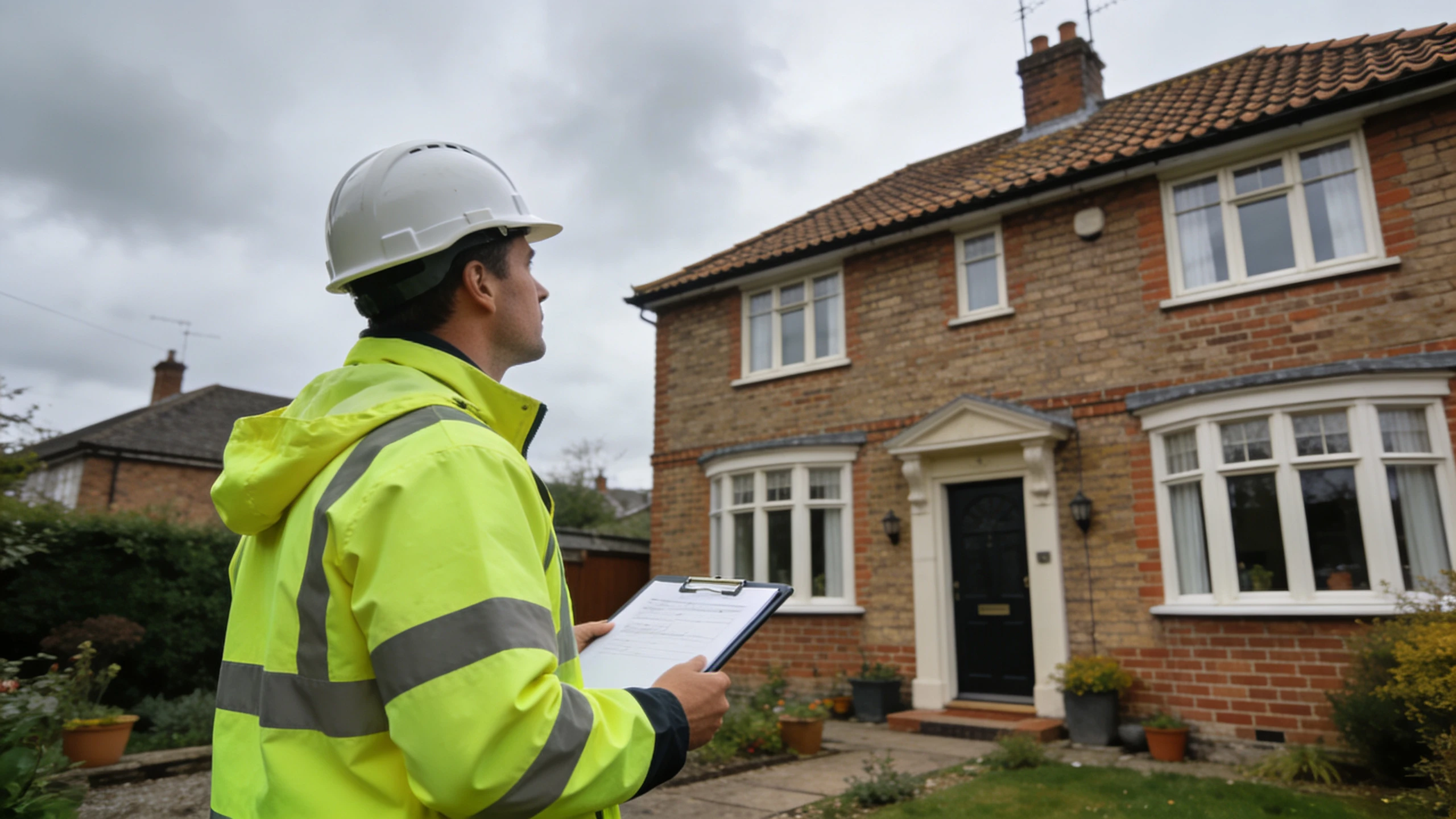
A structural surveyor (RICS Level 2 or Level 3) is not a legal expert and will not advise on the legal implications of easements. However, a good surveyor will:
- Note the presence of physical features consistent with rights of way (gates, worn paths, tracks)
- Flag any arrangements that appear informal or potentially disputed
- Note utility apparatus and drainage routes that may have easement implications
- Draw attention to access routes that rely on third-party land
The surveyor's observations can prompt further legal investigation before exchange rather than after — saving time and potentially preventing exchange on a title that will prove problematic.
When to Use a Specialist Lender
Most easement and right of way issues can be resolved through legal indemnity insurance, formal deed of easement, or detailed advice from your solicitor. The cases where specialist lenders become necessary are those where:
- The title issue is too significant for mainstream lenders to accept, even with indemnity insurance
- The property is subject to active dispute that cannot be resolved before purchase
- The legal position is complex and mainstream lenders' standard title requirements cannot be met
In these cases, a specialist lender may take a more individualised view — particularly for experienced property investors or developers who understand the legal landscape and have the resources to manage any eventual dispute.
Bridging Finance for Time-Critical Situations
Where a title issue is being resolved — for example, a deed of easement is being negotiated and should be available within weeks — but exchange must happen now, bridging finance can be an option. Bridging lenders are typically more flexible on title issues and work to shorter timescales. Once the title issue is resolved, the bridge is replaced by a standard mortgage.
Our exclusive broker partner
Create Finance — for properties with easement or rights of way issues
Create Finance is authorised and regulated by the FCA — Unmortgageable is not. We earn a referral fee from Create Finance only if your mortgage completes through them. This never affects what you pay or what advice you receive.

Unmortgageable is not FCA-authorised. Create Finance is — verify them independently on the FCA Register. See our affiliate disclosure.
This is educational content, not financial advice. Your situation is unique — speak to a qualified mortgage broker and a solicitor experienced in land law before making any decisions.
Related reading
Getting a Structural Survey in the UK: What to Expect
Level 2 vs Level 3 RICS surveys, when to instruct a structural engineer, costs, timelines, and how survey findings affect mortgage lending.

Specialist Mortgage Lenders UK: Who Are They?
Who are the specialist mortgage lenders in the UK? A comprehensive guide to lenders who help with bad credit, self-employment, and non-standard situations.

Bridging Loans Explained: When They Make Sense
UK guide to bridging loans. When they make sense, what they cost (0.5-1.5% monthly), the risks involved, and when to consider alternatives instead.

Second Charge Mortgages
What is a second charge mortgage and when does it make sense? Understand how second charges work in the UK, costs, risks, and alternatives.
Not sure about your mortgage options?
Find out your options — whether it's your circumstances or your property holding you back. Free, no judgement, no cold calls.
This page is educational content, not financial advice or a personal recommendation. Unmortgageable is not FCA-authorised. Any broker or lender we link to is separately regulated — verify them on the FCA Register before engaging. See our affiliate disclosure.