This is general information, not financial advice. Your circumstances are unique — always speak to a qualified mortgage broker before making financial decisions. This page may contain affiliate links. Affiliate disclosure · Terms
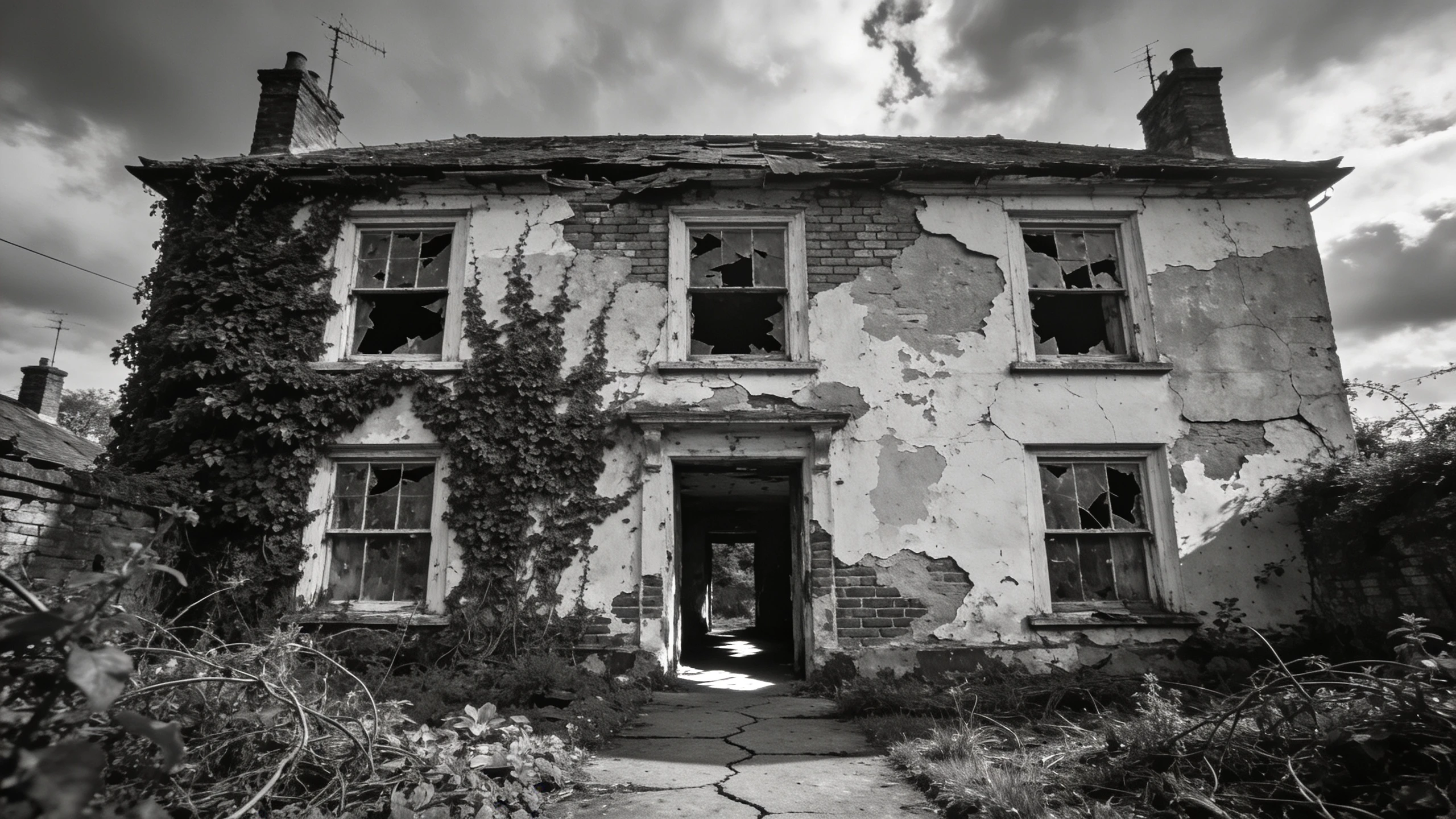
A derelict or uninhabitable property sits at the extreme end of the mortgage spectrum — conventional mortgage lenders simply will not touch them. But that does not mean they are impossible to buy, sell, or finance. There is an active market for these properties, a range of finance options for buyers willing to take on the challenge, and genuine routes for sellers who need to move on from a property they cannot maintain or mortgage.
What Makes a Property Uninhabitable?
The term "uninhabitable" has a specific meaning for mortgage purposes. A lender's surveyor will classify a property as unmortgageable or uninhabitable if it lacks the basic facilities and structural integrity required for residential use. The threshold varies slightly between lenders but typically includes:
Structural danger: Active structural collapse, unsafe floors, or roofing that has failed to the extent that the building cannot be safely occupied.
No water supply: Disconnected or non-functional water supply to the property.
No working sanitary facilities: Absent or non-functional toilet and bathroom.
No working kitchen: No means of preparing food in the property.
No electrical supply or gas supply: While not universally a blocker, disconnected utilities are often combined with other issues that make the property unacceptable.
Significant fire damage: Properties that have been damaged by fire but not repaired.
Extensive damp and rot: Where damp or dry rot has progressed to the point that the building fabric is significantly compromised.
In practice, properties do not need to have all of these issues to be classified as uninhabitable — one or two major deficiencies are usually enough to fail a mortgage valuation.
The surveyor decides
The mortgage lender's surveyor makes the final determination on whether a property is acceptable as mortgage security. Even where you believe a property is habitable, a surveyor may reach a different conclusion. Their assessment is based on the lender's criteria, not a general standard — and different lenders have different thresholds.
Why Derelict Properties Attract Buyers
Despite the financing challenges, derelict properties attract genuine interest:
Investor-renovators: Buyers who purchase at a significant discount, renovate to a habitable standard, and either sell at a profit or let the property.
Self-builders: People who want a property in a specific location and are willing to take on a significant project to achieve it.
Developers: Commercial developers looking for development sites, whether for refurbishment or demolition and new build.
Local residents: People in rural areas where affordable housing is scarce who are willing to take on a renovation to get onto the property ladder in their preferred location.
The common thread is that these buyers can access finance that does not require the property to be habitable — or they are buying with cash.
Bridging Finance for Derelict Properties
Bridging loans are the most common financing route for purchasing a derelict property with the intention of renovating. They are short-term loans secured against the property (and often against other assets), designed to be repaid when the renovation is complete — either by selling the property or remortgaging onto a standard mortgage.
How It Works in Practice
- You identify a derelict property and agree a purchase price
- You approach a bridging lender (usually through a specialist broker) with a renovation plan and exit strategy
- The bridging lender assesses the property's value both now ("as is") and after renovation ("gross development value" or GDV)
- They lend against a percentage of the purchase price, or in some cases against the GDV
- You complete the purchase and begin renovation
- On completion of renovation, you either sell the property or remortgage onto a standard mortgage
- The bridging loan is repaid from the sale proceeds or the remortgage
Bridging Finance Costs
Bridging finance is significantly more expensive than a standard mortgage. Use our bridging calculator to estimate the total cost for your specific loan amount and expected term before committing.
- Interest rates: Typically 0.75-1.5% per month (9-18% per year)
- Arrangement fees: Usually 1-2% of the loan amount
- Exit fees: Some lenders charge an exit fee of 1%
- Valuation costs: The lender requires their own valuation, typically £500-1,500
- Legal costs: Bridging transactions require specialist legal advice on both sides
For a £100,000 bridging loan over 12 months at 1% per month, the interest alone would be £12,000-12,680 (depending on whether interest is rolled up or serviced monthly), plus fees.
This cost must be factored into the renovation feasibility calculation. The numbers need to work even at the higher end of the cost estimate.
What Bridging Lenders Look For
A clear exit strategy: This is non-negotiable. The lender needs to know how they will be repaid — through a sale, a remortgage, or another identifiable source of funds.
Realistic renovation plans and costs: A proper schedule of works with realistic cost estimates from contractors. Many experienced bridging lenders have seen renovation projects overrun; they want evidence that you have too and have budgeted for it.
Experience: If this is your first renovation project, a bridging lender may require a higher deposit or additional security. Previous track record of similar projects helps.
Sufficient deposit: Most bridging lenders require 25-35% deposit for derelict properties, reflecting the additional risk.
Specialist bridging lenders who are active in the derelict property market include Together Money, Octane Capital, MT Finance, West One, and Precise Mortgages' bridging arm.
Self-Build and Renovation Mortgages
For buyers with a longer time horizon, self-build and renovation mortgages provide an alternative to bridging finance. These are purpose-built mortgage products designed for properties being built from scratch or undergoing significant renovation. Our self-build mortgage guide covers the full range of options in detail, including which lenders offer stage-release products and what documentation they require.
Key Features
Stage payments: The lender releases funds in stages as the renovation progresses — typically at foundation completion, wall plate level, wind and watertight, first fix, and final completion.
Lower cost than bridging: Stage-payment mortgages are cheaper than bridging finance, with rates much closer to standard mortgage rates.
Longer term: Unlike bridging finance, these are long-term mortgages — you do not need to repay them when the renovation is complete.
Restrictions: The property will typically need to be mortgageable at some point (i.e., the lender needs confidence it will reach a habitable standard), and the lender will want to see planning permission if structural changes are involved.
Buildstore and Ecology Building Society are among the lenders who have historically been active in this space.
Auction: The Most Effective Way to Sell a Derelict Property
For sellers, residential property auction is often the most effective route for a derelict or uninhabitable property. Auctions attract the cash buyers and experienced investors who are the natural market for these properties.
How Property Auction Works
Properties are listed in an auction catalogue (either physical or online). Buyers have the opportunity to inspect the property and review the legal pack before the auction. On auction day (or during an online auction window), bidders compete, and the highest bid above the reserve price wins.
The winning bidder pays a 10% deposit on the day and exchanges contracts immediately. Completion is typically 20-28 days later. This certainty of sale and speed of completion is the key advantage of auction.
Auction Costs for Sellers
- Entry fee: Typically £200-600
- Auctioneer's commission: Usually 2-2.5% of the sale price (sometimes plus VAT)
- Legal pack preparation: You must provide a legal pack (title documents, searches, special conditions). Typically £300-600 in legal fees
- Unsold property fee: If the property does not sell, some auctioneers charge a fee of £200-400
Setting the Reserve Price
The reserve price is the minimum you will accept. Experienced auctioneers will advise on a realistic reserve based on comparable sales. Setting it too high risks the property not selling; setting it too low protects you from under-selling if the room is quiet. The guide price is typically set just below the reserve to attract interest.
Major UK Property Auctioneers
- SDL Auctions — active nationally, strong in the Midlands and the North
- Barnard Marcus Auctions — London and South East focus
- Clive Emson — strong in South East England
- Savills, Knight Frank, Allsop — national coverage including derelict and development land
Prepare the legal pack in advance
One of the most common reasons for a derelict property auction falling through after the hammer falls is a problem with the legal pack. Engage your solicitor early and ensure the legal pack is complete — title documents, planning history, searches, and any relevant planning permissions or restrictions. Buyers who discover legal issues after bidding can pull out or renegotiate.
Cash Buyers and Property Purchasing Companies
Cash buyers are active in the derelict property market, including:
Property investors: Individual investors who buy at a discount, renovate, and either sell or let. These buyers move quickly but expect a significant discount.
Property purchasing companies ("we buy any home"): These companies offer guaranteed cash purchases at a discount. The discount is typically 20-35% below open market value, sometimes more for severely derelict properties. The benefit is certainty and speed; the cost is the discount.
Developers: Where a derelict property has development potential (either for refurbishment or demolition and new build), commercial developers may be interested, particularly if the site is large or in a desirable location.
Housing associations and local authorities: Some local authorities actively seek derelict properties to add to their affordable housing stock, particularly in areas with housing shortages. This can be worth exploring for isolated derelict properties in areas where local authorities are trying to address empty homes.
Sell your property
Need to sell a derelict property?
SellTo helps UK homeowners sell any property quickly — cash purchase or auction, no fees to you, and a straightforward process. Get a free, no-obligation offer.
Get a free cash offer →We may earn a commission if you use this service. Affiliate disclosure
Planning Considerations
For derelict properties, planning can significantly affect value and viability:
Change of Use
If a property has been derelict long enough, its use class may be disputed. A derelict residential property should retain its residential use, but if it has been used commercially or has been vacant for an extended period, the position may need clarifying. Your solicitor should confirm the planning use status.
Permitted Development Rights
Some renovation works can be carried out under permitted development rights without planning permission. Extensions, loft conversions, and outbuilding additions may fall within PD rights. However, listed buildings and properties in conservation areas have more restricted PD rights.
Demolition and New Build
Where a derelict property is genuinely beyond economic repair, demolition and replacement may be a practical option worth exploring. Planning permission for demolition and new build is generally available in residential areas, but:
- A new build must comply with current building regulations (higher thermal performance, accessibility standards, etc.)
- Listed buildings cannot be demolished without listed building consent — this is rarely granted
- Conservation area properties need conservation area consent for demolition
- The new building's design must be acceptable to the local authority
VAT on Renovation
A significant financial consideration: renovating a derelict property that has been empty for two or more years may attract 5% VAT (rather than the standard 20%) on eligible construction works. Converting a non-residential building to residential use also attracts the 5% rate. These reduced rates can make a significant difference to the overall renovation budget.
Practical Checklist for Buyers
Before purchasing a derelict property:
- Commission a full structural survey — the surprises in derelict properties can be expensive
- Get detailed renovation quotes from at least two contractors
- Add a contingency of 20-30% to your budget — derelict renovations always encounter unexpected costs
- Confirm the planning use status and any restrictions
- Check whether listed building or conservation area constraints apply
- Get bridging or renovation finance agreed in principle before committing to purchase
- Model the exit — what will the finished property be worth, and what mortgage will you be able to achieve?
Practical Checklist for Sellers
- Be realistic about value — a derelict property will not achieve the same price as a habitable equivalent
- Obtain a probate valuation or specialist derelict property valuation before deciding on your approach
- Consider whether minimal works (clearing the property, making it safe, reconnecting utilities) would significantly improve saleability
- Explore auction, cash buyers, and private sale through specialist estate agents active in your area
- Disclose all known issues honestly — legal problems discovered after sale can result in claims against you
Our exclusive broker partner
Create Finance — for derelict or uninhabitable property
Create Finance is authorised and regulated by the FCA — Unmortgageable is not. We earn a referral fee from Create Finance only if your mortgage completes through them. This never affects what you pay or what advice you receive.

Unmortgageable is not FCA-authorised. Create Finance is — verify them independently on the FCA Register. See our affiliate disclosure.
This is educational content, not financial advice. Your situation is unique — speak to a specialist mortgage broker and a solicitor experienced in complex property transactions before making any decisions.
Find out if the property is the problem
Quick check for the construction, lease, cladding, and title issues that get mortgage applications declined — before you spend on a survey.
Get startedRelated reading

Bridging Loans Explained: When They Make Sense
UK guide to bridging loans. When they make sense, what they cost (0.5-1.5% monthly), the risks involved, and when to consider alternatives instead.

Structural Defects and Mortgages: Wall Ties, Cracking, and Movement
How structural defects like wall tie failure, cracking, and building movement affect UK mortgages. Survey red flags, repair costs, and which lenders accept repaired properties.

Specialist Mortgage Lenders UK: Who Are They?
Who are the specialist mortgage lenders in the UK? A comprehensive guide to lenders who help with bad credit, self-employment, and non-standard situations.
Check your options
Answer a few questions and get your situation explained.
Take the quizNot sure about your mortgage options?
Find out your options — whether it's your circumstances or your property holding you back. Free, no judgement, no cold calls.
This page is educational content, not financial advice or a personal recommendation. Unmortgageable is not FCA-authorised. Any broker or lender we link to is separately regulated — verify them on the FCA Register before engaging. See our affiliate disclosure.