This is general information, not financial advice. Your circumstances are unique — always speak to a qualified mortgage broker before making financial decisions. This page may contain affiliate links. Affiliate disclosure · Terms
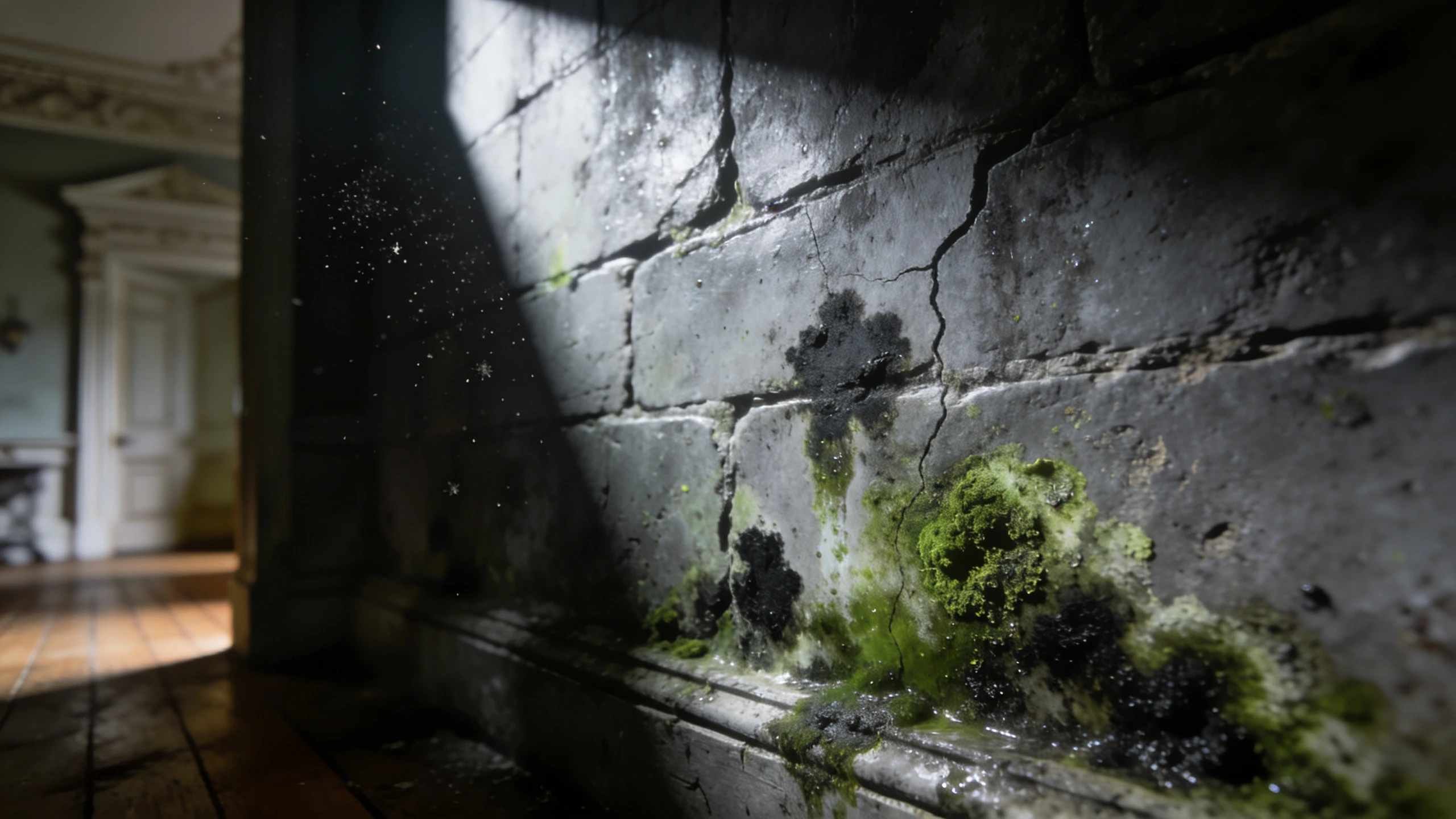
Damp is one of the most common issues flagged in UK property surveys. In its milder forms, it is a maintenance issue rather than a mortgage blocker. In its more serious forms — particularly dry rot or extensive rising damp — it can halt a mortgage application and require significant remediation before a lender will proceed. Knowing the difference, and knowing what to do about it, is what this guide covers.
The Three Types of Damp
Understanding which type of damp affects a property is critical, because the cause determines the treatment — and the treatment determines the mortgage implications.
Condensation
The most common form of damp in UK homes, and the one with the least impact on mortgageability. Condensation occurs when warm, moist air meets cold surfaces — typically walls, ceilings, and windows — and the moisture condenses into droplets. Over time, this creates the black mould patches that are so familiar in bathrooms, kitchens, and poorly ventilated rooms.
Cause: Inadequate ventilation combined with moisture-producing activities (cooking, bathing, drying clothes). Common in flats, properties with solid walls, and older properties without mechanical ventilation.
Treatment: Improving ventilation (extractor fans, trickle vents), insulation to raise surface temperatures, dehumidifiers, and anti-fungal treatment of affected surfaces.
Mortgage impact: Condensation is generally not a mortgage issue unless it is very severe or the surveyor cannot distinguish it from more serious damp types. A well-evidenced diagnosis of condensation typically allows the sale to proceed.
Rising Damp
Rising damp occurs when moisture from the ground migrates upward through the walls by capillary action. It is most common in older properties that lack a damp-proof course (DPC), or where the original DPC has failed or been bridged.
Signs: A tide mark on internal walls at low level (typically up to one metre above floor level), peeling paint and plaster, salt deposits (efflorescence) on the wall surface, a distinctive musty smell.
Diagnosis caution: The diagnosis of rising damp has been disputed in the surveying profession. Some experts argue that true rising damp (as opposed to condensation or penetrating damp) is far less common than the damp-proofing industry suggests. An independent specialist surveyor's opinion is valuable where rising damp is suspected.
Treatment: Chemical injection of a new DPC, replastering affected walls with damp-resistant plaster (salt-inhibiting and breathable), and treating the cause if a bridge exists (soil or debris built up against the DPC, for example).
Cost: £1,000-4,000 for a typical terraced or semi-detached house, more for larger properties.
Mortgage impact: Moderate. Lenders want to see the rising damp treated and a guarantee in place from a recognised contractor. Most mainstream lenders will proceed once treatment is confirmed.
Penetrating Damp
Penetrating damp enters from the outside through defects in the building fabric — a failed roof, missing pointing, cracked render, faulty guttering, or leaking windows. Unlike rising damp, it can appear at any height on the wall and tends to be localised to the area of the defect.
Signs: Damp patches that appear after rain, often localised to one wall, with no tide mark pattern. May appear at high level (suggesting roof or parapet defects) or at any point where the external envelope has failed.
Treatment: Fix the defect causing the ingress — repair the roof, repoint the masonry, replace the guttering. Once the source is addressed, internal drying and redecoration follows.
Cost: Highly variable depending on the defect. A simple guttering repair might cost £200; extensive roof repairs could run to £10,000+.
Mortgage impact: Lenders typically want the cause to be identified and repaired. A surveyor's note that penetrating damp has been investigated, the cause identified, and remediation is in hand will usually allow a mortgage to proceed, often with a retention until works are complete.
The surveyor cannot always distinguish types
In practice, surveyors often flag damp without a definitive diagnosis — particularly during a standard Level 2 survey where access is limited and conditions may not reveal the full picture. A specialist damp survey by a qualified damp surveyor (look for CSRT qualification) will provide a more reliable diagnosis and recommendation.
Dry Rot
Dry rot (Serpula lacrymans) is the most serious timber decay problem a UK property can have. Despite its name, it needs some moisture to start — but once established, it can spread through masonry and transmit moisture over distances, attacking dry timber far from the original source.
Identifying Dry Rot
- White/grey mycelium: Silky white or grey fungal growth on affected timber and masonry
- Red/brown spore dust: A fine reddish-brown powder around active infestations
- Cuboidal cracking: Affected timber cracks into distinctive cube-shaped pieces
- Fruiting bodies: Orange-brown mushroom-like bodies on walls or timber (a sign of advanced infestation)
- Musty smell: A distinctive earthy, mushroomy odour
- Structural weakness: Affected timber loses strength dramatically — it may crumble when pressed
Why Dry Rot Is Serious
Dry rot can spread through masonry, travel behind plasterwork, and establish itself in areas far from where it is visible. A small visible patch may represent a much larger hidden infestation. This unpredictability makes it expensive to treat and makes lenders cautious.
If left untreated, dry rot can compromise floor joists, roof timbers, door frames, and window frames — any structural or semi-structural timber element in the property.
Dry Rot Treatment
Treatment is extensive and must be thorough, as any missed spores or mycelium can cause re-infestation:
- Identify and eliminate the moisture source — dry rot cannot survive without moisture
- Remove all affected timber — extending at least 300-500mm beyond the visible infection
- Treat adjacent masonry with fungicidal solution
- Sterilise the area with specialist fungicides
- Replace removed timber with pre-treated timber
- Improve ventilation to prevent future damp
Cost: Significantly higher than wet rot — typically £3,000-20,000 for a standard residential property, but costs can exceed this for extensive infestations.
Mortgage impact: Active dry rot is a serious red flag for lenders. Most will decline or impose a retention until treatment is fully complete and a guarantee is in place.
Wet Rot
Wet rot (various species, most commonly Coniophora puteana) is less serious than dry rot and far more common. It requires higher moisture levels to spread and does not travel through masonry — it stays confined to the area of dampness.
Identifying Wet Rot
- Darkening of timber
- Timber that feels soft or spongy when pressed
- Longitudinal cracking along the grain (different from the cuboidal cracking of dry rot)
- Fungal growth that may appear darker than dry rot mycelium
Wet Rot Treatment
- Remove and replace affected timber
- Treat adjacent timber with preservative
- Address the moisture source
Cost: £500-5,000 depending on the extent.
Mortgage impact: Less severe than dry rot. Lenders typically want the moisture source fixed and affected timber treated or replaced, but many will proceed once a guarantee is in place from a recognised contractor.
Woodworm
Woodworm is a collective term for the larvae of various wood-boring beetles. The most common in UK properties is the common furniture beetle (Anobium punctatum). The larvae bore through timber, creating a network of tunnels that weaken it over time.
Identifying Active vs Inactive Woodworm
Active infestation: Fresh exit holes (bright, clean-edged holes), frass (fine powdery dust) around the holes, and possibly small beetles visible in spring/summer when adults emerge.
Inactive infestation: Old, darkened exit holes with no fresh frass. This is the most common situation in surveyed properties, and in many cases represents a historic infestation that has self-resolved.
A CSRT surveyor can usually distinguish active from inactive infestations and will advise accordingly.
Woodworm Treatment
Active infestations are treated with insecticidal solutions applied to the affected timber. The process is relatively straightforward and inexpensive:
Cost: £300-1,500 for a standard property, more for extensive infestations or where access is difficult (e.g., treating a roof void).
Mortgage impact: Active woodworm is typically flagged by surveyors but is not generally a mortgage blocker if treatment is agreed. Many lenders simply want confirmation of treatment and a guarantee. Inactive woodworm is usually noted but causes minimal concern.
The 20-year guarantee standard
Reputable damp and timber treatment specialists offer 20-year guarantees on their work as standard. These guarantees should be assignable to future owners and ideally backed by a guarantee protection scheme (such as the Guarantee Protection Trust) in case the contractor goes out of business. A 20-year guarantee from a CSRT member is what most lenders and conveyancers expect to see.
How Surveyors Flag Damp, Rot, and Woodworm
In a standard Level 2 Homebuyer's Report, surveyors assess damp using a moisture meter as well as visual inspection. However, there are important limitations:
- Moisture meters can give false readings on cold surfaces or on certain types of plaster
- Access to roof voids and sub-floor areas may be limited
- Some forms of damp (particularly penetrating damp) may not be visible on the day of inspection if there has been no recent rain
A Level 3 Building Survey provides more thorough investigation, including lifting inspection hatches and assessing areas not visible in a standard survey.
Where a Level 2 survey flags suspected damp, rot, or timber issues, the surveyor will typically recommend further investigation by a specialist. This is not a cause for alarm — it is the standard approach, and the specialist report will clarify the true situation.
Treatment Guarantees and Their Importance
After any damp or timber treatment, the contractor should issue a written guarantee. The key features to look for:
Duration: 20-25 years is standard for damp-proof course treatment and dry rot treatment. Woodworm treatment guarantees are typically 10-20 years.
Assignability: The guarantee must transfer automatically to future owners. Confirm this explicitly with the contractor.
Scope: What does the guarantee cover? It should cover re-infestation or recurrence of the treated problem, not just workmanship.
Guarantee protection: If the contractor goes out of business, a standalone guarantee may be worthless. Some contractors back their guarantees through an independent protection scheme. Check whether this applies to your guarantee.
CSRT membership: The Certificated Surveyor in Remedial Treatment qualification is the industry standard for damp and timber surveyors. Work by CSRT members (available through the Property Care Association) carries more weight with lenders and insurers.
Mortgageability After Treatment
Properties Where Treatment Is Complete with Guarantee
Most mainstream lenders — including Halifax, Nationwide, NatWest, Barclays, and Santander — will proceed on properties where:
- A damp and timber specialist has confirmed the diagnosis
- Treatment has been completed to a recognised standard
- A 20-year guarantee is in place from a reputable contractor
- The guarantee is assignable to the buyer
- The surveyor confirms the treatment appears adequate
The key is that the lender's surveyor must be able to confirm the situation. If treatment is complete but the guarantee has not yet been issued, or if access to the treated areas is not possible for inspection, there may be delays.
Properties Where Treatment Is Underway
Specialist lenders such as Together, Precise Mortgages, and Shawbrook will sometimes consider properties where treatment is underway but not complete, particularly where:
- A credible treatment plan is in place from a recognised contractor
- The works will be completed before completion of the property purchase
- A retention can be held until the guarantee is issued
Properties with Active Dry Rot
Active dry rot is the hardest situation to mortgage. Most mainstream lenders will decline until treatment is fully complete. Specialist lenders may consider bridging finance to allow purchase and treatment, with a remortgage planned once the works and guarantee are in place.
Practical Steps for Buyers
- Commission a specialist damp and timber survey if your Level 2 survey flags any concerns — this gives a definitive diagnosis and treatment plan
- Get at least two quotes for any treatment works, and confirm both contractors are CSRT members
- Check that the guarantee is assignable and backed by a protection scheme before agreeing to the works
- Negotiate on price — damp and timber issues are a legitimate basis for a price reduction, particularly where treatment costs are significant
- Confirm your lender's requirements through your mortgage broker — different lenders have different standards for what they will accept
Practical Steps for Sellers
- Obtain a specialist survey proactively — knowing the situation before marketing avoids surprises during the sale
- Have treatment carried out before sale if cost-effective — a treated property with a guarantee is significantly easier to sell than one where treatment is needed
- Provide all documentation — the original survey, the treatment specification, the guarantee, and any follow-up reports
- Price to reflect the situation if treatment has not been carried out — buyers will discount for the uncertainty of unknown costs
If the damp is too severe to resolve affordably, selling directly for cash may be the fastest route. SellTo offers free cash valuations with no fees to the seller.(affiliate)
Our exclusive broker partner
Create Finance — for damp or timber issues
Create Finance is authorised and regulated by the FCA — Unmortgageable is not. We earn a referral fee from Create Finance only if your mortgage completes through them. This never affects what you pay or what advice you receive.

Unmortgageable is not FCA-authorised. Create Finance is — verify them independently on the FCA Register. See our affiliate disclosure.
This is educational content, not financial advice. Your situation is unique — speak to a qualified CSRT surveyor and a specialist mortgage broker before making any decisions.
Find out if the property is the problem
Quick check for the construction, lease, cladding, and title issues that get mortgage applications declined — before you spend on a survey.
Get startedRelated reading

Structural Defects and Mortgages: Wall Ties, Cracking, and Movement
How structural defects like wall tie failure, cracking, and building movement affect UK mortgages. Survey red flags, repair costs, and which lenders accept repaired properties.
Subsidence and Underpinning: Can You Still Get a Mortgage?
How subsidence and underpinning history affects UK mortgages. Understand what lenders look for, which specialist lenders accept it, and how to protect your position.
Non-Standard Construction Mortgages: What Counts and Who Lends?
UK guide to mortgages on non-standard construction homes. Timber frame, concrete, PRC, thatched — which lenders accept what and what surveys you need.

Mortgage Valuation vs Survey: What Each Covers
Mortgage valuation vs survey explained. What the lender's valuation covers, what it doesn't, and which survey you actually need.
Not sure about your mortgage options?
Find out your options — whether it's your circumstances or your property holding you back. Free, no judgement, no cold calls.
This page is educational content, not financial advice or a personal recommendation. Unmortgageable is not FCA-authorised. Any broker or lender we link to is separately regulated — verify them on the FCA Register before engaging. See our affiliate disclosure.