This is general information, not financial advice. Your circumstances are unique — always speak to a qualified mortgage broker before making financial decisions. This page may contain affiliate links. Affiliate disclosure · Terms
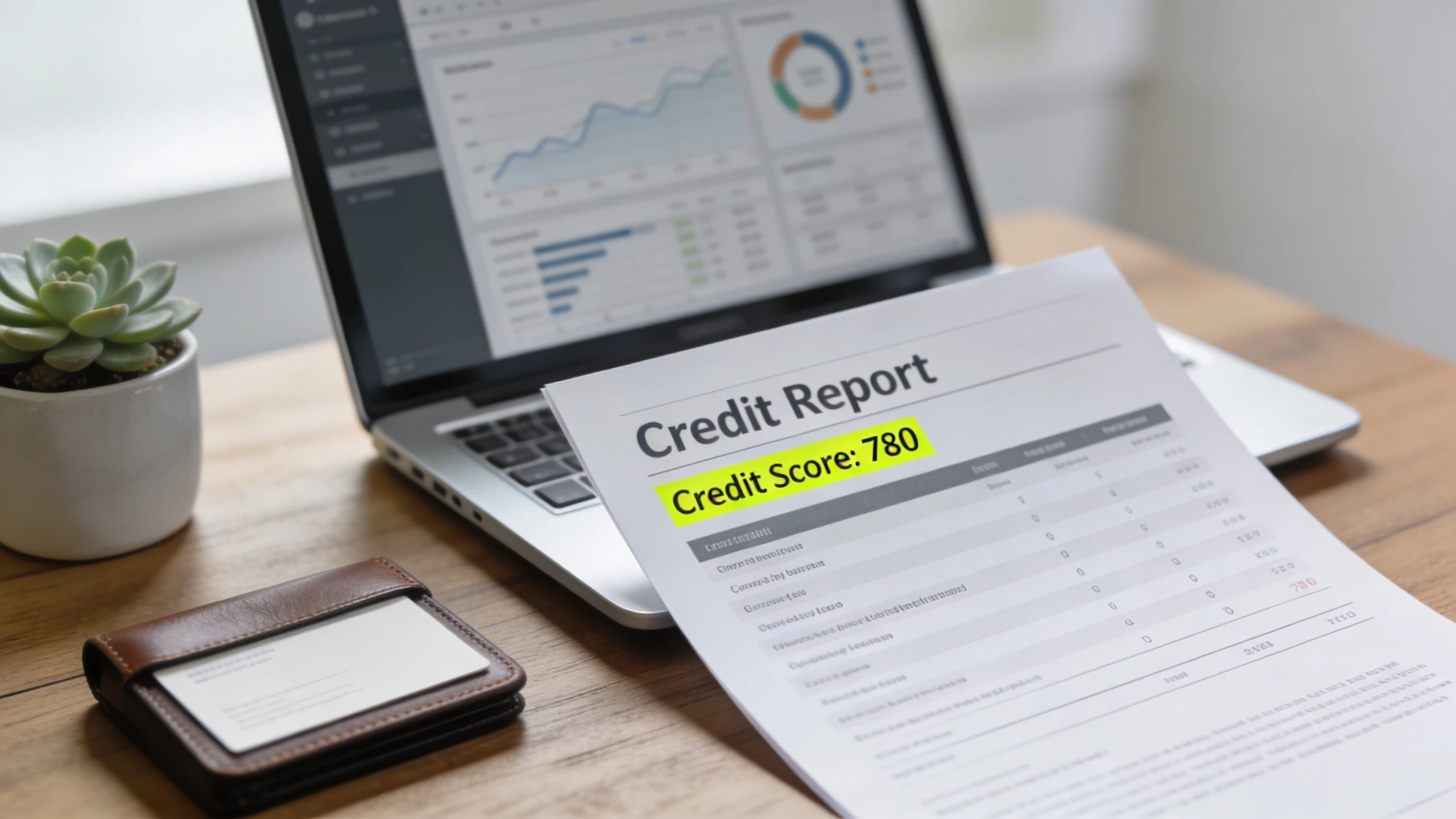
How to Check Your Credit Score for Free (UK)
Before you do anything else about a mortgage — before you talk to a broker, before you apply anywhere, before you worry about whether your credit is good enough — check your credit file. All three of them.
This is the foundation. You need to know what lenders will see when they look at you. And it's completely free.
The Three Credit Reference Agencies
The UK has three main credit reference agencies (CRAs). Each maintains a separate file on you, and each uses a different scoring system:
Experian
Score range: 0–999
- 961–999: Excellent
- 881–960: Good
- 721–880: Fair
- 561–720: Poor
- 0–560: Very poor
How to check for free: Download the Experian app (you get a free Experian account with your score and basic report). For a more detailed free view, use MoneySavingExpert's Credit Club, which shows your full Experian report at no cost.
Equifax
Score range: 0–1000
- 811–1000: Excellent
- 671–810: Good
- 531–670: Fair
- 439–530: Poor
- 0–438: Very poor
How to check for free: ClearScore provides your Equifax credit score and full report for free. Sign up at clearscore.com. It's genuinely free (they make money from showing you product recommendations, but you're not obliged to click anything).
TransUnion
Score range: 0–710
- 628–710: Excellent
- 604–627: Good
- 566–603: Fair
- 551–565: Poor
- 0–550: Very poor
How to check for free: Credit Karma provides your TransUnion score and report for free. Sign up at creditkarma.co.uk. Same business model as ClearScore — free access, funded by product recommendations.
Check all three — they're different
Lenders use different agencies. Some use one, some use two, some use all three. Your data can vary between agencies because not all creditors report to all three. An error might appear on one report but not the others. Checking all three takes about 30 minutes total and gives you the complete picture.
What to Look At (Beyond the Score)
Your credit score is a summary number. It's useful as a quick indicator, but mortgage lenders look at the underlying data. Here's what to focus on:
Personal Details
Check that your name, date of birth, and current address are correct. If you're registered at the wrong address, or your name is slightly wrong, it can cause matching problems.
Electoral Roll
Confirm you're registered to vote at your current address. This is one of the strongest identity verification signals for lenders. If you're not registered, do it now at gov.uk/register-to-vote.
Account Information
Every credit account you have (or have had in the last 6 years) should be listed. This includes:
- Credit cards
- Personal loans
- Car finance
- Mortgages
- Mobile phone contracts
- Buy now, pay later accounts (some now report)
- Overdrafts
For each account, check:
- Is the balance correct?
- Is the payment history accurate?
- Are closed accounts showing as closed?
- Are settled debts marked as settled?
Adverse Credit Markers
These are the big ones for mortgage applications:
- Defaults — check the date, amount, and whether they're marked as satisfied
- CCJs — check the date, amount, and satisfaction status
- Bankruptcy/IVA — should show completion if applicable
- Missed payments — shown month by month for each account
- Repossessions — if applicable
Financial Associations
If you've ever had a joint financial product with another person (joint account, joint mortgage, joint loan), you're "financially associated" with them. Their credit history can affect your applications. Check who you're associated with, and if an old association is no longer relevant (for example, with an ex-partner), apply to have it removed.
Hard Searches
Every time you apply for credit, the lender records a "hard search" on your file. Multiple hard searches in a short period can suggest financial distress. Check that all searches on your file are ones you recognise and authorised.
How to Dispute Errors
Errors on credit files are more common than people realise. Common mistakes include:
- Accounts that aren't yours (possible identity fraud, or a matching error)
- Incorrect balances on accounts
- Payments marked as missed when they were paid on time
- Debts shown as unsettled when they've been paid
- Incorrect personal details
- Old financial associations that should have been removed
The Dispute Process
- Identify the error — note exactly what's wrong, on which account, and on which agency's report
- Gather evidence — bank statements showing payments were made, letters confirming debt settlement, etc.
- Raise a dispute — each agency has an online dispute process:
- Experian: Through your account or the Experian app
- Equifax/ClearScore: Through the ClearScore dispute function
- TransUnion/Credit Karma: Through the Credit Karma dispute function
- The agency investigates — they contact the creditor and ask them to verify the data. Under the Consumer Credit Act, they must respond within 28 days.
- Resolution — the data is either corrected or confirmed as accurate. If confirmed but you still disagree, you can add a Notice of Correction.
Notice of Correction
If you can't get an error fixed, or if accurate data needs context (for example, missed payments during a period of illness), you can add a Notice of Correction to your credit file. This is a short statement (up to 200 words) that's shown to any lender who views your file.
Lenders must read it before making a credit decision. It can't change the data, but it can provide important context.
A Notice of Correction slows down automated decisions
When a Notice of Correction is on your file, automated lending decisions (the kind used for credit cards and personal loans) are paused and referred to a human underwriter. This is usually fine for mortgage applications (which involve human underwriters anyway) but can slow down other credit applications.
Your Statutory Right to See Your Data
Under UK data protection law (UK GDPR), you have a legal right to see all personal data held about you by any organisation, including credit reference agencies. This is called a Subject Access Request (SAR).
The free credit checking services above give you your credit report, which is what lenders see. But if you want the full data file (which may include additional information), you can submit a SAR to each agency. They must respond within one month.
In practice, the free services provide everything most people need.
How Often Should You Check?
- Before applying for a mortgage: Essential. Check all three at least 2–3 months before you plan to apply, so you have time to fix any errors.
- Monthly while building credit: Most free services update monthly. A quick check ensures nothing unexpected has appeared.
- After settling a debt or paying a CCJ: Confirm the change is reflected on your file. If it's not, chase it.
- After any change of address: Make sure your new address is correctly recorded.
What Your Credit Score Doesn't Show

Lenders also assess information that isn't on your credit file:
- Your salary and income — from payslips and bank statements
- Your spending habits — from bank statements
- Your savings — evidence of financial responsibility
- Your employment history — stability matters
- The property details — valuation, location, condition
A good credit score doesn't guarantee a mortgage, and a poor one doesn't prevent it. The score is one piece of a larger puzzle.
Practical Steps
- Sign up for ClearScore (Equifax), Credit Karma (TransUnion), and the Experian app or MSE Credit Club (Experian)
- Check all three reports and note any differences between them
- Look for errors — incorrect personal details, wrong balances, misrecorded payments
- Dispute any errors through each agency's dispute process
- Check your financial associations — remove any that are no longer relevant
- Register on the electoral roll if you aren't already
- Set a reminder to check monthly while you're preparing for a mortgage application
"What If..." Scenarios
What if my three credit scores are very different?
This is normal and doesn't mean something is wrong. Each agency uses a different scoring model, and not all creditors report to all three agencies. A default might appear on your Equifax file but not your TransUnion file, creating a large score difference. What matters for your mortgage application is which agency your chosen lender uses. A broker can tell you which agency a specific lender checks, so you know which file matters most.
What if I find an account I don't recognise?
This could be identity fraud, a data matching error (someone with a similar name or address), or a legitimate account you've forgotten about (old store cards, catalogue accounts). If you're certain the account isn't yours, report it to the credit reference agency immediately and request a fraud investigation. Also report it to Action Fraud (the UK's national fraud reporting centre). The agency must investigate within 28 days and remove the entry if it can't be verified as yours.
What if an old debt reappears on my credit file?
Debts should only appear once on your credit file. However, when debts are sold to collection agencies, they sometimes appear as a "new" entry from the debt purchaser while the old entry from the original creditor also remains. This is called "double reporting" and it's against the rules. If you spot this, dispute it with the credit reference agency — the original entry should remain (with the original date), and any duplicate should be removed.
What if I've never had any credit?
A thin or empty credit file (no credit history) is a problem in its own right — lenders can't assess your creditworthiness if there's no data. This commonly affects young people, people new to the UK, and people who've always used cash. Your score will be low not because of bad behaviour, but because of no behaviour. The fix: get a credit builder card, use it modestly, and pay it in full every month. Within 6-12 months, you'll have a functioning credit file. See our guide on mortgages with no credit history.
What if I check my credit and it hurts my score?
Checking your own credit is a soft search — it's visible only to you and has zero impact on your credit score. You can check as often as you want without any negative effect. Only applications for credit (where a lender checks your file) create hard searches that other lenders can see.
What if my credit file shows the wrong address?
An incorrect address can cause problems in two ways: it may indicate to the lender that you don't live where you claim to live (identity verification failure), and it may mean you're not correctly linked to the electoral roll at your current address. Update your address with every creditor and all three credit reference agencies. Register on the electoral roll at your correct, current address.
Common Credit File Mistakes People Make Before Applying
Only checking one agency. Checking only Experian and assuming the other two are the same is a common and costly mistake. Lenders use different agencies. An error on your Equifax file that you never checked could sink an otherwise strong application.
Checking their score but not reading the full report. The score is a number. The report is the detail. A score of 750 doesn't tell you that there's a satisfied default from 2023 still on your file, or that you're financially associated with an ex-partner with a CCJ. Read every section of every report.
Checking too late. If you check your credit file the week before your mortgage application and discover errors, you won't have time to fix them. Check at least 3 months before you plan to apply — this gives you time to dispute errors, settle any outstanding issues, and make sure corrections are reflected.
Not checking after settling a debt. When you settle a default or pay off a CCJ, the creditor is supposed to update the credit reference agencies. But this doesn't always happen promptly — or at all. After settling any debt, check your credit files 4-6 weeks later to confirm the change is reflected. If it's not, raise a dispute with the agency and provide your settlement confirmation letter.
Ignoring financial associations. If you had a joint account with an ex-partner five years ago and never formally removed the association, their credit behaviour can still affect your applications. Even if the joint account is closed, the financial association may persist until you specifically request its removal.
A Quick Checklist: What to Look for on Each Report
Use this checklist when reviewing each of your three credit reports:
Personal details:
- Name is correct (including any middle names)
- Date of birth is correct
- Current address is correct
- Previous addresses are correct
- No aliases or name variations you don't recognise
Electoral roll:
- Shows as registered at current address
- Registration date is correct
Accounts:
- All listed accounts are yours
- Account balances are correct
- Payment history is accurate (no missed payments that were actually paid)
- Closed accounts show as closed
- Settled debts show as settled/satisfied
Adverse markers:
- All defaults, CCJs, and other markers are accurate
- Dates are correct (this affects when they drop off)
- Amounts are correct
- Satisfied/settled status is correct
Financial associations:
- All listed associations are current and relevant
- No associations with ex-partners or old housemates
Searches:
- All hard searches are ones you authorised
- No unrecognised applications for credit
How Long Does It Take to Fix Credit File Errors?
The timeline for resolving disputes varies:
| Type of Error | Typical Resolution Time | What to Do If It Takes Longer |
|---|---|---|
| Wrong personal details | 1-2 weeks | Contact agency directly by phone |
| Incorrect payment status | 2-4 weeks | Provide bank statement evidence |
| Incorrect default amount | 4-6 weeks | Creditor must verify to the agency |
| Account that isn't yours | 4-8 weeks | May require fraud investigation |
| Financial association removal | 2-4 weeks | Must provide evidence joint account is closed |
| CCJ satisfaction not recorded | 4-8 weeks | Provide form N443 receipt and payment evidence |
If a dispute isn't resolved within 28 days, escalate it. Under UK data protection law, the agency must either correct the data or explain why they believe it's accurate. If you're still dissatisfied, you can complain to the Information Commissioner's Office (ICO).
What this means for your application
Checking your credit is free, takes 30 minutes, and is the single most important first step in any mortgage journey. You might find errors that are dragging your score down, adverse markers you'd forgotten about, or financial associations that need removing.
Knowledge is power. Know what's on your file, fix what you can, and you'll be in the strongest position when you apply.
Check your credit file for free
Before applying for a mortgage, check all three UK credit agencies. They hold different data — errors on one could cost you an approval.
These are free services. We may earn a commission if you sign up through these links. Affiliate disclosure
This is educational content, not financial advice. Your situation is unique — speak to a qualified mortgage broker before making any decisions.
Related reading

How to Improve Your Credit Score Before Applying
Practical UK guide to improving your credit score before a mortgage application. What actually works, what doesn't, and how long each step takes.
Mortgages for Bad Credit: What Score Do You Actually Need?
Find out what credit score you really need for a UK mortgage. We cover minimum scores, specialist lenders, and how to improve your chances.

Mortgage with a CCJ: How Old Is Old Enough?
Can you get a UK mortgage with a CCJ? We explain how age, size, and satisfaction status affect your options with real lender criteria.

Mortgage with a Default: Settled vs Unsettled
UK guide to getting a mortgage with defaults on your credit file. How settled vs unsettled defaults affect your options and which lenders will consider you.
Not sure about your mortgage options?
Find out your options — whether it's your circumstances or your property holding you back. Free, no judgement, no cold calls.
This page is educational content, not financial advice or a personal recommendation. Unmortgageable is not FCA-authorised. Any broker or lender we link to is separately regulated — verify them on the FCA Register before engaging. See our affiliate disclosure.